Showing posts with label Penguin. Show all posts

06 September 2018

The Law of Finders Keepers by Sheila Turnage, 2018

Click to view
on Goodreads 
Pirates, family, and the truth about Mo's Upstream Mother collide in the conclusion to the Newbery Honor and New York Times bestselling Three Times Lucky

When the Colonel and Miss Lana share the clues about Mo's watery origins that they've been saving, it seems the time is finally right for the Desperado Detectives (aka Mo, Dale, and Harm) to tackle the mystery of Mo's Upstream Mother. It's the scariest case Mo's had by far. But before they can get started, Mayor Little's mean mother hires them to hunt in her attic for clues to Blackbeard's treasure, which could be buried right in Tupelo Landing. Turns out, the Desperados aren't the only ones looking. A professional treasure hunter named Gabe has come to town with Harm's estranged mother--and soon the race is on, even though the treasure's rumored to be cursed. As centuries- and decades-old secrets are dragged into the light, there isn't a single person in Tupelo Landing quite prepared for all that they uncover. Especially Mo.

The fourth and last book in the Mo & Dale Mystery series and the long-awaited conclusion to Three Times Lucky, The Law of Finders Keepers is a heartbreaking, heartwarming, honest, and hilarious adventure that you can read right after you finish Three Times Lucky.

(368 pages)

I have been such a huge fan of the Mo and Dale series for years, ever since I saw Sheila Turnage speak on a book panel while promoting Three Times Lucky and I went home and picked up a copy from the library. She was such a cool person in real life, and I still count myself lucky to have seen her before Three Times Lucky became really famous and won its Newberry Honor. And I'm still kicking myself for not buying a copy and getting her to sign it!

Anyway, all that is to say that I was very excited for the release of this final book in the Mo and Dale series.

Did it live up to my hopes? Yes and no.

In some ways, I was a bit disappointed with The Law of Finders Keepers. The "kids hunting for pirate treasure" storyline has never been my favorite, and I'm a bit sick of it. Plus I felt like things were a bit more rote this time, that some of the new characters weren't nearly as interesting as the older ones. Not to mention the storyline about Mo's search for her Upstream Mother. I liked how Turnage portrayed Mo's feelings, as well as the Colonel and Miss Lana's as the search heated up–but I felt like the big clue that fell into Mo's lap was a bit of a plot convenience, I thought the mechanics of the climax were kind of ridiculous, and I'm still not sure the story of Mo's mother is very satisfying for me. Plus the book gets into some darker stuff–a life-threatening experience with quicksand and Harm's troubled relationship with his mother, in particular–which made things feel a little more grounded than they have in the past.

There. I got the negative out of the way. Now I want to point at everything I said above . . . and say it doesn't matter. Because the truth is that even with all those iffy areas, I still adored the book. It's still a really, really fun and compelling read, full of off-the-wall characters and plot twists. In any other writer's hands, The Law of Finders Keepers would have been the cringey end to a series that went on too long; in Turnage's, it's a funny, grabbing romp. Even the areas that weren't as strong as the previous books really weren't that bad, and perhaps their "grounding" effect on an otherwise pretty flighty series was a good way to bring things to a close.

Honestly, I just love this series so much. Three Times Lucky will always be my favorite out of the four by far, but The Law of Finders Keepers is still a great read. I recommend it to anyone who's gotten this far in the series already (but don't you dare read this series out of order!).

Disclaimer: I received a complimentary copy of this book in exchange for an honest review.
19 May 2016

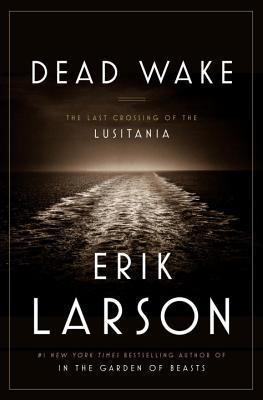
Dead Wake by Erik Larson, 2016

Click to view
on Goodreads 
On May 1, 1915, with WWI entering its tenth month, a luxury ocean liner as richly appointed as an English country house sailed out of New York, bound for Liverpool, carrying a record number of children and infants. The passengers were surprisingly at ease, even though Germany had declared the seas around Britain to be a war zone. For months, German U-boats had brought terror to the North Atlantic. But the Lusitania was one of the era’s great transatlantic “Greyhounds”—the fastest liner then in service—and her captain, William Thomas Turner, placed tremendous faith in the gentlemanly strictures of warfare that for a century had kept civilian ships safe from attack.
Germany, however, was determined to change the rules of the game, and Walther Schwieger, the captain of Unterseeboot-20, was happy to oblige. Meanwhile, an ultra-secret British intelligence unit tracked Schwieger’s U-boat, but told no one. As U-20 and the Lusitania made their way toward Liverpool, an array of forces both grand and achingly small—hubris, a chance fog, a closely guarded secret, and more—all converged to produce one of the great disasters of history.
It is a story that many of us think we know but don’t, and Erik Larson tells it thrillingly, switching between hunter and hunted while painting a larger portrait of America at the height of the Progressive Era. Full of glamour and suspense, Dead Wake brings to life a cast of evocative characters, from famed Boston bookseller Charles Lauriat to pioneering female architect Theodate Pope to President Woodrow Wilson, a man lost to grief, dreading the widening war but also captivated by the prospect of new love.
Gripping and important, Dead Wake captures the sheer drama and emotional power of a disaster whose intimate details and true meaning have long been obscured by history. 

(430 pages)

I've just read three disturbing historical novels in the past three days, and I am most definitely reeling right now. It started with Laurie Halse Anderson's Fever, a historical fiction novel about a plague of yellow fever in Philadelphia; then I re-read Margaret Peterson Haddix's devastating Uprising, which is all about three fictional girls (two of whom die gruesome deaths by the end) and the Triangle Shirtwaist Factory fire. And now there's Dead Wake, which is the most devastating of all because it both focuses on such a huge calamity (two thousand dead!) and describes in painfully exquisite detail the deaths of actual people.

I just . . . ugh. I can't believe I went through a Titanic obsession a few years ago. How could I derive any sort of enjoyment from analyzing the horrible, traumatic deaths of so many people? Somehow with this book - which I thought I'd enjoy because I used to like studying the Titanic - I see now the true horror of these maritime disasters in a way that I never did with the Titanic. The macabre picture Larson paints is just too sick for words, and I really don't even want to think about it.

This is a review, though, so I can't just stop there. I'm going to move away from the actual disaster, which takes place in just the final third of the work, and talk about the book as a whole.

Before now, I would have said that only two nonfiction books stuck completely with the facts and still read like fictional novels. One of these is Candace Fleming's The Family Romanov, a vivid depiction of the last Romanovs drawn from a variety of firsthand accounts and intimate photos; the other is Walter Lord's classic account of the sinking of the Titanic, titled A Night to Remember. Both of these books are amazing, and are the first titles I suggest whenever people ask me for titles on either of those topics. Now I must add Dead Wake to this list, because it is the most stunningly intimate and up-front look you're ever going to get at the Lusitania disaster. You read about the passengers themselves, of course, but you also get to read a little bit about the politics at play behind the scenes; about the British government decoders who knew the general whereabouts of German submarines near the Lusitania but mysteriously neglected to warn anyone; about the rules Germans had for their submarine captains (basically "shoot whatever ships you want, and we'll track your success by measuring how many tons you sink); about Schwieger, the "kind-hearted" submarine captain who once rescued a dog from a ship's wreckage but saved none of the Lusitania passengers.

I can't speak for Larson's historical accuracy, because this is the first book I've ever read about the sinking of the Lusitania. I usually don't read about man-made disasters, because it upsets me so much to see the pain we inflict on each other. Having read many historical nonfiction books in the past, though, this certainly reads like an excellently-researched book - it seems that Larson has done a lot of legwork, and it's obvious from the four-page bibliography (and 25-page Notes section!) that he did a very thorough job with his sources; it didn't all just come straight off of Wikipedia. In the author's note in the back, Larson even talks about how he was very careful to trace every historical claim back to its origins to make sure he used only facts in his account and not just commonly-repeated lies. I for one am more than satisfied, and only the true history buffs are possibly going to be able to poke holes in Larson's interpretation of the event.

At the end of the day, though, forget the squabbles over minor historical details - I'm just left gaping in shock at how terribly cruel humans can be to each other. I shudder at the descriptions that aren't leaving my head any time soon, at the pictures of small children's corpses that I saw when I idiotically typed "Lusitania victims" into Google Images (hint: don't do that). Dead Wake is a stunningly evocative book, and I'm warning you now: only read it if you have the stomach for a front-row look at such a terrible tragedy.

Disclaimer: I received a complimentary copy of this book through the Blogging for Books program in exchange for an honest review.

21 March 2016

The After-Room by Maile Meloy, 2016

Click to view
on Goodreads 
It’s 1955, and Benjamin Burrows and Janie Scott are trying to live a safe, normal life in America. It’s not easy, when they have the power to prevent nuclear disaster, and sinister forces are circling. Soon the advice of a mysterious, unscrupulous magician propels Janie and Benjamin into danger, and toward the land of the dead.
Meanwhile, their friend Jin Lo washes up on a remote island where an American spy is stationed, and finds herself on the trail of a deadly threat in China. But she’s on the other side of the world—how can Janie and Benjamin reach her?
The triumphant finale in the trilogy that began with Maile Meloy’s bestselling, critically acclaimed
The Apothecary, and continued in its captivating sequel, The Apprentices, The After-Room is full of enchantment and heart, with Ian Schoenherr’s stunning illustrations throughout.
(432 pages)

This is, I have to say, a very strange trilogy.

But I love it. I can't help loving it, even when I'm wrinkling my brow and going "huh?" This was the perfect conclusion to the trilogy, wrapping things up for everyone in such a way that just makes sense.

I was a little worried going in about the theology, considering the way the characters can actually send their minds to talk with dead people. It's very strange, yes, but there's no direct reference to any specific religion and Meloy keeps it ambiguous enough that I think readers can interpret everything however they want to.

Honestly, I don't have much to say about this book because it is such a peculiar gem that so perfectly ends the series. This series is one of those things that you either love or hate, and I love it - but at the same time, sometimes I pause and go "hmm, weird." The strange mix of science and magic (i.e. alchemy) works wonderfully throughout the series, and the plots of all three books are realistic and compelling - I honestly felt the characters' emotions bleed into me as I read, making me laugh and cry (and occasionally blush) along with them.

The entire trilogy is one of those things that I have a hard time analyzing, because it's so unique and flawless that I can't think of any ways to change it. No, wait, I do have one way: the ending. I would have liked a little bit of a punchier final scene. Then again, I was mulling it over in my head for like a week afterward, so maybe the slightly underrated ending was the way to go. Hmm . . .

Gah, I know I sound so conflicted and confused! Just read the series for yourself, and you can make up your own mind about it. I'd love to know whether you love it or hate it!

31 August 2015

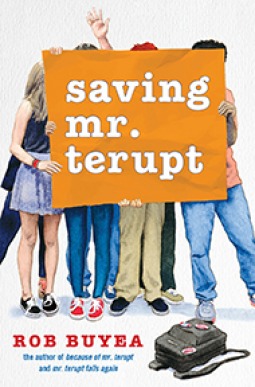
Saving Mr. Terupt by Rob Buyea, 2015

Click to view
on Goodreads 
Seventh grade was going to be awesome. The only thing missing was Mr. Terupt.
The kids from Mr. Terupt’s fifth- and sixth-grade classes are entering their first year of junior high school. There’s a lot to be excited about, but there are new challenges, too. Peter and Jeffrey face tough competition on their wrestling team. Alexia has a disastrous first day of school, and that’s only the beginning. Anna is desperate for Charlie to propose to her mother—what is he waiting for?! Danielle isn’t feeling so well, but she's trying to tough it out, like Grandma. Trouble with a bully makes Lukedread going to school for the first time ever. And Jessica is waiting anxiously for an acceptance to a theater retreat in New York City.
Everyone is missing Mr. Terupt. When a fight threatens to break up the group forever, they think their favorite teacher is the only one who can help them. But the kids soon find out that it’s Mr. Terupt who needs saving.
This novel includes extra content in the back of the book. Readers will find a Junior High Survival Guide with tips from the old gang!

(384 pages)

I've loved these books since Because of Mr. Terupt was a standalone, and I didn't even have a book blog. Thus many of you may not know how much I love the Terupt books. Let me tell you now: I. Love. Them. Which is why I was over the moon when I found out that Saving Mr. Terupt was actually a thing. A third Terupt book? Sign me up! I requested it from the library immediately (instead of pre-ordering it, because I was out of shelf space and trying to teach myself the Art of Patience), and snapped it up the day it came in (which was three days after its release date, thank you very much. I hate really don't like my library). I devoured it that same day.

The first thing I discovered was that it had been too long since I read the first two books. It took me a few chapters to remember the ins and outs of who was who. It didn't help that there were three girls and three boys (all conveniently crushing on each other in three neat pairs), and the girls sometimes got kind of muddled together. Then there were pieces of peoples' pasts that I had to scramble to remember, especially Jeffrey's - the whole dead brother thing is never explained at all in this book, and it took me a while to remember what on earth was going on with him. My other main complaint is that it felt like things were constantly escalating. Not that escalating tension is a bad thing (and frankly, Buyea did a great job in general with it), but that every single stinkin' chapter ended with "little did we know, it was just the calm before the storm," or something to that effect. It's like, I get it. Things are going to get worse. Quit saying that and start showing me.

But then, I also really liked how things continued to escalate throughout the book. We start out all happy and gay, excited about a new school year and pledging to remain the best of friends, and then slowly sink lower and lower into the tension and stress that is middle school, until everyone is at pretty much complete odds with each other. I still absolutely adore Mr. Terupt, and I was completely behind everything the gang did as they fought to help him. I saw literally every twist coming (except the one with Jessica, when she went you-know-where and met you-know-who), but that didn't stop me from feeling bad for Mr. Terupt, and rooting for him to come out on top.

I always loved how there were so many different characters telling the story in the Terupt books, because it allowed a more complete view of events - and it made it possible to actually have six main characters I could still keep straight (most of the time). I continued to enjoy reading about six very different kids in Saving Mr. Terupt, and I appreciated the fact that they were all struggling with very different issues throughout the book and yet the narration never began to feel disjointed.

All in all, I really enjoyed Saving Mr. Terupt. I don't think it's quite as good as the first two books, but they're so good that it's only in comparison that it comes up (slightly) lacking. I still recommend it to all fans of the previous books, and would even recommend it on its own merits to people who haven't read the rest of the series, except it wouldn't make one bit of sense if you came in without all the backstory from the first two books. But yeah, definitely a great book. Someday I'll buy the second and third Terupt books and complete my collection (which is currently a collection of one).

07 August 2015

The Hostage Prince by Jane Yolen and Adam Stemple, 2013

Click to view
on Goodreads
Terrifying monsters, daring escapes and a kingdom on the verge of war…
Unlikely companions Snail and Prince Aspen find themselves thrown together on the adventure of a lifetime. Due to a series of misunderstandings, they end up on the run, having adventure after mishap after scary, thrilling escape. When they reach Aspen's kingdom, they learn to their horror that their actions have divided the country and plunged it into violence. Every minute counts: it is time for Snail and Aspen to figure out a way to stop the building war—together.

(256 pages)

Honestly, just look at that cover. Does this look like a good book to you? Snail's leggings are truly hideous, and Aspen . . . well, he kind of looks like a girl. Which is kind of ironic, thinking after having read the second book.

Yeah, I've already read the second book as well. Because while The Hostage Prince looks very mediocre from the cover, it's actually really, really good. My mother, who also read it, was willing to make a special library run the day the second book (The Last Changeling) came in, even though she'd been running around all day doing errands, just because she wanted to read it so badly. She finished it that same night.

The thing about the Seelie Wars books is that they don't pull any punches - sometimes literally. As middle grade fiction goes, this series is surprisingly dark and full of violence (a lot of it implied, but some deaths actually shown). This makes the tale that much more gripping for the main characters, and makes me love them that much more for not being like the people (er, creatures) around them. Because they live in a world of ruthlessness, where any sign of mercy or sympathy is treated like a deadly crime, their own behavior becomes that much more endearing. I love the way that they begin the book behaving the way most people of their respective classes would to each other (the prince completely in charge, Snail completely submissive), but then the wall between them breaks farther and farther down as the story progresses. There just reaches a point when you're in danger and it's more important to grab someone's hand and drag them away than it is to ask their permission for touching them, you know?

Snail makes for a great main character, because she's not a huge rebel. Honestly, I'm sick of stories about girls raised in servitude who spend all of their time revolting. Snail is the low of the low, and she knows it. She understands her own position of weakness, and while she may get a little bitter from time to time (when the nobility get especially capricious), and she never loses her own self-respect, most of the time she just goes along with however things are going. She begins to gradually lose this mindset of needing to "keep her place" as the story goes on and she develops a friendship with Aspen.

Speaking of the prince, he's not always the brightest bulb. But then again, I think that goes along with his upbringing. He's basically just meant to be a placeholder to keep war from breaking out between two kingdoms; there's really nothing he can be expected to actually do with his life besides that, so he hasn't exactly gotten a lot of stimulating training or anything. I love him a lot, though, especially as the book goes on and he begins to discover things about himself and how the world works that he had never even considered before (for example: just because someone isn't born into royalty, doesn't mean he or she is good for nothing more than cleaning up after you - she might actually make a great friend, too).

So yeah, I'm a huge new fan of the Seelie Wars series (and of Jane Yolen's!), and I can't wait to read the third book. Keep an eye out for my review of book two, The Last Changeling, in the next couple of weeks!