 |
| Click to view on Goodreads |
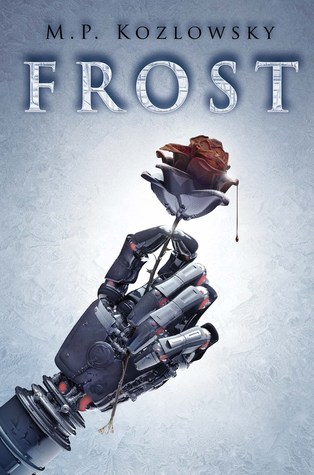
Sixteen-year-old Frost understands why she’s spent her entire life in an abandoned apartment building. The ruined streets below are hunting grounds for rogue robots and Eaters.
She understands why she’s never met a human besides her father. She even understands why he forbids her to look for medicine for her dying pet. But the thing is, it’s not her real father giving the orders…
It’s his memories.
Before he died, Frost’s father uploaded his consciousness into their robot servant. But the technology malfunctioned, and now her father fades in and out. So when Frost learns that there might be medicine on the other side of the ravaged city, she embarks on a dangerous journey to save the one living creature she loves.
With only a robot as a companion, Frost must face terrors of all sorts, from outrunning the vicious Eaters…to talking to the first boy she’s ever set eyes on. But can a girl who’s only seen the world through books and dusty windows survive on her own? Or will her first journey from home be her last?
(352 pages)
When I was not far into Frost, I described it as a steampunk novel to my younger sister. When she asked me what steampunk was, I told her it's a genre of fiction that usually has a lot of advanced tech and clockwork motifs, a fair number of robots, a fantasy-esque scenario that's explained with sciency stuff rather than magic, lots of dystopian situations with oppressive bad guys, and stories that grapple with what it means to truly be human (and whether a robot "with a human-like consciousness" is still inferior to a living, breathing human being)
I legit started laughing halfway through Frost because it had every single one of those elements in it. I've only read about three steampunk novels counting Frost, but I must really have a deeper insight into the genre than I expected. Since it follows so many of my expectations, as you might guess, the book isn't exactly the most original book I've ever read; it sticks with the usual tale of robots gone bad, humanity oppressed, a quest to find the legendary human colony, etc. I'm a little sketchy on the details of why the humans all went nuts when Frost was a baby, because it seems like most of the dangers are human-inflicted rather than related to the robots, but it's definitely the humans' fault now that things aren't improving. Things get pretty gory at some points, with mentions of people eating their own bodies in order to stay alive (which is both really gross and highly unrealistic) and of the brutal treatment slaves receive under the dictator who offers asylum to the humans. They're not described in extreme detail, but Frost definitely is not for the faint of heart.
Honestly, though, I'm not sure I agree with Frost's decision to put herself and the people around her in danger over and over again in order to save the life of a pet that was already like eight years old. It's absolutely horrible when pets are dying, I should know that more than anyone right now, but I don't know that the solution is really to throw yourself and everyone you know into mortal peril in the slim hopes of finding something that would help it recover. It seems like throughout the book characters are unable and unwilling to deal with the finality of death; they're constantly either avoiding it, daring it, or cheating it (by way of uploading their brain to a robot). Death is awful and horrible, yes, but I don't think that trapping a soul inside a metal body is really a good long-term alternative. It cheapens the tragedy of a human body's death and decay when you can just install a copy of their brain in a robot and keep right on going. Their consciousness may still be alive in another form, but that original human being is still dead. And that is still a tragedy.
Anyway, that's my two cents on the whole issue. I liked Frost more than I thought I would, enjoyed foraying into a genre that I don't usually read, but I wasn't blown away by it. If you like steampunk, or you're interested in getting into it, then Frost might well be a good place to start–or at least I think so. Keep in mind that I've only ever read three steampunk's novels when you take my recommendation under consideration.
Disclaimer: I received a complimentary copy of this novel from the publisher in exchange for an honest review.
When I was not far into Frost, I described it as a steampunk novel to my younger sister. When she asked me what steampunk was, I told her it's a genre of fiction that usually has a lot of advanced tech and clockwork motifs, a fair number of robots, a fantasy-esque scenario that's explained with sciency stuff rather than magic, lots of dystopian situations with oppressive bad guys, and stories that grapple with what it means to truly be human (and whether a robot "with a human-like consciousness" is still inferior to a living, breathing human being)
I legit started laughing halfway through Frost because it had every single one of those elements in it. I've only read about three steampunk novels counting Frost, but I must really have a deeper insight into the genre than I expected. Since it follows so many of my expectations, as you might guess, the book isn't exactly the most original book I've ever read; it sticks with the usual tale of robots gone bad, humanity oppressed, a quest to find the legendary human colony, etc. I'm a little sketchy on the details of why the humans all went nuts when Frost was a baby, because it seems like most of the dangers are human-inflicted rather than related to the robots, but it's definitely the humans' fault now that things aren't improving. Things get pretty gory at some points, with mentions of people eating their own bodies in order to stay alive (which is both really gross and highly unrealistic) and of the brutal treatment slaves receive under the dictator who offers asylum to the humans. They're not described in extreme detail, but Frost definitely is not for the faint of heart.
Honestly, though, I'm not sure I agree with Frost's decision to put herself and the people around her in danger over and over again in order to save the life of a pet that was already like eight years old. It's absolutely horrible when pets are dying, I should know that more than anyone right now, but I don't know that the solution is really to throw yourself and everyone you know into mortal peril in the slim hopes of finding something that would help it recover. It seems like throughout the book characters are unable and unwilling to deal with the finality of death; they're constantly either avoiding it, daring it, or cheating it (by way of uploading their brain to a robot). Death is awful and horrible, yes, but I don't think that trapping a soul inside a metal body is really a good long-term alternative. It cheapens the tragedy of a human body's death and decay when you can just install a copy of their brain in a robot and keep right on going. Their consciousness may still be alive in another form, but that original human being is still dead. And that is still a tragedy.
Anyway, that's my two cents on the whole issue. I liked Frost more than I thought I would, enjoyed foraying into a genre that I don't usually read, but I wasn't blown away by it. If you like steampunk, or you're interested in getting into it, then Frost might well be a good place to start–or at least I think so. Keep in mind that I've only ever read three steampunk's novels when you take my recommendation under consideration.