Showing posts with label Bethany House. Show all posts

27 July 2018

A Breath of Hope by Lauraine Snelling, 2018

Click to view
on Goodreads 
With her younger brother Ivar in tow, Nilda Carlson is on her way to America to join her older brother Rune and his family in the northern forests of Minnesota. While she sees this as a golden opportunity, she has enough experience in life to know it won't be easy. The transatlantic voyage itself proves to be an adventure, and she hopes she will feel safe in her new home.

Rune and Signe Carlson are thrilled that Nilda and Ivar are coming to Minnesota, but life on the Strand farm remains a struggle. Rune is trying to build a house for his wife and children, but Uncle Einar Strand, obsessed with his own ambitions, refuses to help. What's more, he forbids anyone from the community to step foot on his land, leaving Rune to toil on his own. When a tragedy lays bare the truth behind Einar's anger and isolation, the Carlsons and Strands will have to come together like never before to become a true family.
(336 pages)

I really, really enjoyed the first book in the "Under Northern Skies" series, The Promise of Dawn. I was excited to see the story continue with A Breath of Hope.

And, on the whole, I'm satisfied with this second instalment in the series. Nilda is an interesting new character, though I almost found her a little bland in comparison to the rest of the family. It's hard for a young, single woman who mostly just helps with the cooking and takes some English classes to compete for the spotlight with Signe, Rune, the boys, the baby, Gerd, and Einar. I didn't care much about her potential romances. I think my favorite parts with Nilda have to be her reaction to an attempted assault back in Norway (and her attempts to see justice done), and she and Ivar's stop at a wealthy woman's mansion during their journey to Minnesota. Both are compelling storylines that I thought were done well.

I also really appreciated seeing the continuation of the story started in the first book, following the characters we grew to love in The Promise of Dawn. I didn't enjoy them quite as much as in the first one, because Einar's surliness got a little old after a while and most of the drama of living on the farm and growing accustomed to everything was already hashed out in the previous book, but it was still nice to see the continuation of their transition to their own place in Minnesota.

I've really enjoyed this series so far. While The Breath of Hope wasn't quite as good as The Promise of Dawn in my opinion, I still loved it and I am excited to read any more books in the series that might be coming out.

Disclaimer: I received a complimentary copy of this novel from the publisher in exchange for an honest review.
20 July 2018

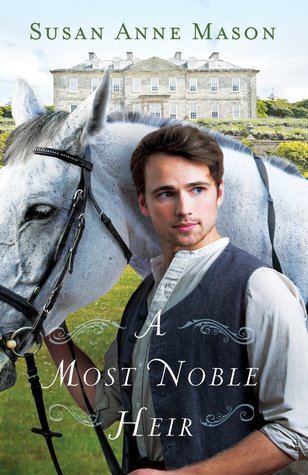
A Most Noble Heir by Susan Anne Mason, 2018

Click to view
on Goodreads 
Will gaining the world cost him everything he holds most dear?

When stable hand Nolan Price learns from his dying mother that he is actually the son of the Earl of Stainsby, his plans for a future with kitchen maid Hannah Burnham are shattered. Once he is officially acknowledged as the earl's heir, Nolan will be forbidden to marry beneath his station.

Unwilling to give up the girl he loves, he devises a plan to elope--believing that once their marriage is sanctioned by God, Lord Stainsby will be forced to accept their union. However, as Nolan struggles to learn the ways of the aristocracy, he finds himself caught between his dreams for tomorrow and his father's demanding expectations.

Forces work to keep the couple apart at every turn, and a solution to remain together seems further and further away. With Nolan's new life pulling him irrevocably away from Hannah, it seems only a miracle will bring them back together.

(360 pages)

Oh, gosh. So much cringe.

But in a good way. Definitely a good way. Everyone needs one of these once in a while, right? A story about a stable hand who turns out to be the heir to a vast fortune and a title, but who marries his kitchen maid fiance in secret and then gets swept away from her by his new life. There's drama–make that melodrama!–galore, and surprise relations, and more than enough stupid decisions to fill the novel.

It's painful, on one level. But also fun.

I can't even pretend to review A Most Noble Heir as fine literature, but it serves its purpose well as chick lit: it's a good length, has no offensive content, and is written well enough to keep the reader's attention. Some of the adult characters are especially cringey, and I never really stopped hating Nolan's father, but I liked Nolan and Hannah and was definitely rooting for them. I could barely comprehend the reasoning behind why there was any drama about them potentially separating, but it made for a fun read so I won't pick at it too hard.

Really, that's all I can say about A Most Noble Heir. It's an entertaining read, but you have to be in the mood for it.

Disclaimer: I received a complimentary copy of this novel from the publisher in exchange for an honest review.

08 June 2018

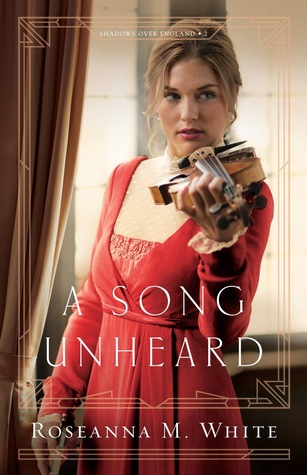
A Song Unheard by Roseanna M. White, 2018

Click to view
on Goodreads 
Willa Forsythe is both a violin prodigy and top-notch thief, which make her the perfect choice for a crucial task at the outset of World War I—to steal a cypher from a famous violinist currently in Wales.

Lukas De Wilde has enjoyed the life of fame he's won—until now, when being recognized nearly gets him killed. Everyone wants the key to his father's work as a cryptologist. And Lukas fears that his mother and sister, who have vanished in the wake of the German invasion of Belgium, will pay the price. The only light he finds is in meeting the intriguing Willa Forsythe.

But danger presses in from every side, and Willa knows what Lukas doesn't—that she must betray him and find that cypher, or her own family will pay the price as surely as his has.

(416 pages)

This is the second book in the Shadows Over England series, following A Name Unknown which is about Willa's older sister-thief Rosemary. I really loved A Name Unknown. In fact, this is a direct quote from my review of it:
I believe I can unequivocally say that A Name Unknown is not only the best Christian fiction novel I've read in a very long time, but it's also straight-up one of the best romances I've read in a while.
 That's why I jumped at the chance to read A Song Unheard. Unfortunately, I wasn't quite as enamored with it. The writing is still quite good, and the historical setting (the beginning of WWI) is a fascinating one, but I just didn't connect quite as well with the characters.

Perhaps it's because I don't have a good ear for music (I have to admit it all kind of sounds the same to me), so I have a harder time relating to the bond Willa and Lukas form over their music which made it feel rather forced. Perhaps it's because I'm growing rather sick of genius characters who magically have all these super, one-of-a-kind code-breaking skills that are basically one big deus ex machina.

I think my favorite storyline was actually Lukas's sister's, because she had to grapple with the moral nuances of war as she grew to know the enemy soldier, practically old enough to be her father, who seemed to grow to care for her and her mother, but was also a part of the forces which had torn their city apart. These are the sorts of ethical complexities I like to see in all war books.

I enjoyed A Song Unheard well enough that, even if it were the first book in a series, I would still be interested in reading the followups. Since it's following A Name Unknown, I am definitely hoping to read the next books in the series. These books are on the long side, but they are well-written and engaging, and even this slightly weaker entry is still much better than much of the competition.

What other historical romance books would you recommend for some light summer reading?

Disclaimer: I received a complimentary copy of this novel from the publisher in exchange for an honest review.
23 April 2018

A Light on the Hill by Connilyn Cossette, 2018

Click to view
on Goodreads 
After being branded during the battle of Jericho, Moriyah has had no prospects for marriage--until now. She hopes to please the man, but things go horribly wrong and she is forced to flee for her life. Seeking safety at one of the Levitical cities of refuge, she is unprepared for the dangers she faces, and the enemies--and allies--she encounters on her way.
(352 pages)

I chose to review A Light on the Hill because I really enjoyed her Wings of the Wind, which is apparently part of a different series but which is set in the same time period and community. Moriyah is even a fairly significant character in Wings of the Wind.

I have to say that while I was still entertained by A Light on the Hill, I don't think it's nearly as good as that other Cossette book. What I loved so much about Wings on the Wind was that it recreated an extremely important and vibrant time in Judeo-Christian history, one which almost never gets any real focus the way other periods of history do, and tied compelling and sympathetic characters to the grander arc of the Old Testament. God's acts were powerful, but they were also true to the Biblical accounts and thus the book was 100% plausible.

A Light on the Hill, however, falls into a trap that I always find strangely off-putting: it makes God into a character of sorts, who interacts with and directly guides the main character in more than one scene. I don't mean to be petty, but these sorts of storylines always get my goat because it feels like they turn God into a tool to advance the plot. Sure, they're meant to show His greatness and faithfulness etc., but I'm never a huge fan of this idea because the author has no idea whether that's actually how God would have acted in these situations. I also felt like the tethering to the Biblical narrative was a lot more tenuous in general, really.

Setting aside the religious aspect of the book, I also just didn't find the story as compelling. I still really love the idea of the cities of refuge, and I will very likely seek out future books in this new series (the "City of Refuge" series) just to see the implications of the idea played with in new ways. But rather than taking place in one of these cities, the book largely consists of Moriyah's attempts to reach one. It's fine as its own story, but I would have been more interested to read about life in the cities.

As for the romance, I never much cared for it. The insta-love was ridiculously fast here, and the whole dynamic between the two leads felt really hammy. I was more interested in Moryiah's relationship with the other important people in her life, including her surrogate mother figure and the orphaned boy she cared for before the accident. Those dynamics were sweet and interesting to read, and I enjoyed all the bits we had of them. I also enjoyed reading about Moryiah's journey to the recognition that she was more than just the scars on her face–it reminded me a little bit of Aza's journey to self-confidence in Gail Carson Levine's Fairest.

This review may seem very negative, but I did enjoy reading A Light on the Hill. I think I just keep returning to dwell on the could-have-beens with this book because I know from Wings on the Wind that it had the potential to be better. I do still recommend it if you're looking for a Christian historical fiction read. And tell us in the comments section down below, what is your favorite book about a protagonist who struggles with their physical appearance?

Disclaimer: I received a complimentary copy of this novel from the publisher in exchange for an honest review.

15 January 2018

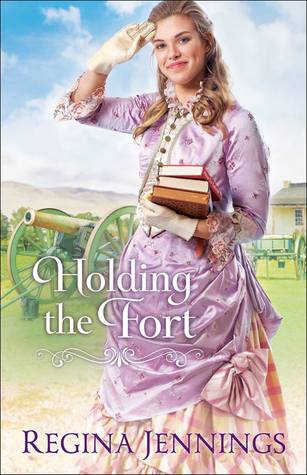
Holding the Fort by Regina Jennings, 2017

Click to view
on Goodreads 
Louisa Bell never wanted to be a dance-hall singer, but dire circumstances force her hand. With a little help from her brother in the cavalry, she's able to make ends meet, but lately he's run afoul of his commanding officer, so she undertakes a visit to straighten him out.

Major Daniel Adams has his hands full at Fort Reno. He can barely control his rowdy troops, much less his two adolescent daughters. If Daniel doesn't find someone respectable to guide his children, his mother-in-law insists she'll take them.

When Louisa arrives with some reading materials, she's mistaken for the governess who never appeared. Major Adams is skeptical. She bears little resemblance to his idea of a governess--they're not supposed to be so blamed pretty--but he's left without recourse. His mother-in-law must be satisfied, which leaves him turning a blind eye to his unconventional governess's methods. Louisa's never faced so important a performance. Can she keep her act together long enough?

(345 pages)

Sometimes I'm just in the mood for a fluffy book, you know? And it doesn't get much fluffier than a historical fiction novel about a dance hall singer mistaken for a governess at a fort in the American West.

A small part of my brain hates the entire premise of the book, since basically the entire point of Fort Reno appears to be to dole out food rations to the American Indians of the West and generally just "keep them in line." I also dislike a man, Frisco Smith, who showed up a couple of times in the story and may be setting up to be the hero of a future book: he's fighting to open the latest land aquisition up to homesteading. The exact quote:

"All I'm asking is that the government do the same thing for them [white settlers] that they did for the Indians. Give them a chance at a homestead, too.

 This is completely unfair, of course, since the land was the Native Americans' to begin with–not the white settlers'–and their culture was not really compatible with the euro-centric model of small, individual homesteads.

But honestly, sometimes I just need to read a fluffy historical fiction without thinking about all the horrible parts of American history. The story in Holding the Fort is held together by the romance, which is likely the driving factor for most people reading the book and basically also is the plot. I think my favorite parts were honestly when Louisa was spending time with the girls and studying her way into an education of her own along the way. I sympathized with her struggles and rooted for her to find a happy ending, since life had dealt her nothing but bad cards and she had always done the best she could with them. I cared for Daniel's daughters more than I cared for him himself, but I was happy enough to see them both finding their way to happiness together.

Honestly, though, I think I'm much too cynical for this book, because I kind of agreed with the grandmother that the girls needed to get out of that fort full of men and get a real education. Fort Reno doesn't seem like a very nice place to raise children, and the "mean old grandmother" trying to "steal the children" presented in the story really just seems like a loving and concerned grandmother who wants the best for her daughter's children more than anything else.

But gah, that's me thinking about things too much again. Anyway, Holding the Fort is a fun escapist read for a few hours–if you can manage to turn off the questioning part of your brain long enough to enjoy it.

Disclaimer: I received a complimentary copy of this novel from the publisher in exchange for an honest review.
31 July 2017

A Name Unknown by Roseanna M. White, 2017

Click to view
on Goodreads 
Edwardian Romance and History Gains a Twist of Suspense

Rosemary Gresham has no family beyond the band of former urchins that helped her survive as a girl in the mean streets of London. Grown now, they concentrate on stealing high-value items and have learned how to blend into upper-class society. But when Rosemary must determine whether a certain wealthy gentleman is loyal to Britain or to Germany, she is in for the challenge of a lifetime. How does one steal a family's history, their very name?

Peter Holstein, given his family's German blood, writes his popular series of adventure novels under a pen name. With European politics boiling and his own neighbors suspicious of him, Peter debates whether it might be best to change his name for good. When Rosemary shows up at his door pretending to be a historian and offering to help him trace his family history, his question might be answered.

But as the two work together and Rosemary sees his gracious reaction to his neighbors' scornful attacks, she wonders if her assignment is going down the wrong path. Is it too late to help him prove that he's more than his name?

(432 pages)

I was a little wary of reading A Name Unknown because I get rather frustrated with the cheesy, unrealistic nature of a lot of historical fiction novels (and most especially Christian historical fiction novels). I really liked the premise, though, so I decided to take the plunge and review it.

And I'm very glad I did. While the writing was indeed slightly cheesy in parts (mainly in the few–rather skippable–scenes where the characters were talking/writing about religion), I was impressed by how normal A Name Unknown really was. I didn't read it thinking "ick, this is cringe-worthy but it's fluffy enough that I'm enjoying it;" rather, I was so engaged by the story and its characters that I wasn't really thinking anything to myself at all. I believe I can unequivocally say that A Name Unknown is not only the best Christian fiction novel I've read in a very long time, but it's also straight-up one of the best romances I've read in a while.

I think a huge reason for this is the male lead. Most books feature male protagonists who are handsome and brooding, rich and intelligent, well-spoken and clever. Peter Holstein is many of these things–he's middlingly handsome, quite wealthy, very smart, and extremely clever–but all of this is hidden from the world by his terrible stutter. That's right, Peter has a stutter. Like, a really bad one. And I love that, because it makes him so much more real and vulnerable. I mean, the man communicates important things to people by letters because he can't make his tongue trip out all the right words! Peter is also definitely not some high-society golden boy: he's basically scorned by everyone but a close few, because his family and last name tie him too closely to the hated Germans (the book's set during the lead-up to WWI, a fascinating time I know far too little about).

I also love that we get to watch Peter and Rosemary develop a very natural relationship over the course of over 400 pages–there's zero insta-love involved. They don't look at each other for the first time and get a strange spike in their heartbeat, they don't find themselves yearning to be close to each other, they don't rush to fall in love with someone they just met because they're physically attracted to them. During the first half of the book their relationship grows carefully, slowly, respectably, and genuinely. It's a beautiful thing to watch.

Now for a few negatives. I have to say, A Name Unknown does fall for the usual trap of having the characters start saying stupid, unrealistic things after things have developed a bit: Rosemary and Peter express their high opinions of each other in terms that are way too frank, for example. The only other bad dialogue comes in once or twice when Rosemary is supposed to be showing off her street smarts and cleverness–her dialogue in those scenes reads more like something from a movie than anything from real life. Come to think of it, Peter was a little too perfect as well.

But I'm really not complaining too loudly. He's a sweet, humble bookworm, for crying out loud. A bookworm and an author. And they grow to know each other by reading books and talking about them, which is like my ideal romance. So I'm just going to make a passing reference to the political stuff that I've completely ignored (and which was actually quite fascinating, by the way!) and end the review here.

Disclaimer: I received a complimentary copy of this book from the publisher in exchange for an honest review.

05 June 2017

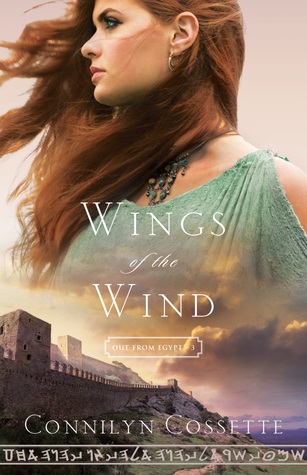
Wings of the Wind by Connilyn Cossette, 2017

Click to view
on Goodreads 
Alanah, a Canaanite, is no stranger to fighting and survival. When her family is killed in battle with the Hebrews, she disguises herself and sneaks onto the battlefield to avenge her family. The one thing she never counted on was surviving.
Tobiah, a Hebrew warrior, is shocked to find an unconscious, wounded woman among the Canaanite casualties. Compelled to bring her to a Hebrew healer back at their camp, he is soon confronted with a truth he can’t ignore: the only way to protect this enemy is to marry her.
Unused to being weak and vulnerable, Alanah submits to the marriage—for now. As she comes to know and respect Tobiah and his people, however, she begins to second-guess her plans of escape. But when her past has painfully unanticipated consequences, the tentative peace she’s found with Tobiah, the Hebrews, and Yahweh is shaken to the core. Can Alanah’s fierce heart and strength withstand the ensuing threats to her life and all she’s come to love?

(352 pages)

I have read very, very few books set before the lifetime of Christ.

Actually, make that books set before the Renaissance. Or maybe even books set before the 1700s. Really, most of the novels I read seem to either be fantasy stories (i.e. not set in our timeline) or based in more modern times. That's why I was really intrigued by Wings of the Wind, which promised to tell a fascinating romance story set during the battles between the Canaanites and the Israelites near the end of the forty years in the desert after God's people had fled from Egypt.

And it delivered. I honestly really, really enjoyed reading Wings of the Wind. I have no idea how historically accurate it was, but it seemed well-researched and relatively plausible. The characters are all realistic, and though I saw some of the plot twists coming from a mile away I definitely didn't foresee how everything wound wind up tying back to the biblical narrative. The romance between Alanah and Tobiah is relatively gradual and realistic, and not as creepy as the whole forced marriage plotline could have gone. I liked them together and was rooting throughout everything for them to stay together throughout everything that was happening. I also really liked the depiction of Yahweh, because he was so active in the Israelites' lives during this period and I think Cossette depicted his powerful justice and simultaneous mercy very skillfully.

That being said, I do want to warn potential readers that this book doesn't pull any punches. There are many references to what soldiers do to unarmed women they come across, and of Alanah's desperation not to let that happen to her, especially at the beginning of the book. Then there are some scenes that describe a couple in love and some *ahem* morning after scenes. Later in the book, Alanah encounters another city that is teeming with vice and prostitutes. Basically, there are a lot of references to both having sex and avoiding molestation throughout the book that I thought were a little bit much. In her author's note, however, Cossette explains her choice to include the atrocities committed by the Canaanites by describing her desire to provide a clear-eyed look at the people who were being wiped out. I still don't know that I can totally be okay with wiping out a whole people in order to steal their land, but I suppose God must have known what he was doing.

Anyway, this is one of the most well-written and fascinating Christian fiction/romance books I've ever read, and–with a warning about the mature material it includes–I do recommend it highly. If you're in the mood for this sort of book, then just know that Wings of the Wind is one of the good ones.


Disclaimer: I received a complimentary copy of this novel from the publisher in exchange for an honest review.

20 February 2017

A Note Yet Unsung by Tamera Alexander, 2017

Click to view
on Goodreads 
Despite her training as a master violinist, Rebekah Carrington was denied entry into the Nashville Philharmonic by young conductor Nathaniel Whitcomb, who bowed to public opinion. Now, with a reluctant muse and a recurring pain in his head, he needs her help to finish his symphony. But how can he win back her trust when he's robbed her of her dream?
(448 pages)

I want to start by saying this book is not quite as "soft" a story as the cover and description suggest. It's true that it's essentially a love story, and that most of the pages are full of character descriptions and increasing romantic tension between the two leads, but we also get (relatively vague) flashbacks to the time Rebekah's step-father attempted to rape her in her childhood. There are a few more "modern-day" creepy scenes with the man sprinkled throughout the book, despite Rebekah's attempts to avoid his company at all costs, and the material is still pretty heavy even though it's handled as gently as possible.

Besides Rebekah's relationship with Tate (i.e. Nathaniel Whitcomb), which I'll get to in a moment, there were several storylines that received generous time in the spotlight throughout the book. I was impressed by that, because I always hate when books seem completely wrapped up in the romance with a plot only thrown in as an afterthought. We get to watch Rebekah struggle in a man-dominated world, trying to find a way to join a symphony in an age where women were considered too "delicate" for such grueling work. We also get glimpses (though not quite as much as I would have liked) at Rebekah's strained relationship with her mother, who is completely oblivious to her husband's abuse and bitter about Rebekah's independent and liberal life choices. That storyline doesn't really get a conclusion, which is too bad. We also get to see Rebekah working to tutor a young girl on the violin, but–again–this isn't given as much page space I would have liked.

The biggest "side issue" that's in the book, actually, is probably race relations. The story takes place about a decade or so after the Civil War ended, in Nashville, and Rebekah's own family used to own slaves. They still keep on one or two of them as "servents," and Alexander is careful to depict Rebekah as an open-minded woman who sees African Americans as human beings (and who dearly loves the black housekeeper who essentially raised her). I can't say for sure what struck me as being a little off about the treatment of African Americans in the book, because I honestly think the author did make her heroine as liberal as she possibly could while remaining within the confines of historical realism, but reading about how Rebekah's mother beat her when she went to sing in the slave quarters as a little girl, or about what happened to the black slave who protected her from her stepfather that night, it's sad to see snippets of the racist, slave-upholding society of the period. I suppose my discomfort is more with the basic facts of slavery and of racial discrimination, though, so I don't hold them against A Note Yet Unsung–in fact, I think the book provides a good starting point for thinking about such issues.

Now for the romance. I've left it until the last for a reason, and it's a simple one: I really don't care much for romance. I don't dislike stories about people falling in love per se–I've read many Grace Livingston Hill books just for their cute old-fashioned romances, for example–but I truly hate descriptions of people panting after each other, of how their bodies "thrum" every time they touch or of how their minds stray, in the middle of conversations, to fantasizing about getting physical with the other person. It's fine for characters to be attracted to each other, of course, but when they keep focusing on each others' bodies then that debases the romance for me, turning it from a beautiful meeting of sympathetic minds to a baser lust. I will definitely say that the romance in A Note Yet Unsung is far less obnoxious than many others I've read, and that the main characters clearly clicked on professional and emotional levels before their thoughts got too mushy. They had some ridiculous thoughts, not just about kissing each other but also about realizing "I truly love him!" despite having despised each other for most of their relatively short acquaintance. These lapses into foolishness were relatively few, though, and even near the end of the book they didn't become as cloying as I'd dreaded. The author never loses her grip on the plot of the book, and she introduces some very serious issues throughout the story to keep all readers–even those not interested in the mushy thoughts–hooked.

I won't say this is the best book I've ever read, but I will say it's probably one of the best Christian historical fiction romance novels I've come across. I was impressed with how much substance the book had, despite the fact that it's essentially marketed as a sparkly romance novel, and I'm glad I decided to take the plunge and try a genre I don't usually read. If more books in the Christian romance genre were like this one, then I'd probably read them a little more often.

Disclaimer: I received a complimentary copy of this novel from the publisher in exchange for an honest review.

16 January 2017

In the Shadow of Denali by Tracie Peterson and Kimberly Woodhouse, 2017

Click to view
on Goodreads 
Cassidy Ivanoff and her father John, a wilderness guide, work at a prestigious new hotel outside Mt. McKinley. John's new apprentice, Allan Brennan, finds a friend in Cassidy, but the real reason he's here--to learn the truth about his father's death--is far more dangerous than he knows.
(320 pages)

I hadn't read a "chick flick" book in a long while, so I thought I'd shake things up a bit. I always like books about mountain climbing, and I've never read a book set in Alaska before, so In the Shadow of Denali had all the makings of a unique and grabbing read for me.

And for the most part, it was that. The characters were slightly flat, it's true, and the romance was truely cringe-worthy (and the villain ridiculously stereotypical), but those things honestly didn't bother me as much as they probably should have. The fact is that I really loved Cassidy, who was a good mixture of sweet optimism and realistic emotions. I didn't like the men quite as much (they were all a little too perfect for my taste), but reading about Cassidy's time in the kitchen, all the foods she makes and her growing friendship with the head cook Mrs. Johnson, was what kept me stuck to the story. Mrs. Johnson is probably my favorite character, actually. I can't say much about her backstory, but I really loved watching her gruff outer shell peel away over time!

It does have to be said, though, that the discussions of both romance and religion are almost uniformly hard to read throughout the book. The characters are so obnoxiously slap-you-in-the-face Christian (and so obsessed with making sure everyone thinks exactly the way they do) that it got a little old for me–even though I actually am Christian! It's not like they act like God makes life one big rose-fest, because all of the main characters grapple with some pretty scary/hard things throughout the book, but something about the discussions of faith just felt cheesy and unrealistic to me. There's also a fair bit of instalove, which anyone who has read this blog for long knows is a big pet peeve of mine. Cassidy and Allan barely know each other at all when they start having feelings for each other that they'd never had for anyone else in their entire lives. Despite the fact that they only spend minimal amounts of time with each other and don't really seem to have anything in common, we're supposed to believe they're perfect for each other. Meh. I'd rather have seen Cassidy wind up with Thomas, the seventeen-year-old kitchen boy who has a crush on her–I honestly liked him better than I did Allan, and the age difference could have easily become negligible if the authors had made Cassidy just a year or two younger!

Anyway, you wouldn't guess it from all the negativity in this review but I really did spend a few happy hours reading In the Shadow of Denali. Now that I'm writing out my thoughts I'm realizing just how many little things bugged me about the book, but when I was actually reading it I was sucked in nonetheless. I love Cassidy, Mrs. Johnson, and Thomas, and I have pretty neutral (though certainly not negative) feelings toward Allan and Cassidy's father John. I liked the basic premise of the story and the conflicts that came up, and I loved getting a look at what life was like in Alaska during the 1920s. We even get to read about President and Mrs. Harding staying at the hotel on their 1923 trip to Alaska right before the president's sudden death! I'd never even heard of President Harding, let alone known that he traveled to Alaska.

Basically, I can't recommend In the Shadow of Denali as fine literature. If you're looking for some clean, fluffy (and slightly preachy) entertainment set in a rural Alaska setting, though, then this might just be the book for you. If you do give it a try, comment below to let us know how you like it!

Disclaimer: I received a complimentary copy of this novel from the publisher in exchange for my review.

19 December 2016

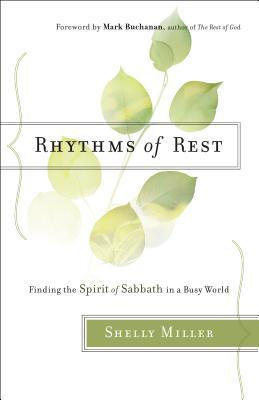
Rhythms of Rest by Shelly Miller, 2016

Click to view
on Goodreads 
Sabbath-keeping not only brings physical refreshment, it restores the soul. God commands us to "remember the Sabbath," but is it realistic in today's fast-paced culture? In this warm and helpful book, Shelly Miller dispels legalistic ideas about Sabbath and shows how even busy people can implement a rhythm of rest into their lives--whether for an hour, a morning, or a whole day. With encouraging stories from people in different stages in life, Miller shares practical advice for having peaceful, close times with God. You will learn simple ways to be intentional about rest, ideas for tuning out distractions and tuning in God, and even how meals and other times with friends and family can be Sabbath experiences. 

Ultimately, this book is an invitation to those who long for rest but don't know how to make it a reality. Sabbath is a gift from God to be embraced, not a spiritual hoop to jump through.
(224 pages)

Oh, the irony. Here I am sitting here on a Sunday afternoon–the only slow time I get all week, because I have two midterms due in the next six days–reading and reviewing a book whose entire purpose is to convince me to take time off for myself. If I wanted I could try to argue that I'm working on my blog because it's relaxing to me, but the truth is that I feel compelled to do it. If I had unlimited time to do whatever I wanted today, I would totally be reading a brand-new fiction novel or re-watching a favorite episode of Doctor Who or even agreeing to go with my Star Wars-obsessed sister to see Rogue One. I certainly haven't got anything against Rhythms of Rest, but it's not the sort of book I normally read on a Sunday afternoon. I've just been so busy lately that I didn't have time to read it until the day before my review was due.

So yes, I'm definitely feel the call to take more breaks. At the risk of being like one of the women Miller quotes in the book, though, I'm afraid I have to postpone my Sabbath-taking until things have died down a little. The good news is that the holidays are nearly upon us: once I take my physics midterm this coming Saturday, I'll have a week off to celebrate Christmas and recharge my batteries. Once the school year starts again, I'll focus on being more intentional about giving myself time to unwind.

Anyway, enough about me. Moving on to a discussion of the book itself! I think Miller has a lot of excellent points, and that she makes them relatively well. I enjoyed reading the anecdotes she shared about her own family and their experiences practicing Sabbath, though some of the letters she shared from other women participating in the practice felt like slightly random additions. There were a few times when she was telling about something, whether in her own life or that a friend had told her, when it would be confusing at first to figure out what was going on. I don't think she always kept things quite in chronological order, which muddied the waters some, but what really made things hard to decipher at times was her use of first-person present narration. At some points I thought she was telling the reader "this is something I do regularly," only to realize that she was actually just describing in first-present tense something that had happened to her in the past.

Anyway, I still enjoyed reading the book (especially since I completely empathize with Miller's calling to live in Great Britain). Though I didn't always agree with Miller's interpretation of events in her friends' lives (especially when she said a young woman miscarried her baby because she wasn't in the right spiritual place to have a child–that gets dangerously close to implying the baby was punished for its mother's sins by losing its life!), I did like her overall points. They were just what I needed to hear right now, as my life is so hectic and stressful right now. Has anyone else read Rhythms of Rest or spent some time devoted to carving out free time on a weekly basis? If you have any tips for decreasing stress through relaxation, please do share them in the comments section below!

Disclaimer: I received a complimentary copy of this book from the publisher in exchange for an honest review.