Showing posts with label review. Show all posts

09 June 2017

The Runaway by Claire Wong, 2017

Click to view
on Goodreads 
Shortly before her eighteenth birthday, Rhiannon Morgan runs away from the remote Welsh village of Llandymna. Camping out in Dyrys Woods, she starts to make a new life for herself. In the woods she finds space for her active imagination--weaving together the stories she loves and memories of her past, including the mother she lost thirteen years ago.

Back in the village, Rhiannon's disappearance triggers a series of events that uncover the cracks in Llandymna's quiet surface. Relationships become frayed as a young police officer is forced to investigate his neighbors, and the village's elderly storyteller hints at a secret that the older generation has kept for decades. But as painful as the village's past may be, it may hold the key for hope in the present...

Claire Wong's strong debut explores how human relationships develop, how we change as we interact with one another, and the role of folktales and mythology in small communities.

(302 pages)

When I agreed to participate in the blog tour for The RunawayI didn't really know that much about it. I thought it would be kind of interesting, with its story of a girl who ran away from home and of secrets in the village, and that the "surviving in the woods" storyline would be Hatchet-style thrilling while the village stuff would be kind of contrived and ridiculously dramatic.

It turned out completely different from how I was envisioning it. For one thing, the story is way more complex and intriguing than I expected it to be. Rhiannon turns out to not have as big a part to play in the story as we're drawn to believe, as most of the action during the middle of the book takes place in the village rather than in the forest, but it was still interesting to see the way she grows up over the course of the book. She's pretty much a self-centered jerk at the beginning of the book, believing herself to be so much better than everyone else in the village because she's "not a hypocrite" and is good in school, but as time goes on she begins to gain perspective on everything as she carves a life for herself in Dyrys Woods. Switching away from Rhiannon, though, I liked learning more about the motivations of her perfectionistic aunt/guardian who copes with tragedy by micro-managing everyone in the village. There's much more beneath Diana's surface than what first meets the eye. I also liked reading about Tom the policeman and Nia the rather oppressed farm-wife and Maebh the old woman who knows everything that has ever happened in the town. My favorite characters were probably Maebh and the sibling pair who came into the village a little ways into the book.

The book is called The Runaway for a reason, and it goes much deeper than just Rhiannon's last-minute decision to leave her aunt's home for the woods. Over the course of the book, we read about two more people who run away to Dyrys, each for their own unhappy reasons. The focus of the book is truly the village, not the woods, because we begin to discover the rotten reasons villagers are driven to run away from their homes and into the woods. You know how some books aren't necessarily super violent, but they still manage to drive home the complexities and occasional horrors of human nature? The Runaway is most definitely one of those books. I can't dive too much into that because of spoilers, but it is in every sense of the word a people-driven novel.

The Runaway was not quite the fluffy quick read I went in expecting, but I loved it even more for that. It's a fascinating exploration of human nature and the community in a small town, and I really, really liked it. I don't usually keep ahold of books I get for review, but I'll definitely hold off on passing this one along because I know I'll want to revisit it sometime down the line. And since this was just Wong's debut (and one of the most impressive debuts I've read in a long time), I'll be keeping a hopeful eye out for many more books by her in the future!


Disclaimer: I received a complimentary copy of this novel from the publisher in exchange for an honest review.
05 June 2017

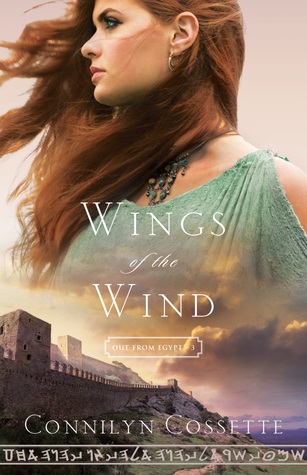
Wings of the Wind by Connilyn Cossette, 2017

Click to view
on Goodreads 
Alanah, a Canaanite, is no stranger to fighting and survival. When her family is killed in battle with the Hebrews, she disguises herself and sneaks onto the battlefield to avenge her family. The one thing she never counted on was surviving.
Tobiah, a Hebrew warrior, is shocked to find an unconscious, wounded woman among the Canaanite casualties. Compelled to bring her to a Hebrew healer back at their camp, he is soon confronted with a truth he can’t ignore: the only way to protect this enemy is to marry her.
Unused to being weak and vulnerable, Alanah submits to the marriage—for now. As she comes to know and respect Tobiah and his people, however, she begins to second-guess her plans of escape. But when her past has painfully unanticipated consequences, the tentative peace she’s found with Tobiah, the Hebrews, and Yahweh is shaken to the core. Can Alanah’s fierce heart and strength withstand the ensuing threats to her life and all she’s come to love?

(352 pages)

I have read very, very few books set before the lifetime of Christ.

Actually, make that books set before the Renaissance. Or maybe even books set before the 1700s. Really, most of the novels I read seem to either be fantasy stories (i.e. not set in our timeline) or based in more modern times. That's why I was really intrigued by Wings of the Wind, which promised to tell a fascinating romance story set during the battles between the Canaanites and the Israelites near the end of the forty years in the desert after God's people had fled from Egypt.

And it delivered. I honestly really, really enjoyed reading Wings of the Wind. I have no idea how historically accurate it was, but it seemed well-researched and relatively plausible. The characters are all realistic, and though I saw some of the plot twists coming from a mile away I definitely didn't foresee how everything wound wind up tying back to the biblical narrative. The romance between Alanah and Tobiah is relatively gradual and realistic, and not as creepy as the whole forced marriage plotline could have gone. I liked them together and was rooting throughout everything for them to stay together throughout everything that was happening. I also really liked the depiction of Yahweh, because he was so active in the Israelites' lives during this period and I think Cossette depicted his powerful justice and simultaneous mercy very skillfully.

That being said, I do want to warn potential readers that this book doesn't pull any punches. There are many references to what soldiers do to unarmed women they come across, and of Alanah's desperation not to let that happen to her, especially at the beginning of the book. Then there are some scenes that describe a couple in love and some *ahem* morning after scenes. Later in the book, Alanah encounters another city that is teeming with vice and prostitutes. Basically, there are a lot of references to both having sex and avoiding molestation throughout the book that I thought were a little bit much. In her author's note, however, Cossette explains her choice to include the atrocities committed by the Canaanites by describing her desire to provide a clear-eyed look at the people who were being wiped out. I still don't know that I can totally be okay with wiping out a whole people in order to steal their land, but I suppose God must have known what he was doing.

Anyway, this is one of the most well-written and fascinating Christian fiction/romance books I've ever read, and–with a warning about the mature material it includes–I do recommend it highly. If you're in the mood for this sort of book, then just know that Wings of the Wind is one of the good ones.


Disclaimer: I received a complimentary copy of this novel from the publisher in exchange for an honest review.

29 May 2017

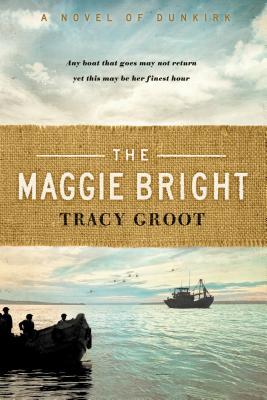
The Maggie Bright by Tracy Groot, 2017

Click to view
on Goodreads 
"England, 1940." Clare Childs knew life would change when she unexpectedly inherited the "Maggie Bright"--a noble fifty-two-foot yacht. In fact, she's counting on it. But the boat harbors secrets. When a stranger arrives, searching for documents hidden onboard, Clare is pulled into a Scotland Yard investigation that could shed light on Hitler's darkest schemes and prompt America to action. Across the Channel, Hitler's "Blitzkrieg" has the entire British army in retreat with little hope for rescue at the shallow beaches of Dunkirk. With time running out, Churchill recruits civilian watercraft to help. Hitler is attacking from land, air, and sea, and any boat that goes might not return. Yet Clare knows "Maggie Bright" must answer the call--piloted by an American who has refused to join the war effort until now and a detective with a very personal motive for exposing the truth.The fate of the war hinges on this rescue. While two men join the desperate fight, a nation prays for a miracle.
(360 pages)

Oof. The Maggie Bright book deals with a lot of heavy topics. I mean, WWII isn't known for being a light or happy period in human history, but sometimes books set during that period focus on the homefront and on happier parts of the story. I don't think I'd ever read a book with such a focus on the beaches of Dunkirk. I also hadn't read a book that painted such a bleak picture of the war effort before America joined in. There are some snide comments made throughout the book about isolationist Americans, because even through the end of the book America has not decided to join the war yet. It's fascinating to read a book set in the thick of WWII before the tide had turned and our triumph was ensured. It's also really scary to see how close the Nazis came to winning everything.

The book takes a surprisingly dark angle on the Nazis as well. I mean, we all know that they were awful–that's not up for debate, of course–but a lot of book that are set more on the homefront don't really focus much on the enemy powers as much more than potential bombers. We get an intimate, horrible look into the atrocious acts committed by the Nazis throughout the book. I won't go too much into the circumstances because those would be spoilers, but suffice it to say that the main characters talk about the Nazi T4 program.

Anyway, moving on to the book as entertainment rather than just as history. I liked it, I did, but I have to say that my main appreciation for the book comes from its historical insights rather than from the characters. Murray is definitely my favorite, and then Jamie and then probably Clare, but there were so many characters that things got rather confusing by the end. Everyone also had a chronic over-sharing problem: perfect strangers would walk up to each other, exchange some pleasantries, and then spill huge secrets to each other. The worst offenders were the two Scotland Yard agents who literally introduced themselves to Clare, invited her to coffee, and then told her big state secrets known only by a few (as well as a plethora of little personal details they surely should have been trained not to reveal to a complete stranger). Along the same vein as this ever-so-convenient openness, there's a dreadful case of insta-love in the book as well. Within the case of a single week and just a few encounters, Clare and a man she just met fall completely in love with each other. It's rather painful to watch.

Also, there's a whole side-plot with Clare's colorful family history, but we never even get to meet her oppresive uncle or learn anything important about her parents or watch her properly process something else she stumbles across over the course of the book. I would have really liked to see more in this area, because I liked what we got.

But really, though, I devoured The Maggie Bright because it's about a fascinating, and little-known, period of WWII. I lapped up the historical details and the new perspective on both the war as a whole and America's role in it, and I read anxiously to see what would happen to my favorite characters on every fresh page because I knew that so many real soldiers faced similar situations to theirs. It's a gripping story, even if parts are rather contrived, and I am glad I had the opportunity to read it.


Disclaimer: I received a complimentary copy of this novel from the publisher in exchange for an honest review.

22 May 2017

Just Life: A Novel by Neil Abramson, 2016

Click to view
on the publisher's site
From Neil Abramson, the acclaimed author of Unsaid, comes a riveting novel that explores the complex connection between humans and animals.

Veterinarian Samantha Lewis and her team are dedicated to providing a sanctuary for unwanted, abused, and abandoned dogs in New York City. But every day it gets harder to operate her no-kill shelter. Sam is already at her breaking point when she learns of an unidentified, dangerous virus spreading through their neighborhood. The medical community can only determine that animals are the carriers. Amid growing panic and a demand for immediate answers, suspicion abruptly falls on dogs as the source. Soon the governor is calling in the National Guard to enforce a quarantine -- no dog may leave the area.

Samantha knows from her own painful history that, despite the lack of real evidence against the dogs, a quarantine may only be the beginning. As questions about the source of the virus mount and clash with the pressure for a politically expedient resolution, Sam is forced to make life-altering choices. She finds allies in a motley crew of New Yorkers -- a local priest, a troubled teen, a smart-mouthed former psychologist, and a cop desperate to do the right thing -- all looking for sanctuary from their own personal demons. But the person Sam needs the most to unravel the mystery of the virus and save the dogs is the last one she'd ever want to call on -- because contacting him will mean confronting the traumatic past she has fought so hard to escape.

(386 pages)

Whew, this book is heavy.

I mean, it's got the whole animal euthanasia plotline about Sam's attempts to protect New York's dog population during the outbreak, but it also has a lot of poignant discussions about animal abuse, the use of animals in medical testing, human abuse (including one memory of a sexual assault and another of the discovery of a gruesome murder), substance abuse, and more. The main characters each carry their own heavy, terrible baggage and they must learn to cope with it throughout the course of the book in order to do their best for the dogs who are being pinned (with little to no evidence) for the spread of a dangerous new virus that is affecting and killing children.

Honestly, I didn't really like the book that much. It was a little too gritty, too painful, and too explicit. The language was really bad and the description of violence was too extreme for my tastes. Also, the descriptions of animal cruelty and of the euthanasia process were way too much for this animal lover. It's absolutely heartbreaking to read about how the innocent, loving creatures who are put down because no one will love them back!

Setting aside the strong language and my emotional reaction to the violence, Just Life is definitely a very thought-provoking read that makes a good jumping-off point for interesting debates. The characters are diverse and pretty well-rounded, and Sam is even pretty likeable (though her sort-of romance plotline feels really forced). If you're a little less sensitive than I am, you might like this book much more than I did.

As it is, I'm handing off my copy to the Little Free Library by my house and making sure to give my dog lots of extra pats. It's been a roller-coaster month as my sweet old boxer has been slowly losing control over her hind legs, and I really don't need any sad books about dying dogs lying around while watching her deteriorate. Come to think of it, my dog's health problems may also have affected my reaction to the book; if so, I'm sorry I can't give a more unbiased review. If anyone else has read Just Life, please let me know in the comments what you thought of it!


Disclaimer: I received a complimentary copy of this book to participate in a TLC book tour.

15 May 2017

Dark Breaks the Dawn by Sara B. Larson, 2017

Click to view
on Goodreads 
On her eighteenth birthday, Princess Evelayn of Eadrolan, the Light Kingdom, can finally access the full range of her magical powers. The light looks brighter, the air is sharper, and the energy she can draw when fighting feels almost limitless.

But while her mother, the queen, remains busy at the war front, in the Dark Kingdom of Dorjhalon, the corrupt king is plotting. King Bain wants control of both kingdoms, and his plan will fling Evelayn onto the throne much sooner than she expected.

In order to defeat Bain and his sons, Evelayn will quickly have to come into her ability to shapeshift, and rely on the alluring Lord Tanvir. But not everyone is what they seem, and the balance between the Light and Dark comes at a steep price.

(320 pages)

Basically: I love everything to do with Swan Lake. Always have, always will. So when Dark Breaks the Dawn showed up on my doorstep with a swan on the cover and a reference to Swan Lake in the cover letter, I was thrilled.

And I was right to be. I loved seeing the old familiar tale being told in an entirely new light. I may just be imagining it, but I also sensed hints of Shannon Hale's The Goose Girl and even Gail Carson Levin's The Two Princesses of Bamarre in the story as well, and it was very cool to see how the author also made the story her own. The magic system is very intriguing and original, with a balance of magic between the "Light" and "Dark" kingdoms. The monarchs are kind of like the lodestones for the magic of their kingdoms, channeling the power given to them by the ancient tree of magic and into all of their people. When they die, their successor must go through a ritual of claiming all the magic within a few days or otherwise they lose all of their power and the new monarch must make a long trek to the tree to somehow get the magic back and restore the balance between the two kingdoms.

Very intriguing, isn't it? I love it, this whole magic system and the world Larson has created for the old tale. What I don't love quite so much boils down to, well, the romance. I feel like there are so many amazing ways the story could have gone, so many aspects of the world-building it could have focused on or side plots it could have included, but instead we spend a significant amount of time watching Evelayn and her insta-love romance interest. Don't get me wrong, Tanvir seems like a nice enough character (and more principled than a lot of love interests!), but I just didn't really . . . well, care about his attachment to Evelayn. Whenever they had a romance scene, I would read through it quickly to get back to the good stuff. Evelayn's awesome best friend Ceren more than made up for the gooey stuff with Tanvir, though, so everything's good.

Except for that ending. The ending is not good. Why? Because it really gets into the juicy Swan Lake stuff . . . and then it's over! I can't wait to see what happens in the second book of the duology!


Disclaimer: I received an unsolicited complementary copy of this novel from the publisher in exchange for an honest review.

31 March 2017

1,001 Ways to Slow Down by Barbara Ann Kipfer, 2017

Click to view
on National Geographic 
This irresistible list book from National Geographic provides lighthearted quick hits of inspiration for those of us who feel overwhelmed--which is to say, all of us. Musings, activity suggestions, and illuminating quotes are paired with whimsical art on themes such as living in the moment, achieving balance, relieving stress, developing patience, and appreciating the world around us. "Slow living" sidebars, such as "Foods to Cook Slowly" and "Things to Do the Old-Fashioned Way," are interspersed throughout the book.
(320 pages)

What a nice book this is.

It's not a novel, but instead a collection of 1,001 gentle tips for slowing down and enjoying life.

1,001 Ways to Slow Down is a gorgeous book in and of itself, a thick hard-bound square book with a luxuriously textured dust jacket. Every two-page layout of the book is bordered by a different pretty design (usually either flowers or loops), and the color of the numbers above each tip correlates with the color of the border. This creates a very nice effect, though a slightly confusing one at first: I thought there was some organizational reason for the different colored numbers, but it turned out they were just decorative.

As for the tips themselves, I thought most of them were wonderful. There were a few that didn't apply to me, about doing things with your kids or having relations with your partner, but most of them were directly applicable to my life. Flipping through them again, here are a few favorites that stick out:
#405: Read long, slow, calming, class books.
#481: Ask yourself, "What bad thing will happen if I don't keep moving and doing? Can I just be for a while?"
#768: Read gravestones. Stories are there to be discovered.
Scattered between the 1,001 entries are also beautifully-illustrated quotes about slowing down/finding peace, and a handful of helpful lists (foods that need to be cooked slowly, ways to spend time outside, ways to productively slow down at work, etc.). The entire vibe of the book makes me think it's geared toward millenials, with all its description of "me time," adult coloring books and yoga, but I think its messages are still good and not just catering to the hip crowd. For me, reading 1,001 Ways to Slow Down was a much-needed reminder to slow down and appreciate the present without agitating about my future. I will definitely keep my copy of the book, and will flip through it for inspiration when I start to feel overwhelmed by the stressors in my life.


Disclaimer: This is an Amazon affiliate link, and I received a complimentary copy of this novel for the purpose of participating in a TLC Book Tour.

24 October 2016

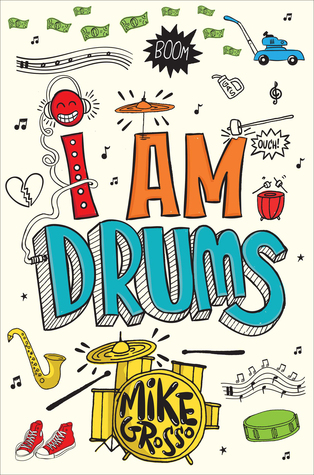
I Am Drums by Mike Grosso, 2016

Click to view
on Goodreads 
Sam knows she wants to be a drummer. But she doesn’t know how to afford a drum kit, or why budget cuts end her school’s music program, or why her parents argue so much, or even how to explain her dream to other people.

But drums sound all the time in Sam’s head, and she’d do just about anything to play them out loud—even lie to her family if she has to. Will the cost of chasing her dream be too high?

(256 pages)

I never really thought of drums as a guys-only instrument. Maybe that's because the only other character I've ever read about who plays the drums is Amanda in Wendy Mass's amazing Willow Falls series. It never really occurred to me that Amanda was doing something unusual by playing the drums, and I still don't really think she was. So in the first few chapters, when Sam kept thinking about how unusual she was for being a girl who played drums and about how offbeat her passion for music was, I was a little puzzled.

Luckily, the entire book doesn't consist of Grosso creating a faux-gender roles situation and then overcoming it. Instead, the book quickly moves to becoming a story about one girl's desperation to do the one thing that makes her happy. Sam goes through a huge amount of work to get her drum lessons, you've got to admire her devotion to drumming. I loved the character of her drum teacher (whom I can't name for fear of spoilers!)–he/she had just the right amount of passion, kindness, and grumpiness to make a realistic yet lovable mentor. As for Sam's parents . . . yeah. I don't really want to talk about them, because her father is so unkind to her that I can't stand him.

Though, now that I think about it, Sam could have pushed her parents a little harder on the drum issue before sneaking around behind their backs. As far as I can tell, she asked her father a grand total of two times (both when she could already tell he was in a bad mood), and immediately wilted when he snapped at her. Plus, why was it always her father that she asked? Considering the fact that Sam's mom was the one really bringing in a paycheck, you'd think she'd be the one getting the final say over whether her daughter could pursue a new hobby. For the majority of the book, she has a very wallflower-like presence in Sam's life. It's never specifically stated in these terms, but I think Sam's dad is sexist. This could also explain why it was so firmly ingrained into her head that playing the drums was a masculine activity (and thus not something she was really supposed to enjoy)–her dad could have put some weird ideas about gender roles into her head.

That's my two cents, anyway. I did enjoy I Am Drums, even though I wanted to smack almost every main character at least once. It's an interesting novel, full of a variety of important themes. I don't know that it is very memorable, though–a year from now, it will probably have faded into my memory, woven in with all the other books I've read which feature misunderstood pre-adolescent girls with special abilities and unhappy parents. I enjoyed it while it lasted, though, and you could too. If you've read I Am Drums, comment below to let us know what you thought of it!

Disclaimer: I won a complimentary ARC of this novel, which was provided by the author, in a giveaway on Tweens Read Too.

21 October 2016

Our Man in Charleston by Christopher Dickey, 2015

Click to view
on Goodreads 
Between the Confederacy and recognition by Great Britain stood one unlikely Englishman who hated the slave trade. His actions helped determine the fate of a nation.
As the United States threatened to break into civil war, the Southern states found themselves in an impossible position: Their economic survival would require reopening the slave trade, banned in America since 1807, but the future of the Confederacy could not be secured without official recognition from Great Britain, which would never countenance such a move. How, then, could the first be achieved without dooming the possibility of the second? Believing their cotton monopoly would provide sufficient leverage, the Southerners publically declared the slave trade dead, even as rapacious traders quickly landed more and more ships on the American coast.
The unlikely man at the roiling center of this intrigue was Robert Bunch, the ambitious young British consul in Charleston, S.C. As he soured on the self-righteousness of his slave-loving neighbors, Bunch used his unique perch to thwart their plans, sending reams of damning dispatches to the Foreign Office in London and eventually becoming the Crown's best secret source on the Confederacy—even as he convinced those neighbors that he was one of them.
In this masterfully told story, Christopher Dickey introduces Consul Bunch as a key figure in the pitched battle between those who wished to reopen the floodgates of bondage and misery, and those who wished to dam the tide forever. Featuring a remarkable cast of diplomats, journalists, senators, and spies,
Our Man in Charleston captures the intricate, intense relationship between great powers as one stood on the brink of war.
(400 pages)

I actually read this over the summer, but I was just so busy working on applications and starting my classes that I couldn't find time to review it. Then I got a bunch more books to review, with actual deadlines staring me in the face, that kept distracting me from doing Our Man in Charleston. I'm finally getting more organized now–I put all the books I have for review into a calendar, and I force myself to methodically go through and read/review them in that order–and it's made me actually efficient at something for once, so now I'm reviewing Our Man in Charleston.

And honestly, I loved it. Every single word. This is the sort of historical nonfiction I adore, full of character studies and firsthand quotes and vivid descriptions that make it feel like a fictional novel. Books like Our Man in Charleston (and The Family Romanov, and A Night to Remember) are so amazing, because they really make the events they describe feel real. When I put down Our Man in Charleston, I not only finally understood the American Civil War (the motives, the conflict, the nature of the fighting), but I also saw how it fit into a grander global context. Before reading this, I had no idea that the rest of the world was even watching the Civil War, let alone how close Britain came to coming into it on the side of the South.

It's a horrible book at times, though. Bunch lived in Charleston, the heart of Southern rebellion, and some of the stories he tells about the way Southerners treated their slaves are absolutely sickening. Also, one of the biggest conflicts that sprung up between the North and the South, and one of the most hotly debated ones inside the South, was the question of whether or not America should reopen the slave trade with Africa. I kid you not, there was a shortage of slave labor and the most common Southern reaction was "okay, let's just go capture fresh Africans and ship them here. That will solve all of our problems!" I just . . . can't even think of anything to say about that. It takes a special kind of evil to think like that.

I don't know what else to say, besides read this! If you're at all confused by the forces behind the Civil War, read it. If you're a Civil War geek looking for an intimate, international angle, read it. If you're still trying to argue that the war had nothing to do with slavery and was really just about the right to secede, then please read it–and I dare you to come out the other side still talking about the "War of Northern Aggression."

I don't usually quote specific lines from the books I review, but I'll do it just this once because there's a quote I want to end with that perfectly encapsulate's South Carolina's attitude at the onset of the Civil War:
"Other nations, especially those enlightened and more old-fashioned in their notions, rebel, fight, and die for Liberty," wrote Bunch, while South Carolina "is prepared to do the same for slavery."
Disclaimer: I received a complimentary copy of this book from the publisher through the Blogging for Books program in exchange for an honest review. 
30 September 2016

The Thief's Apprentice by Bryan Methods, 2016

Click to view
on Goodreads 
All of London lives in fear of the Ruminating Claw. He's silent. He's ruthless. And he's been living inside Oliver Diplexito's family home. In fact, he's the man who serves Oliver his dinner!
Timid Oliver has the shock of his life when he learns his father's butler, Mr. Scant, has a secret life as an infamous thief. Oliver expects to be the Claw's next target, but the truth is far more frightening. Mr. Scant wants Oliver to be his partner in crime!
As Oliver bumbles through the darkest corners of England, he discovers secrets within secrets. Mr. Scant is waging war on a society of thieving tycoons, taking from the crooks and giving to the rightful owners. But when the society strikes back, it could mean doom for the Claw and his apprentice . . . 

(272 pages)

It took me four months to finish The Thief's Apprentice. I think that has more to do with my own insanely busy summer than it does with the book itself, though. I read the first few chapters back in May, and enjoyed them, but then I went on a week-long trip and decided to leave my copy at home for when I would have time to really focus on it. By the time I got back, though, I'd forgotten everything I'd read so far. I kept meaning to get back to The Thief's Apprentice, but every time I'd crack it open I would read only a page or two before I needed to run off again. Then more urgent books, with release dates staring me right in the face, began pressing in on my reading time. I began to hoard my increasingly scarce free time, saving it only for books I had to read immediately and the occasional shiny new library book that caught my eye.

Finally, though, The Thief's Apprentice worked its way to the top of my priority review list. And when I picked it up to read a chapter before bed . . . I got sucked in for and hour and a half. Because I discovered all over again how fun this book really is.

Actually, I think that's the perfect word to describe The Thief's Apprentice: "fun." It's chock full of danger and excitement and drama that's extremely unrealistic but, somehow, even more appealing for its craziness. It's also set in historical London, which–if you're American, anyway–adds an extra layer of charm to everything. It's a pity I didn't read The Thief's Apprentice sooner, because it's just the sort of silly escapist fun I wanted last summer.

I'll pause for a minute and talk about the downsides of the book, so I can get them over with. For one thing, the first few chapters are not as gripping as they could have been. Part of the reason I wasn't more aggressive about finishing The Thief's Apprentice was the fact that I wasn't completely sucked in by the beginning. In fact, the vibe I got from the book's beginning made me think that it would be an exciting but also dull sort of story–the kind that drives eleven-year-old boys wild with excitement, but whose thrills are a little too unrealistic for the rest of us. As I said in the last paragraph, it's not like that at all: the unrealistic nature of the action actually adds an escapist charm to the story. But in the first few chapters, I was having my doubts.

The only other real problem I had with The Thief's Apprentice was that it skated over some things I would have preferred details of. Perhaps this is just it's middle-grade targeting coming through, but the narration almost entirely skips over describing Oliver's day-to-day life. We get sketches of his home and school situation, enough to whet my appetite for more, but that more never comes. I also would have liked more details of what, exactly, Mr. Scant was having Oliver study and how he managed to so rapidly improve in his studies.

While this is a book targeted specifically toward kids–and I did occasionally get the vibe that I really wasn't the target audience–I was surprised by how witty and clever it still was. Some of Oliver's observations about everyday life are very spot-on, and he makes them in a manner that's almost tongue-in-cheek. I also spotted a literary allusion or two, which was fun as well.

When it comes down to it, I think The Thief's Apprentice is a great, fun (yes, there's that word again!) book. It didn't completely blow me away, or leap right up to a top position on my favorites list, but I enjoyed reading it and I'll be interested in reading the sequel sometime down the line. I have a sneaking suspicion my younger brothers (who are more a part of the target demographic) will be even more enchanted than I was by Oliver's thrilling tale.

Disclaimer: I received a complimentary ARC of this novel from the author in exchange for an honest review.

26 September 2016

Eden's Escape by M. Tara Crowl, 2016 (+ Giveaway!)

This is my review of the second Eden of the Lamp book. Don't read on unless you've read Eden's Wish (my review–which includes a giveaway for both books).

Click to view
on Goodreads 
Eden's new life on earth begins in New York City under the guidance of her new guardian: Pepper, a petite, bubbly genie alum who's also a Broadway actress. Before she has a chance to settle in, though, Eden is whisked away for a granting--only to find herself trapped in a laboratory. David Brightly, owner of the world's leading tech company, cares more about tapping into the lamp's power than making a wish and starts performing tests on Eden. With Brightly's plasma shield around the lamp, Eden has no way home. Left without a choice, she escapes the lab and goes on the run. After her daring exit, Eden finds herself on the streets of Paris--home to Electra's headquarters. Left in a strange city with a price on her head (courtesy of scheming Brightly), Eden has to keep her wits about her. She dons a chic disguise and flits around Paris incognito, investigating Brightly Tech. Assisted by Pepper and her old adversary Bola, as well as some new friends, Eden embarks on a quest to retrieve the lamp and protect the secrets of the genie legacy.
(320 pages)

Okay, well it's time for my review of Eden's Escape. It just came out earlier this month, and I got copies of both books from the author so I could participate in the blog tour. I'm posting my tour stop with all its goodies today too, so click here to check it out–I've got an excerpt from Eden's Escape on there, plus an exclusive Top Ten list written by Ms. Crowl herself just for Read Till Dawn.

Now for the review itself. I wasn't sure exactly what to expect after the ending of Eden's Wish with the announcement that Eden would be going to live on earth. I thought Eden would probably be struggling to fit in, going to school, making friends, doing all the things she did in the first book but on a much grander scale. Instead, Eden spends most of the book in hiding after a granting goes horribly wrong: a scientist named David Brightly has tracked her lamp down and rubbed it, for the express purpose of performing experiments on Edem until he can figure out how to get unlimited wishes. She makes a desperate escape, but has to leave the lamp behind; the rest of the book covers Eden's attempts to avoid being found by Brightly (a feat made a thousand times harder by the fact that his company made all the phones, and he's not at all shy about tapping phones to get the information he needs), find allies, get the lamp back, and generally set everything to rights. It seems like a pretty hopeless mess at some points, and it was interesting to watch the magic of the lamp collide with all the advantages of cutting-edge technology.

It was also fun watching Eden try to interact with modern technology for the very first time. Xavier completely neglected to teach her anything about it, because he thought it was a waste of time, so she's stuck figuring things out on her own. One of my favorite scenes is when she sits down at a computer to get on the internet. She stares at the screen for a minute, clicks the Word icon on the bottom because she thinks the "w" stands for "web," and then proceeds to type in what she needs and wait for the results to pop up. It was funny, and really realistic! It may have been slightly less realistic to see how quickly she caught on to the internet after that–I've spent some solid time teaching my grandmother how to navigate the web, and it definitely wasn't as intuitive for her. I guess being a genie makes Eden better at figuring things out than my human grandmother, though. That's one of the perks of being, you know, a magical immortal being with supernatural powers.

I don't want to talk too much about the story itself, for fear of spoilers. I would like to just touch on the interpersonal relationships, though, because I think they're both the main weakness and the greatest strength of Eden's Escape.

My only real complaint is Eden's relationship with Pepper. Now, don't get me wrong: I love Pepper. She seems like a fascinating character, and a very kind one. I would happily spend a whole book just learning about her backstory or watching her move forward in the present. My trouble, though, is that she and Eden develop a strong bond too quickly. They're together in New York for just two weeks, yet when they're separated and then reunited both act as though they were in a legitimate mother-daughter relationship. I love that Eden adores Pepper–because I do, too–but I was just a little turned off by the way she saw her as a mother figure so soon after leaving Xavier and Goldie (the couple who actually raised her, and who she recognized as her true family in Eden's Wish). You'd think there'd be a little more homesickness for her masters, but Eden barely thinks of them throughout the novel except in relation to her attempts to rescue the lamp.

The relationships are also a huge strength to the book, though, simply because they're so compelling. Whether it's Eden's relationships with the main characters from Eden's Wish, or with her new friend Melodie, or even with some of the members of Electra, there's always an interesting dynamic to watch. This goes to the character-building, too: Crowl builds dynamic characters, so that–for the most part, anyway–there are no stock characters. This is a huge plus, and it really makes the entire novel for me.

Overall, I'd say that Eden's Escape is a very strong MG fantasy novel (that's perhaps not quite as strong as its prequel). I really enjoyed reading both books, and I look forward to finding out whether there will be a third installment in the series. There's certainly room for one!

And now it's time for the giveaway. Enter below in the Rafflecopter form (the same one that's on the main blog tour post). Good luck!

a Rafflecopter giveaway

Disclaimer: I received complimentary copies of both Eden of the Lamp books so I could participate in the blog tour for Eden's Escape. I'm also being entered into a random $50 giftcard giveaway for posting my review and the blog tour stop during the month of September.

22 September 2016

Truth or Dare by Barbara Dee, 2016

Click to view
on Goodreads 
A few white lies during a simple game of truth or dare spin out of control and make life very complicated for Lia in this brand-new novel from Barbara Dee.
When Lia returns after a summer with her eccentric aunt, it feels like everything has changed within her group of five friends. Everyone just seems more…dramatic. And after playing a game of Truth or Dare, Lia discovers how those divides are growing wider, and tells a few white lies about what really happened over the summer in order to “keep up.” But is “keeping up” with her BFFs really worth it?

(256 pages)

When I got an email from Barbara Dee asking me if I wanted to review her latest novel, I was absolutely thrilled. I'd only read one of her books before - the amazing Solving Zoe - but I'd loved it so much that I can't believe I never looked up Dee's other books. That's why I jumped at the chance to read Truth or Dare, even though I probably normally would have said no - I figured, just this once, I could read a book about girls going through puberty and trust in the author that it wouldn't be cringe-worthy.

And you know what? I was right to say yes; I was happy to read Truth or Dare. I enjoyed it. The puberty drama was mixed in with much more serious storylines about grief, parental relationships, peer relationships, and bullying. Lia and her friends play truth or dare, sure, and Lia lies about hitting milestones that she hasn't. But the reason for this isn't just some lame one-upmanship game - instead it's the result of a complex cocktail of emotions and social politics.

I will say, though, that I never once competed with my friends in this arena the way Lia does. Heck, it never even came up! With that in mind, maybe the girls' obsession with puberty isn't exactly the most realistic thing in the world to me, but I'm willing to turn on my suspension of disbelief and accept this as the compelling, meaningful story that it is. Because Lia's dealing with some really hard things in her life: she's still trying to move past her mother's death, she's struggling to see her (rather eccentric) aunt as a mother figure, she's trying to one-up her friends because they're slightly cliquey and she's terrified of being left behind. These and many more storylines intertwine themselves throughout the book, grounding it. Making it feel real, and honest, and true-to-life even when the troubles Lia's dealing with aren't ones that I can personally relate to.

I'm not going to recommend this book to "anyone and everyone," because I don't think it would do well with such a broad audience. Most boys would be turned off by the mentions of bras and periods; some girls who actually are Lia's age might get the wrong idea about what sort of emphasis to place on the milestones of puberty. But for the rest of us, Truth or Dare is a good book. If you've read this far and you're sitting there thinking it looks cool, then I can almost guarantee that Truth or Dare will be a great book for you.

Disclaimer: I received a complimentary ARC of this novel from the author in exchange for an honest review.

16 September 2016

Jingle by Gordon Korman, 2016

Click to view
on Goodreads 
JINGLE: a light clinking or tingling sounds, often heralding the approach of Santa, reindeer, or the mysterious thief of a priceless possession . . .
Griffin Bing and his friends are NOT happy. Instead of going away for winter break, they've been signed up to volunteer at a local Christmas extravaganza . . . as elves.
It's not easy being an elf. Not when Santa is bad news and Rudolph is being played by a Doberman who makes up his own rules wherever he goes.
But being an elf is nothing compared to being blamed when a prized Christmas possession -- worth over ten million dollars -- is stolen right from under your nose.
It's time for these elves to get off the shelf and track down a Christmas thief!
(208 pages)

When I told my family I had the latest book in Gordon Korman's Swindle series, the response was two-fold. First, everyone said something along the lines of "wait, for real? There's another one? This series goes on forever!" And then, invariably, they asked if they could borrow it when I'm done.

You see, my family loves Gordon Korman's books. I'm the driving force behind this (i.e. I check the books out from the library), but my siblings will always choose to read the latest Gordon Korman when given the chance. They've had a little trouble keeping track of the Swindle books, though, just because there are so many of them - and the titles/covers sort of blend together after a while. I've read them all, though, mostly in order (besides accidentally reading the second book first), and I've heartily enjoyed every single one. Considering that Jingle is the eighth book of the series, you'd think that the novels would be getting pretty watered down by now. That hasn't been happening at all, though. I will say that in a perfect world I would prefer to see a tad more character development from book to book (the characters all seem pretty static at this point), but since I love the team members the way they are it's not too hard a pill to swallow that they don't change/mature over time.

I'm not here to talk about the Swindle series as a whole, though. Let's focus in on Jingle. I thought it was a really fun idea to have this installment revolving around the holidays, because it added a bit of an edge to the mystery when everything went wrong. No one wants Christmas to roll around with a missing Christmas star! Well, no one but Mr. Slovak, I suppose.

That brings me to the biggest side plot of the novel, the competition between Ben's parents. His mom is Christian; his dad's Jewish. The theft of the star winds up pushing them into a decorating competition (think giant Santas and light-up dreidels competing for roof space), and things get pretty out of hand by the end of the book. It's really funny, but also slightly sad - I felt bad for Ben, torn between his parents' two religious holidays.

As for the search for the stolen star, I thought it was an interesting mystery but maybe not the best the series has seen. Griffin seemed not quite as sharp as usual - there were one or two times when he made a call that even I could immediately tell wasn't right. I felt like there was more dumb luck involved with this one than in the other books, and the surveillance cameras the team often uses somehow felt more like an invasion of privacy in Jingle than they have in any of the other Swindle books. Characters actually discussed this, though, so I guess that was done on purpose. Just a hunch, but maybe the team will be forced to confront the ethics of their tactics in book nine!

There's not much more to say about Jingle. All of Gordon Korman's books are fun, and this is no exception. If you're interested and you haven't read the other books in the Swindle series, though, please go back and start at the beginning. You don't want to spoil pieces of the first seven books by starting with the eighth book in a series!

Disclaimer: I received a complimentary ARC of this novel from the publisher in exchange for an honest review.

09 September 2016

Children of Exile by Margaret Peterson Haddix, 2016

Click to view
on Goodreads 
For the past twelve years, adults called “Freds” have raised Rosi, her younger brother Bobo, and the other children of their town, saying it is too dangerous for them to stay with their parents, but now they are all being sent back. Since Rosi is the oldest, all the younger kids are looking to her with questions she doesn’t have the answers to. She’d always trusted the Freds completely, but now she’s not so sure.
And their home is nothing like she’d expected, like nothing the Freds had prepared them for. Will Rosi and the other kids be able to adjust to their new reality?

(304 pages)

I don't think this is my absolute favorite of Haddix's books, but I can't exactly put my finger on why that is. Perhaps it's a touch too on-the-nose in its social critique; perhaps the reveals at the end are too wild to be entirely believable; perhaps the adults just didn't ring true for me (or if they did, I simply didn't like them). Or perhaps the ending is so bizarre that I honestly can't figure out what to make of it.

I have a hunch, though, that the Children of Exile series as a whole will be great - this book is clearly laying the groundwork for either a breathtaking action series or a thought-provoking social commentary (or both!), and I'm really intrigued to see where on earth the story goes from here. I'm especially interested to see Haddix tackle the ethical dilemmas she presented in Children of Exile, because I honestly have no idea how I feel about everything Rosie finds out in the end.

Speaking of Rosi, I really loved the kids in Children of Exile. I haven't read a character like Rosi in a long time: she's not particularly brave, not particularly clever (at least not that we've seen so far), is a useless fighter but an amazing babysitter, and is altogether too naive to be a good judge of anything. But it's her innocence - and the innocence of the other children - that's so fascinating. They were raised to believe war was a historical trouble, left behind in the stone ages; they were taught to be kind, and good, and to never hit back at anyone but instead to talk out their feelings until things were settled. Their upbringing was like some sort of politically-correct extreme, focused on respecting everyone. And in part, it truly is perfect; if everyone got along the way these children did, then war really wouldn't exist anymore. But after a while, it started to hit me: what sort of world is it, where there's no war or hitting or swearing, or even fighting? Where every conflict between your parents is magically solved in a single private conversation? It's a wonderful world, but it's not a real world. It never can be. That's partly why the children's return to their birth families is so terrible for them - they've lived in a bubble their whole lives, so they can't cope with the real world that is their home.

And that, right there, is why I always love reading Margaret Peterson Haddix novels: because they make me think. They make me look at some dilemma and try to figure out my own views. So just because Children of Exile wasn't a clear favorite of mine right from the get-go doesn't mean it's a bad book by any means - in fact, the more I sit here and chew over it the better I think Children of Exile actually is. I still hold points against it for keeping me at arms length for so long, though. Haddix has written many thought-provoking novels with major plot twists/withheld information, books I absolutely adored from page one. Somehow that didn't happen with Children of Exile, and I'm still a little bit sad about that. I guess every book can't be as perfect as Under Their Skin or Double Identity, right?

The truth is that Children of Exile is one of those books that you read, you analyze, you chew over . . . but you don't really love. I can recommend it as a thought-provoking dystopian novel, but I can't say you'll fall head over heels for it - because I didn't. I still hold out hope for the sequel, where I have complete faith that Haddix will pull all the strings together into a cohesive and fascinating whole; until then, though, my recommendation of Children of Exile as a standalone will have to be slightly tepid. If you do get a chance to read it, definitely comment below and let us know what you think!

Disclaimer: I received a complimentary ARC of this novel from the author in exchange for my honest review.