Showing posts with label historical fiction. Show all posts

27 April 2018

Polaris by Michael Northrop, 2017

Click to view
on Goodreads 
Alone at sea, with only the stars to guide them...

The proud sailing ship Polaris is on a mission to explore new lands, and its crew is eager to bring their discoveries back home. But when half the landing party fails to return from the Amazon jungle, the tensions lead to a bloody mutiny. The remaining adults abandon ship, leaving behind a cabin boy, a botanist's assistant, and a handful of deckhands -- none of them older than twelve. Troubled by whispers of a strange tropical illness and rumors of a wild beast lurking onshore, the young sailors are desperate to steer the vessel to safety. When one of their own already missing and a strange smell drifting up from belowdecks, the novice crew begins to suspect that someone -- or something -- else is onboard. Having steeled themselves for the treacherous journey home, they now have more to fear than the raging waters of the Atlantic...

(288 pages)

Hmm. Wow. This is definitely very . . . different from the books I usually read.

For one thing, I usually don't go for books set on ships. I just don't find the pirate/mutiny/ship trouble stories very interesting, so I definitely would not have picked up Polaris on my own. But since Scholastic went to the trouble of sending me a copy, I had the interesting experience of picking up a book outside of my usual reading habits.

And I enjoyed it. Polaris is a very interesting blend of sci-fi and historical fiction, full of ship sailing details as well as horrifying scientific advancements. I scoffed at the sci-fi premise when it was first revealed in detail–and I still scoff, since it's utterly ridiculous from a biological standpoint–but it creates a real sense of terror and indeed horror on board the ship. I don't dabble much in horror stories, either, so it was an interesting change to read a book about a slow, creeping, almost unspeakable terror lurking belowdecks in wait.

I honestly would have liked the book even without all of that tension, just because the characters were well-drawn with interesting personalities and backstories. I really loved the way Northrop handled the group dynamics, showing not just stereotypical power struggles between characters but also depicting nuance and maturity as the group dynamics fluctuated with the changing situation belowdecks and navigationally. Some of the plot twists may have been a little obvious and/or stale (I'm pretty sure we all knew that ________ was a girl, didn't we?), but they're done in a clear-eyed way and fit into a larger narrative in a way that is still engaging and pretty well-done.

Honestly, while I enjoyed the ride, I did have a little bit of a hard time suspending my disbelief through to the very last page of the book. Polaris is not my usual cup of tea, so I'm not a real expert on this, but I thought the ending was a bit too soft for the genre it was aiming at. And the pseudo-science nearly drove me crazy by the end. A certain subset of kids are really going to love Polaris, though, and I say–as long as they're okay with a little bit of terror–let them at it. I'm sure they'll enjoy it.

How about you, when was the last time you read a book outside of your usual reading habits? Did it go well?

Disclaimer: I received a complimentary copy of this novel from the publisher in exchange for an honest review.
15 January 2018

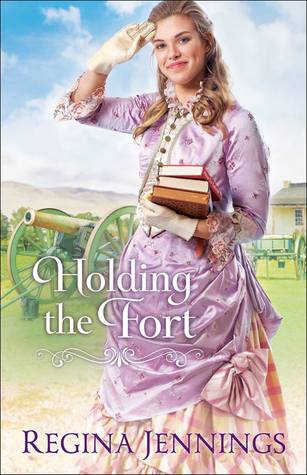
Holding the Fort by Regina Jennings, 2017

Click to view
on Goodreads 
Louisa Bell never wanted to be a dance-hall singer, but dire circumstances force her hand. With a little help from her brother in the cavalry, she's able to make ends meet, but lately he's run afoul of his commanding officer, so she undertakes a visit to straighten him out.

Major Daniel Adams has his hands full at Fort Reno. He can barely control his rowdy troops, much less his two adolescent daughters. If Daniel doesn't find someone respectable to guide his children, his mother-in-law insists she'll take them.

When Louisa arrives with some reading materials, she's mistaken for the governess who never appeared. Major Adams is skeptical. She bears little resemblance to his idea of a governess--they're not supposed to be so blamed pretty--but he's left without recourse. His mother-in-law must be satisfied, which leaves him turning a blind eye to his unconventional governess's methods. Louisa's never faced so important a performance. Can she keep her act together long enough?

(345 pages)

Sometimes I'm just in the mood for a fluffy book, you know? And it doesn't get much fluffier than a historical fiction novel about a dance hall singer mistaken for a governess at a fort in the American West.

A small part of my brain hates the entire premise of the book, since basically the entire point of Fort Reno appears to be to dole out food rations to the American Indians of the West and generally just "keep them in line." I also dislike a man, Frisco Smith, who showed up a couple of times in the story and may be setting up to be the hero of a future book: he's fighting to open the latest land aquisition up to homesteading. The exact quote:

"All I'm asking is that the government do the same thing for them [white settlers] that they did for the Indians. Give them a chance at a homestead, too.

 This is completely unfair, of course, since the land was the Native Americans' to begin with–not the white settlers'–and their culture was not really compatible with the euro-centric model of small, individual homesteads.

But honestly, sometimes I just need to read a fluffy historical fiction without thinking about all the horrible parts of American history. The story in Holding the Fort is held together by the romance, which is likely the driving factor for most people reading the book and basically also is the plot. I think my favorite parts were honestly when Louisa was spending time with the girls and studying her way into an education of her own along the way. I sympathized with her struggles and rooted for her to find a happy ending, since life had dealt her nothing but bad cards and she had always done the best she could with them. I cared for Daniel's daughters more than I cared for him himself, but I was happy enough to see them both finding their way to happiness together.

Honestly, though, I think I'm much too cynical for this book, because I kind of agreed with the grandmother that the girls needed to get out of that fort full of men and get a real education. Fort Reno doesn't seem like a very nice place to raise children, and the "mean old grandmother" trying to "steal the children" presented in the story really just seems like a loving and concerned grandmother who wants the best for her daughter's children more than anything else.

But gah, that's me thinking about things too much again. Anyway, Holding the Fort is a fun escapist read for a few hours–if you can manage to turn off the questioning part of your brain long enough to enjoy it.

Disclaimer: I received a complimentary copy of this novel from the publisher in exchange for an honest review.

27 November 2017

Crossing the Line by Bibi Belford, 2017

Click to view
on Goodreads 
Billy’s family has fallen on hard times, what with his da hospitalized after the war and his ma barely scraping by. But it’s no hardship for him when there’s not enough money to pay the tuition for Nativity of Our Lord, the private Catholic school everyone in his neighborhood attends. Billy’s not big on education.

When he transfers to James Ward, a Chicago public school, he finds out there’s a big difference at public school: the kids aren’t all Irish—in fact, they aren’t even all white. It isn’t long before Billy’s found a new best friend in Foster, another fifth grader who also doesn’t have any money, loves baseball, and just happens to be black.


Billy is pretty sure skin color doesn’t matter. Not when he and Foster are just horsing around, playing baseball, working on the docks of the canal, and building a raft at their secret hideout on Bridgeport’s Bubbly Creek. But in the Red Summer of 1919, it does matter.


Whew. I had no idea what I was getting into when I picked up Crossing the Line: I thought it was going to be a rather run-of-the-mill middle-grade novel about some kids who learn to be friends across color lines and defend their choices to the outside world (along the lines of Kristin Levine's The Lions of Little Rock). I suppose it did feature those topics, but there's so much more going on in Crossing the Line than just "crossing social boundaries."

The main character Billy learns some very hard truths over the course of the book. Truths like that some of his friends and family are racist. And that in 1919, with not enough money or jobs to go around, racism can rear its head in terrible, gruesome ways. He learns to walk a thin line, staying pleasant to his racist white friends and keeping distant from his black friends in public but spending all of his free time playing in the woods with his best friend Foster (who is black) and Foster's two older brothers. He hates hiding his friendship with the black boys, feels like a coward for pretending not to know them in public, but he grows to realize over time that by being "selfish" and protecting himself he's actually protecting them from all sorts of terrible things at the hands of the racists.

Belford has said that she decided to write Crossing the Line after gradually becoming aware of her own white privilege, and I definitely see that influence in the book. Billy is forced throughout the story to notice and despise all the ways, little and big, that the color of his skin grant him access to both places and freedoms that Foster isn't allowed. He goes from being nearly oblivious to the inequalities in his world to seeing them everywhere, and he struggles with feeling guilty and trying to find ways to help Foster and his brothers that don't put them in even more danger.

Billy's struggle to recognize, internalize, and prevent the evils of racism is the biggest focus of the book, but there are many other themes tied into the story that make it even more meaningful and thought-provoking. There are no absolutes in this book, no pure good guys and very few total bad guys. Billy's racist best friend Tommy seems like a monster when he's talking about "the blacks who steal our jobs," but he also comes from a deeply troubled, abusive home and has still been a wonderful friend to Billy in some of his most vulnerable moments (including when his da returned with debilitating shell-shock from WWI). Billy's da himself was a wonderful man on the race issue, teaching his children to respect people of all races, but he was also quite sexist: he didn't think his oldest daughter needed to go to high school because all a woman needed to know was how to cook and keep house. And don't even get me started on the policeman, the secretive Russian lodger, Billy's put-upon older sister Mary, and the myriad other side characters who are each drawn with their own nuanced personalities.

Honestly, I absolutely loved Crossing the Line. It's gritty and real and honest in a way that's still okay for younger readers. But that same grittiness and realness and honesty forces me to put a qualification on my recommendation of it: beware giving this book to the gentle children you know, because I promise it will upset (and possibly traumatize) them. There's a scene involving a puppy getting hit with a glass bottle that's not described in detail, but which could also be very upsetting for animal lovers. But once a kid is old enough, this is a book that they need to read. Honestly, I would say that this is a book that everyone needs to read at some point or another. It's definitely far and away one of the best books I've read this year–and that's really saying something.

Disclaimer: I received a complimentary copy of this novel from the publisher in exchange for an honest review.

13 November 2017

A Promising Life by Emily Arnold McCully, 2017

Click to view
on Goodreads 
For as long as he can remember, Jean Baptiste Charbonneau has been told that a promising future lies ahead of him. After all, his mother is the great Sacagawea, who accompanied Lewis and Clark on their expedition of discovery. And thanks to his mother, Baptiste's life changes forever when Captain Clark offers him an education in the bustling new city of St. Louis.

There, his mother charges him to "learn everything" - reading, writing, languages, mathematics. His life becomes a whirl of new experiences: lessons, duels, dances, elections. He makes friends and undertakes unexpected journeys to far-off places.

But he also witnesses the injustices Clark, as a US agent for Indian Affairs, forces upon the Osage, the Arikara, the Mandan, and so many others. He sees the effect of what some call "progress" on the land and on the people who have lived there for generations. And he must choose what path he will take and what place he will have in a rapidly changing society.

(304 pages)

When a copy of A Promising Life showed up on my doorstep a few weeks ago, I was intrigued by the idea of reading a book about Sacagawea's son set during a time period I knew very little about.

It wasn't much like what I was expecting, since Sacagawea disappears from the story almost immediately and the 300-page book covers a huge span of time from Baptiste's childhood to when he's about 25-30 years old. I did learn some valuable new things about history, like the fact that Sacagawea was actually the slave of a Frenchman (who was also Baptiste's father) and that the real-life Jean Baptiste Charbonneau lived an absolutely fascinating–and very international!–life.

Unfortunately, I can't say I really loved the book. I never got a good handle on the characters because it felt like there were just too many people and events going on. I also don't feel like there's a good rising action, climax, falling action, etc., because the author essentially just took all the historical facts known about Baptiste and filled in the gaps with her own ideas. Real life doesn't often fall into easy plot organization, does it?

Anyway, I feel like A Promising Life is a very educational book but it just wasn't quite my cup of tea. It felt a bit mature at times (especially when Baptiste fathers a baby in a one-night stand–though details are given!). It also introduced me to a lot of fascinating historical characters, though, so I'm still happy to have had the opportunity to read it.

Disclaimer: I received a complimentary copy of this novel from the publisher in exchange for an honest review.
10 November 2017

League of American Traitors by Matthew Landis, 2017

Click to view
on Goodreads 
When seventeen year-old Jasper is approached at the funeral of his deadbeat father by a man claiming to be an associate of his deceased parents, he’s thrust into a world of secrets tied to America’s history—and he’s right at the heart of it.

First, Jasper finds out he is the sole surviving descendant of Benedict Arnold, the most notorious traitor in American history. Then he learns that his father’s death was no accident. Jasper is at the center of a war that has been going on for centuries, in which the descendants of the heroes and traitors of the American Revolution still duel to the death for the sake of their honor.

His only hope to escape his dangerous fate on his eighteenth birthday? Take up the research his father was pursuing at the time of his death, to clear Arnold’s name.

Whisked off to a boarding school populated by other descendants of notorious American traitors, it’s a race to discover the truth. But if Jasper doesn’t find a way to uncover the evidence his father was hunting for, he may end up paying for the sins of his forefathers with his own life.

Like a mash-up of
National Treasure and Hamilton, Matthew Landis’s debut spins the what-ifs of American history into a heart-pounding thriller steeped in conspiracy, clue hunting, and danger.
(256 pages)

Okay, let me start by getting rid of the elephant in the room: Hamilton. I have actually never seen Hamilton (or listened to its full soundtrack), but I know enough about the musical to hazard a pretty good guess that League of American Traitors is nothing like it. Sure, the book's got some mentions of Revolutionary War-era historical figures, but they're definitely not the focus of the book. Instead, League of American Traitors is basically a modern-day adventure/spy novel trying hard to capture some of the vibe of National Treasure while really reminding me of a rather watered-down nonmagical Harry Potter.

I'm sorry, was that overly negative? I don't mean to be, but I'm having a hard time swallowing my disappointment. I was really excited for League of American Traitors, I thought it would be thrilling and realistic and educational at the same time. It may have been education at parts (when the author wasn't, you know, making stuff up to serve the plot), and thrilling occasionally, but I just couldn't get past all the unrealistic and ridiculous stuff that the book expected me to accept. My biggest issue with the plot is the whole premise: a league of the descendants of "good guys" from history decided to hunt down every single descendant of the "bad guys" of American history and force them to participate in one duel. If they win, they're left in peace; if they lose, they're dead; if they flee, they spend the rest of their life on the run.

You know what my biggest problem with this premise is? The idea that people who are descended from famous figures from 300 years ago care so much about some ancient grudge that they're willing to make all of their children participate in duels to the death. That just wouldn't happen. Also, why is everyone so hung up on the past, anyway? We are not our ancestors. We are not responsible for what they did in the past. If you trace my family tree far enough back, I've got some bad people back there, too. But I don't define myself by the choices made by my distant ancestors hundreds of years ago, and I don't see why the people in the book do either!

The other issue I have with the book is the fact that it takes all of history at face value. All the historical figures are sorted into either the "good guy" or the "bad guy" category with no room for nuance. Jasper does bemoan this at one point, when he questions why Benedict Arnold is remembered only for his betrayal and not for any of the amazing battles he won for the cause before then, but I would have liked to take things a step further: why does everyone assume that the "good guys" were good? Why is fighting against Britain inherently better than remaining a Loyalist? Is it just because we won the Revolutionary War, so history was written by the victors? I for one would have probably been a Loyalist, if we're being perfectly honest–I just don't really think our excuses for breaking off from Britain were as great as everyone thought. And some of the classifications seemed very arbitrary, like the fact that Thomas Paine (author of the extremely patriotic Common Sense) was classified as a traitor for a pamphlet he wrote after the war that the patriots didn't agree with, or that one "traitor" ancestor was a slave who fled his patriot owners and fought for the British because he was promised freedom afterword. I think it's frankly horrible that this poor man was branded a "traitor" to some cause he really couldn't care less about and his descendants were forced to participate in this gruesome tradition of deadly duels. And setting all this aside, I think it's ridiculous that all of these people who pride themselves on being descended from the people who fought for American freedoms (only for white male landowners at the beginning, but still) are completely disrespecting those same freedoms to force people into duels against their will.

Honestly, though, I should stop and talk about the positives. I did like some of the side characters, though Jasper seemed like a very bland character without much personality of his own–and I completely disagree with an immoral choice that he made during the climax. I would say that the book could be good for younger kids who love spy stories and history, but it's got some pretty terrible languge (including several instances of the f-word), so I don't want to recommend it to anyone who's not ready for that. Basically, if you've read my semi-ranting review and still think you'd like to read the book, and you don't mind some bad language, then go ahead and give League of American Traitors a try. Maybe you can find something in it that I couldn't.

Disclaimer: I received a complimentary copy of this novel from the publisher in exchange for an honest review.

23 October 2017

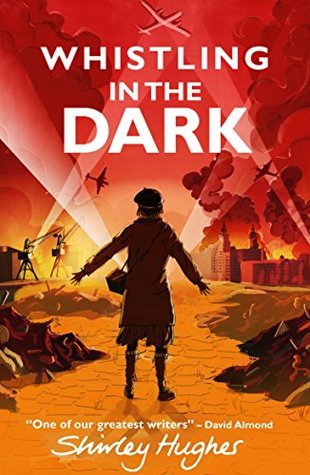
Whistling in the Dark by Shirley Hughes, 2015

Click to view
on Goodreads 
"Well-written and well worth reading." The Bookseller. Liverpool, 1940: thirteen-year-old Joan’s home is under threat from the Nazi’s terrifying nightly air-raids. It is not an easy time to be a teenager, especially with the sweet rationing, strict curfews and blackouts. Joan and best friend Doreen love going to the cinema until the bombings intensify and then even that becomes too dangerous, especially when an army deserter is found lurking near their home. Who is he and why does he think Joan can help him? As the Blitz worsens, Joan and her friends make a discovery that will tear the whole community apart…
(240 pages)

I've read a lot of historical fiction book centered around WWII, and they all take a slightly different angle on the terrible time. A lot of them involve the homefront in some way, so I was a little worried that Whistling in the Dark would struggle to carve its own unique spot in the literature, but I needn't have worried.

One thing I didn't know going into the book is that the author, Shirley Hughes, actually lived through WWII as a teenager living in Liverpool (the town where the book is set). I think that detail adds a little spark to the story that many other books about the time period don't have, just because we know the author really knows what she's talking about when she describes life there at the time.

And really, though it's a little book, there's quite a lot going on. I don't really want to go into the individual plotlines very much, because there would be lots of spoilers, but suffice it to say that Joan is confronted with issues ranging from personal/familial crises to meeting a loner refugee girl in school who doesn't speak English to dealing with the army deserter who is lurking around. They're all resolved in satisfactory and interesting ways, and I really liked reading about it.

Honestly, with all the amazing WWII books out there, I can't say that Whistling in the Dark stands out from the crowd a huge amount. But it's a good book, especially for younger readers who aren't prepared for the full horror of, say, a European Jewish girl's experiences during the war, and I for one really liked it. If you read it, please let us know your thoughts in the comments section down below!

Disclaimer: I received a complimentary copy of this novel from the publisher in exchange for an honest review.
16 October 2017

The Nutcracker Mice by Kristin Kladstrup, 2017

Click to view
on Goodreads 
Hidden in Saint Petersburg's famed Mariinsky Theater are the world's tiniest ballet fans: the Mariinsky mice, including Esmeralda, a rising dancer in the Russian Mouse Ballet Company. Despite being unable to control her tail, Esmeralda has just been assigned the lead role of Clara in a ballet debuting at Christmas: The Nutcracker. But when she learns that the new ballet features mice as villains, her excitement turns to horror: the mice of Saint Petersburg will never come to see such a production. Meanwhile, nine-year-old Irina is convinced that the mice she's seen in the Mariinsky -- the mice her father, the custodian, is supposed to exterminate -- are not only fans of the ballet, but dancers themselves. No one will believe her, so it falls to Irina to help save the mice everyone else considers vermin . . . and perhaps to help Esmeralda ensure the future of the mouse company. Sweet and inventive, Kristin Kladstrup's ballet fantasy features artwork by beloved illustrator Brett Helquist, old-fashioned drama, and just a touch of holiday magic.
(336 pages)

This is the sort of cozy book I would have devoured as a little girl. There's something so appealing about a story set in a far-off country (in this case Russia) during a far-away time (1892) that features anthropomorphic creatures (ballet-dancing talking mice!). Add all the dancing and ballet details to that, plus the one human girl who suspects the truth about the mice, and it's even more absorbing. In addition to all that, the scenario of mice preparing to perform The Nutcracker during its first human performance adds a delicious familiarity and Christmas feeling to the story because I attended performances of The Nutcracker almost every year when I was small.

Thus, before I even try to analyze The Nutcracker Mice objectively, I have to just say that I fell in love with the simple magic the story offers. After so many YA novels and adult nonfiction books, I needed to reading something so simple and pure as The Nutcracker Mice. It felt like a breath of fresh air.

Now, as for the story itself. First you have to get past the implausibility of the idea that mice are not only intelligent, human-like creatures who put on elaborate productions using the music played during the human performances, but also that all the theater mice are trained to read and understand both Russian and French. For some, I suppose that could be a pretty big hurdle; as for me, I counted it as part of the story's charm. I thought it was interesting that Esmerelda is an adult in the story because normally children's books feature protagonists who are in middle school. It made the (pretty slight) romance much stronger, in my opinion, and also made Esmerelda's adventures much more above-board and legit–she wasn't lying to any parents or sneaking out after hours, for example. It was also a little disconcerting, though, because I kept forgetting she was older until random moments when something would remind me.

I also really liked the bits of the story about Irina, the girl who spots Esmerelda practicing her ballet moves one day. She's written very realistically, and the drama surrounding her father's job is very well done.

Honestly, I have a hard time being very objective about The Nutcracker Mouse. It may not be perfect, or unpredictable, but it's a good solid book that I enjoyed and that I know for a fact I would have been completely in love with even a few years ago. If you know a kid with a fanciful imagination, then The Nutcracker Mouse would be a wonderful present for them–especially now while we're close to Christmas time!

Disclaimer: I received a complimentary copy of this novel from the publisher in exchange for an honest review.
04 September 2017

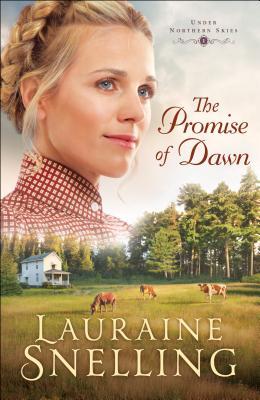
The Promise of Dawn by Lauraine Snelling, 2017

Click to view
on Goodreads 
When Signe, her husband, Rune, and their three boys arrive in Minnesota from Norway to help a relative clear his land of lumber, they dream of owning their own farm and building a life in the New World. But Uncle Einar and Aunt Gird are hard, demanding people, and Signe and her family soon find themselves worked nearly to the bone in order to repay the cost of their voyage. At this rate, they will never have land or a life of their own.

Signe tries to trust God but struggles with anger and bitterness. She has left behind the only life she knew, and while it wasn't an easy life, it wasn't as hard as what she now faces. When a new addition to the family arrives, Signe begins to see how God has been watching over them throughout their ordeal. But after all that has happened, can she still believe in the promise of a bright future?

(276 pages)

Going into reading The Promise of Dawn, I didn't really have a good idea what it would be like. I won it in a giveaway on LibraryThing, and when I entered I'd just kind of assumed it was one of those fluffy Christian romantic historical fictions. I thought it would be kind of meh, but still entertaining, so I took the two seconds to click "Request It."

It turns out that The Promise of Dawn is a lot more serious than I originally expected, and it's not really a romance novel since the main characters are already married with three sons old enough to work for Uncle Einar. It is indeed a Christian novel, though, but the religion in the book is not as cloying as it is in most from the genre. And it is definitely a historical fiction story–which is what I loved best about it!

You see, I'm nearly 1/2 Swedish by descent. My great-grandfather and his family moved from Sweden to Nebraska around the same time Signe and Rune's family move from Norway to Minnesota, so it's easy for me to read about this family's fictional struggles on the American frontier and imagine my own ancestors into their place. True, my great-grandfather was a farmer in a tree-less state while Uncle Einar  is a tree logger, but that's small potatoes. The comparison is still real to me.

Plus, I actually really liked watching Signe fight to bring orderliness and civility into a house that was truly disgusting when she first arrived. Gird is bed-ridden, miserable, and miserly when they arrive; Einar is curt, unpleasant, and solely focused on his tree-logging endeavors to the point of abandoning everything (and everyone) else. It's impossible not to cheer for Signe as she puts the house and farm to rights with the help of her two younger sons and begins the process of helping Gird regain her strength. I also loved watching the way her sons always obeyed her, even though they were growing big and tall and lived during a time when women weren't always given much respect. Seeing the give-and-take of Signe and Rune's relationship was also very satisfying. I also just really liked getting such a different angle on frontier life, focused on the individual struggles of the people making their lives on the frontier rather than on the more publicized "drama" of cowboys and Native American struggles/raids and the like. This is the authentic story of the West, because it's the story of the individual family.

Basically, if you're looking for an character-focused book about Scandinavians moving to the American frontier in the early twentieth century, then The Promise of Dawn fits the bill to a T. Let me know what you think if you read it!


Disclaimer: I received a complimentary copy of this novel through the BookLook Early Reviewers program.

23 June 2017

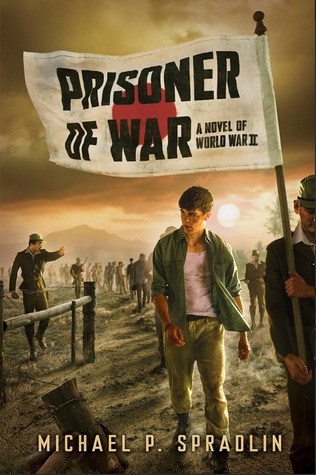
Prisoner of War: A Novel of World War II by Michael P. Spradlin, 2017

Click to view
on Goodreads 
Survive the war. Outlast the enemy. Stay alive.

That's what Henry Forrest has to do. When he lies about his age to join the Marines, Henry never imagines he'll face anything worse than his own father's cruelty. But his unit is shipped off to the Philippines, where the heat is unbearable, the conditions are brutal, and Henry's dreams of careless adventuring are completely dashed.

Then the Japanese invade the islands, and US forces there surrender. As a prisoner of war, Henry faces one horror after another. Yet among his fellow captives, he finds kindness, respect, even brotherhood. A glimmer of light in the darkness. And he'll need to hold tight to the hope they offer if he wants to win the fight for his country, his freedom . . . and his life.

Michael P. Spradlin's latest novel tenderly explores the harsh realities of the Bataan Death March and captivity on the Pacific front during World War II.

(272 pages)

It's so awful. I can't believe that people were so terrible to each other–and this isn't even the Germans in their usual racist evilness, but the Japanese conforming to their archaic, ingrained ideas about proper military behavior. They literally believed that the American soldiers were despicable, subhuman creatures because they'd surrendered territory, something a true Japanese warrior would rather die than do. Or at least, that's the reasoning they gave–I'm sure the men who actually committed the atrocious acts also just enjoyed the feeling of absolute power their positions offered, and the opportunity to punish someone for the pains of WWII.

I have a hard time reviewing books like Prisoner of War because they are so valuable for me to read, literary qualities aside. I'd never read a book directly focused on the experience of captured soldiers in the Philippines (well I guess I have, but not one focused on the men who experienced the Bataan Death March). It's horrible to read about the depths of inhumanity reached during WWII, so I didn't necessarily enjoy reading this, but I felt like it was a necessary read. We need to know the darkest parts of our collective history as a species so we can move forward and prevent the chain of events that would lead to a similar situation ever again.

As an aside, part of me wonders why today's education/society focuses on the murder of European-born Jews to the almost entire drowning out of stories like the Bataan Death March from WWII. So many more Jews than soldiers were killed, of course, but these were our own soldiers who suffered under the Japanese hand. Was there no public backlash when we discovered how completely the Japanese had ignored the Geneva Convention's rules about prisoners of war? Or were we so emotionally devastated by the waves of horror rolling out of newly-liberated European concentration camps that we didn't have the emotional energy to become angry at this fresh piece of brutality? Or perhaps we felt so conflicted about the morality of bombing innocents in Hiroshima and Nagasaki that we didn't think we were in any position to argue against the mistreatment of our soldiers.

Anyway, as far as the actual story is concerned I liked Henry but I never felt like I got to know him super well. The characters are portrayed with as much nuance as the book's short length allows, and it's clear that the author has done a lot of research. It did feel in some parts like the soldiers were idealized a little bit while the Japanese were almost universally pure evil, but that may well have been what it felt like for the real soldiers in Henry's shoes. Anyway, this is a good starting point for anyone interested in this area of WWII. I probably won't be reading any more on the subject just because it's really depressing, but I'm glad I at least read Prisoner of War. If you know of any other good books about life in the Philippines during WWII, post them in the comments section down below so others can check them out!


Disclaimer: I received an unsolicited, complimentary copy of this novel from the publisher in exchange for an honest review.

10 March 2017

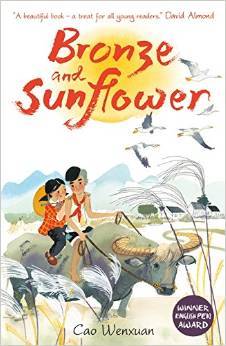
Bronze and Sunflower by Cao Wenxuan, 2017

Click to view
on Goodreads 
When Sunflower, a young city girl, moves to the countryside, she grows to love the reed marsh lands - the endlessly flowing river, the friendly buffalo with their strong backs and shiny, round heads, the sky that stretches on and on in its vastness. However, the days are long, and the little girl is lonely. Then she meets Bronze, who, unable to speak, is ostracized by the other village boys. Soon the pair are inseparable, and when Bronze's family agree to take Sunflower in, it seems that fate has brought him the sister he has always longed for. But life in Damaidi is hard, and Bronze's family can barely afford to feed themselves. Can the little city girl stay here, in this place where she has finally found happiness?
A classic, heartwarming tale set to the backdrop of the Chinese cultural revolution.

(384 pages)

I honestly have no idea how to review Bronze and Sunflower.

I don't know what it is about the book, but I just can't wrap my head around it. I'm actually a little puzzled by the ending, which is still not entirely clear to me even after I've read it a few times. I think that's a translation trouble–in fact, I think a lot of my confusion comes either from translation ambiguousness or cultural differences. Since I know nothing about the Chinese cultural revolution–or indeed about anything in Chinese history, culture, or politics–I have the overwhelming feeling that all sorts of important themes and references are passing right over my head throughout the story.

Because of that, I advise you to take my review with a grain of salt. After all, I'll be the first to admit that I am on very shaky ground here. But anyway, I did enjoy the book. It was very different from my usual fare, rather strange to my American mind (though Chinese readers might find it perfectly normal, I don't know), and very interesting. It felt like a fairytale in many parts, in large part due to its fairly unrealistic characters. Both Bronze and Sunflower seem unrealistically perfect (never squabbling, never selfish, never unpleasant). The levels of sacrifice they're willing to go through for each other makes their relationship very sweet, but also makes both of them ring false to me.

The troubles they face definitely aren't fairytale-like, though. The family is very poor, and they struggle to afford school (eventually deciding to send just Sunflower because, you know, they hadn't thought about the fact that Bronze wouldn't be able to attend school too before they invited her to stay with them). Toward the middle of the story a swarm of locusts comes through and devours everyone's crops, and people begin to starve. Things get really hard, and Wenxuan doesn't pull any punches when he describes what it's like for them.

I may have a few issues with the choices made by the adults throughout the book, but those pale in comparison to the sense of wonder I feel reading a book that was written in an entirely different language from my own, in a world and a culture entirely distinct from mine, and which has given me a peek into the world of Chinese literature. I loved diving into the world of Bronze and Sunflower for a time, as theirs was an engrossing story that provided a fascinating cultural insight for me, but now I'm ready to set it down and return to my usual fare that strikes closer to home. I'l definitely be keeping an eye out for more international novels in the future.


Disclaimer: This is an Amazon affiliate link, and I received a complimentary copy of this novel from the publisher in exchange for an honest review.
20 February 2017

A Note Yet Unsung by Tamera Alexander, 2017

Click to view
on Goodreads 
Despite her training as a master violinist, Rebekah Carrington was denied entry into the Nashville Philharmonic by young conductor Nathaniel Whitcomb, who bowed to public opinion. Now, with a reluctant muse and a recurring pain in his head, he needs her help to finish his symphony. But how can he win back her trust when he's robbed her of her dream?
(448 pages)

I want to start by saying this book is not quite as "soft" a story as the cover and description suggest. It's true that it's essentially a love story, and that most of the pages are full of character descriptions and increasing romantic tension between the two leads, but we also get (relatively vague) flashbacks to the time Rebekah's step-father attempted to rape her in her childhood. There are a few more "modern-day" creepy scenes with the man sprinkled throughout the book, despite Rebekah's attempts to avoid his company at all costs, and the material is still pretty heavy even though it's handled as gently as possible.

Besides Rebekah's relationship with Tate (i.e. Nathaniel Whitcomb), which I'll get to in a moment, there were several storylines that received generous time in the spotlight throughout the book. I was impressed by that, because I always hate when books seem completely wrapped up in the romance with a plot only thrown in as an afterthought. We get to watch Rebekah struggle in a man-dominated world, trying to find a way to join a symphony in an age where women were considered too "delicate" for such grueling work. We also get glimpses (though not quite as much as I would have liked) at Rebekah's strained relationship with her mother, who is completely oblivious to her husband's abuse and bitter about Rebekah's independent and liberal life choices. That storyline doesn't really get a conclusion, which is too bad. We also get to see Rebekah working to tutor a young girl on the violin, but–again–this isn't given as much page space I would have liked.

The biggest "side issue" that's in the book, actually, is probably race relations. The story takes place about a decade or so after the Civil War ended, in Nashville, and Rebekah's own family used to own slaves. They still keep on one or two of them as "servents," and Alexander is careful to depict Rebekah as an open-minded woman who sees African Americans as human beings (and who dearly loves the black housekeeper who essentially raised her). I can't say for sure what struck me as being a little off about the treatment of African Americans in the book, because I honestly think the author did make her heroine as liberal as she possibly could while remaining within the confines of historical realism, but reading about how Rebekah's mother beat her when she went to sing in the slave quarters as a little girl, or about what happened to the black slave who protected her from her stepfather that night, it's sad to see snippets of the racist, slave-upholding society of the period. I suppose my discomfort is more with the basic facts of slavery and of racial discrimination, though, so I don't hold them against A Note Yet Unsung–in fact, I think the book provides a good starting point for thinking about such issues.

Now for the romance. I've left it until the last for a reason, and it's a simple one: I really don't care much for romance. I don't dislike stories about people falling in love per se–I've read many Grace Livingston Hill books just for their cute old-fashioned romances, for example–but I truly hate descriptions of people panting after each other, of how their bodies "thrum" every time they touch or of how their minds stray, in the middle of conversations, to fantasizing about getting physical with the other person. It's fine for characters to be attracted to each other, of course, but when they keep focusing on each others' bodies then that debases the romance for me, turning it from a beautiful meeting of sympathetic minds to a baser lust. I will definitely say that the romance in A Note Yet Unsung is far less obnoxious than many others I've read, and that the main characters clearly clicked on professional and emotional levels before their thoughts got too mushy. They had some ridiculous thoughts, not just about kissing each other but also about realizing "I truly love him!" despite having despised each other for most of their relatively short acquaintance. These lapses into foolishness were relatively few, though, and even near the end of the book they didn't become as cloying as I'd dreaded. The author never loses her grip on the plot of the book, and she introduces some very serious issues throughout the story to keep all readers–even those not interested in the mushy thoughts–hooked.

I won't say this is the best book I've ever read, but I will say it's probably one of the best Christian historical fiction romance novels I've come across. I was impressed with how much substance the book had, despite the fact that it's essentially marketed as a sparkly romance novel, and I'm glad I decided to take the plunge and try a genre I don't usually read. If more books in the Christian romance genre were like this one, then I'd probably read them a little more often.

Disclaimer: I received a complimentary copy of this novel from the publisher in exchange for an honest review.

16 January 2017

In the Shadow of Denali by Tracie Peterson and Kimberly Woodhouse, 2017

Click to view
on Goodreads 
Cassidy Ivanoff and her father John, a wilderness guide, work at a prestigious new hotel outside Mt. McKinley. John's new apprentice, Allan Brennan, finds a friend in Cassidy, but the real reason he's here--to learn the truth about his father's death--is far more dangerous than he knows.
(320 pages)

I hadn't read a "chick flick" book in a long while, so I thought I'd shake things up a bit. I always like books about mountain climbing, and I've never read a book set in Alaska before, so In the Shadow of Denali had all the makings of a unique and grabbing read for me.

And for the most part, it was that. The characters were slightly flat, it's true, and the romance was truely cringe-worthy (and the villain ridiculously stereotypical), but those things honestly didn't bother me as much as they probably should have. The fact is that I really loved Cassidy, who was a good mixture of sweet optimism and realistic emotions. I didn't like the men quite as much (they were all a little too perfect for my taste), but reading about Cassidy's time in the kitchen, all the foods she makes and her growing friendship with the head cook Mrs. Johnson, was what kept me stuck to the story. Mrs. Johnson is probably my favorite character, actually. I can't say much about her backstory, but I really loved watching her gruff outer shell peel away over time!

It does have to be said, though, that the discussions of both romance and religion are almost uniformly hard to read throughout the book. The characters are so obnoxiously slap-you-in-the-face Christian (and so obsessed with making sure everyone thinks exactly the way they do) that it got a little old for me–even though I actually am Christian! It's not like they act like God makes life one big rose-fest, because all of the main characters grapple with some pretty scary/hard things throughout the book, but something about the discussions of faith just felt cheesy and unrealistic to me. There's also a fair bit of instalove, which anyone who has read this blog for long knows is a big pet peeve of mine. Cassidy and Allan barely know each other at all when they start having feelings for each other that they'd never had for anyone else in their entire lives. Despite the fact that they only spend minimal amounts of time with each other and don't really seem to have anything in common, we're supposed to believe they're perfect for each other. Meh. I'd rather have seen Cassidy wind up with Thomas, the seventeen-year-old kitchen boy who has a crush on her–I honestly liked him better than I did Allan, and the age difference could have easily become negligible if the authors had made Cassidy just a year or two younger!

Anyway, you wouldn't guess it from all the negativity in this review but I really did spend a few happy hours reading In the Shadow of Denali. Now that I'm writing out my thoughts I'm realizing just how many little things bugged me about the book, but when I was actually reading it I was sucked in nonetheless. I love Cassidy, Mrs. Johnson, and Thomas, and I have pretty neutral (though certainly not negative) feelings toward Allan and Cassidy's father John. I liked the basic premise of the story and the conflicts that came up, and I loved getting a look at what life was like in Alaska during the 1920s. We even get to read about President and Mrs. Harding staying at the hotel on their 1923 trip to Alaska right before the president's sudden death! I'd never even heard of President Harding, let alone known that he traveled to Alaska.

Basically, I can't recommend In the Shadow of Denali as fine literature. If you're looking for some clean, fluffy (and slightly preachy) entertainment set in a rural Alaska setting, though, then this might just be the book for you. If you do give it a try, comment below to let us know how you like it!

Disclaimer: I received a complimentary copy of this novel from the publisher in exchange for my review.

30 November 2015

Minna's Patchwork Coat by Lauren A. Mills, 2015

Click to view
on Goodreads 
Minna and her family don't have much in their small Appalachian cabin, but "people only need people," Papa always reminds her. Unable to afford a winter coat to wear to school, she's forced to use an old feed sack to keep her warm. Then Papa's terrible cough from working in the coal mines takes him away forever, and Minna has a hard time believing that anything will be right again...until her neighbors work tirelessly to create a coat for her out of old fabric scraps. Now Minna must show her teasing classmates that her coat is more than just rags--it's a collection of their own cherished memories, each with a story to share.
(288 pages)

First, let me just say that I debated about putting that teaser at the top of the page. The story isn't plotted out at all the way it suggests, and it isn't actually until the end of the book that Minna actually takes her patchwork coat to school.

Marketing quibbles aside, though, let's talk story. I thought this was a really cool one, because it took something I knew very little about (life in the Appalachians), and turned it into a fascinating background for the story. Minna's Patchwork Coat is full of poignant messages about family, friendship, and racism, and all the way those three subjects can be woven together. A boy, Lester, who's part African America, part white, and part Native American is despised by everyone but the Native American grandmother he lives with - until he and Minna become friends. His grandmother, Aunt Nora, is so smart and so good at healing and yet is left so entirely out of the community because of the color of her skin. And Minna, of course, is just as cut out of the community, but for a different reason: she's so poor she can't afford a coat.

This is a really good example of how middle grade novels can still dig into deep topics and come up with some serious themes, without ever straying onto edgy territory. Minna's Patchwork Coat is a wonderful book for kids of any age, full of no more violence than the (unseen) death of Minna's convalescent father. It is somehow a gentle book, even as it depicts grief and racism and bullying and everything else Minna struggles with throughout the book - gentle, because it's honest without ever once beginning to relish its harsher themes. It comes across as a very honest book, portraying the true emotions and experiences of a little girl growing up in the Appalachians - one whose father dies, whose best friend is shunned by the rest of her society, and whose family is so poor she literally can't go to school because she doesn't have a warm coat for walking to school in the winter.

I think kids will appreciate the straight-forward depiction of Minna's reality, while still being enchanted by the stories behind the patchwork coat. I know I certainly would have loved Minna's Patchwork Coat at a younger age, because I would enjoy the mix of historical fiction (I always loved books that made me feel smart by teaching me something) and optimism. For at its core, despite the hard themes that run through it, Minna's Patchwork Coat is a story about an extremely optimistic girl who learns some sad truths but still does her part to draw her community together through the patchwork coat made from their most beloved memories.

Do I recommend it? Yes. I'm not going to say I think everyone should run out and buy it this instant, but I do think it's a good book. It's worth a read it it's handy, and it's definitely worth looking into if you know a kid who's into historical fiction.

Disclaimer: I received an ARC of this book from KidLitCon.

30 March 2015

The Whispering Mountain by Joan Aiken, 1968

Click to view
on Goodreads 
In the small town of Pennygaff, where Owen has been sent to live after his mother’s death, a legendary golden harp has been found. Knowing of the prophesy of the Harp of Teirtu, Owen must prevent the magic harp from falling into the evil clutches of its reputed owner, the sinister and diabolical Lord Mayln. But it won’t be easy. Owen and his friend Arabis are plunged into a hair-raising adventure of intrigue, kidnapping, exotic underground worlds, savage beasts...even murder.
For only too late will Owen learn that Lord Mayln will stop at nothing to have the golden harp.
(240 pages)


I love Joan Aiken's books so much. Every year or so I go on an Aiken kick where I read a bunch of books in her amazing Wolves series. The thing about those books is that they always look so boring from the cover description and synopsis, but are actually amazing books full of humor, terror, mischief, and clever plot twists that make things fun. You always know the young main characters won't come to any real harm, but anyone else is fair game. Aiken's books are written for a less sheltered generation of children, where murder and terror are part of the story. This serves to increase the tension, and sweeten the reward.

Now for this specific book. I picked it up for a quarter at a flea market, very excited to find a Joan Aiken I hadn't read yet. I read it in one sitting (staying up a bit later than I really should have, more from an unwillingness to go to sleep than any driving desire to finish the book), and - well, and then I fell asleep. It was good, but it wasn't exactly thrilling.

This is a book with many pieces and people and plot devices, all rolled together in a way that makes things seem ridiculously complicated at first, but actually winds up fitting together perfectly in the end. There is a father and daughter team of gypsies, a nerdy-yet-inwardly-strong young boy, two nasty thieves, a prince, an evil Marquess (It took me a while to get it straight in my head that this is a male term), a monk, a foreign Seljuk (apparently some sort of Rajah), a bunch of dwarf-people, and many more wildly different characters. This is a story told in bits and pieces, where everyone pursues the truth from a different angle and then at the end of the book figure out the whole picture by talking to everyone else. This  is a very clever way of telling the tale, because there are many "mini books" inside the big book, with the various main characters ducking and weaving throughout the stories of the other characters.

However, it's the story itself that just doesn't really appeal to me. Aiken is a genius at taking seemingly worn-out tales and making them fresh, but it just didn't happen for me with this one. Arabis is like a mix between Aiken's other main female characters, Sophie and Dido, and I have to say I like the others better. Ditto for Owen - I liked him, but I like Simon better. According to Goodreads this is book 0 in the Wolves chronicles (does that mean it's a prequel?). I don't really see how it fits in with the others at all, except for its similar time-setting. I love the later books far, far more, from the wonderful Wolves of Willoughby Chase that I first read in lower elementary school, to Black Hearts in Battersea, which is one of my later-discovered favorites.

If you love old-fashioned adventures full of danger, excitement, humor, and compelling characters, then I wholeheartedly recommend you read this series. I'm sure that many would like this book, but for me at least it just felt a bit too ordinary - and I kept getting flashbacks to George McDonald's The Princess and the Goblins. If you're a fan of the series and haven't gotten around to this one yet, then by all means read it. It's not that it's bad by any definition of the word - it's just not as good as many of the other books in the series. If you have never read a Joan Aiken and you want to, then start with The Wolves of Willoughby Chase or Black Hearts in Battersea. Trust me, you'll be happy you did.

09 January 2015

Mark of the Thief by Jennifer A. Nielsen, 2015


When Nic, a slave in the mines outside of Rome, is forced to enter a sealed cavern containing the lost treasures of Julius Caesar, he finds much more than gold and gemstones: He discovers an ancient bulla, an amulet that belonged to the great Caesar and is filled with a magic once reserved for the Gods -- magic some Romans would kill for. Now, with the deadly power of the bulla pulsing through his veins, Nic is determined to become free. But instead, he finds himself at the center of a ruthless conspiracy to overthrow the emperor and spark the Praetor War, a battle to destroy Rome from within. Traitors and spies lurk at every turn, each more desperate than the next to use Nic's newfound powers for their own dark purposes.
In a quest to stop the rebellion, save Rome, and secure his own freedom, Nic must harness the magic within himself and defeat the empire's most powerful and savage leaders. 
(352 pages)

I have been reading/loving Nielsen's Ascendance Trilogy books for a couple of years now (click here to read my review of the first book in that series, The False Prince). When the last book, The Shadow Throne, was coming out I participated desperately in every giveaway the author offered but didn't win. Not one to let failure stop me, I ordered it from Amazon instead and read it within twenty-four hours of its release.

This is why I find it particularly cool that I won a giveaway of Mark of the Thief, the first book in a new series by Nielsen. Not only do I now have her autograph (squeal!), I got to read her new book two months before its release date.

And let me just say, how amazing it was to be able to read this wonderful book early! I went into it with a large amount of hope for the new series but not a little fear as well - what if it wasn't any good? What if it was just a cliche rehash of other books I've read? I was worried, because The False Prince borrowed a lot in terms of plot from other books/series. While Nielsen totally pulled it off then, and I adore the book to pieces, I was worried she would wind up pulling from the same bag of tricks for this series. And in the first few chapters, I thought my fears were confirmed: Nic seemed like a rehash of the cocky-but-brilliant Sage  (but where Sage was witty and fantastic, Nic seemed to just have an inflated ego for a slave). I sensed some sort of family secret a long way off, and the insta-hate between Nic and Aurelia just screamed "romance."

However, as I was sucked farther and farther into the complicated world of deceit, treason, and mixed motives that was Ancient Rome, the more I realized what a different story Nielsen had created. While Nic may have shared similarities with Sage on the surface, once the book gets going it's clear to see that he has a different personality than Sage. This is most clear when you compare the ways Sage was always planning three steps ahead and laying out elaborate plots to get people to do what he wanted. Nic is not a plotter and a planner like Sage was; his brainpower is used attempt to figure out who is on his side and how he can manage not to be killed.

As for the family secret and the insta-hate with Aurelia (by the way, love the name!), at the risk of spoilers all I can say is that the "family secret" aspect plays a rather minimal role in the book and isn't really that huge of a shock (especially when compared with The False Prince). It has potential to make the next book pretty interesting, though. And the insta-hate/inevitable-romance thread actually straightens itself out very nicely. Aurelia is probably already more fleshed out than Amarinda ever was, and I'm looking forward to watching what she does next - both with Nic, and on her own. She's a complex, interesting character instead of the cliche "two-dimensional warrior girl with some sort of grudge against the main character" that I thought she was the first time I saw her. I can't wait to see her in the next book!


The setting is phenomenal, the plot complicated (Who are the bad guys here? Who wants Nic dead?) but never convoluted or confusing, and the characterization solid with lots of room for additions later. While I still love The False Prince better (let's be honest, I don't think anything can surpass that book on my favorites list!), I still spent several enjoyable hours reading this book and look forward to reading it again. If you think it looks at all interesting, or are a fan of the author because of the Ascendance trilogy, then by all means read this book! For those of you who are interested in getting it from the library or buying it, it comes out February 24. And if you do read it, please post below to tell me what you think!

Disclaimer: I won a copy of this book through a giveaway offered by the author. She did not ask me to review it, and the opinions expressed in the above review are entirely my own.

17 January 2014

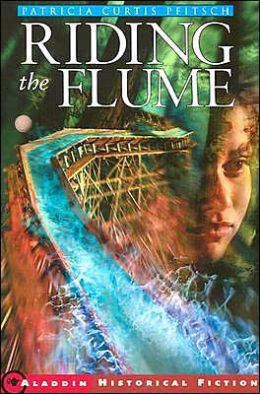
Riding the Flume by Patricia Curtis Pfitsch, 2002

Don't tell anyone -- the only safety is in secrecy. During the summer of 1894 the giant sequoia trees -- the oldest living things on earth -- are being felled for lumber in northern California. When fifteen-year-old Francie finds a note hidden in the stump of an old sequoia, she immediately recognizes her sister's handwriting. But Carrie died in an accident six years ago. Could Carrie's secret still be important?

Francie's search for the truth turns dangerous, and she needs to get to St. Joseph fast. She's faced with the choice of either giving up, or riding the flume, a rickety track that carries lumber from the mills in the mountains to the lumberyard in St. Joseph. Should Francie risk her life for the secret her sister fought to keep?


This is a beautiful book that I first read 6/7 years ago, and I have loved it ever since.

Francie lives in a logging town situated by a large forest of sequoia trees which are rapidly being cut down for lumber. Her father runs a hotel that prospers due to the logging, and is all for it. Francie is not as enthusiastic as her father, but there is nothing she can do. She is busy helping at the hotel and counting the tree rings on a dead sequoia for a man who is writing a newspaper article to try to make people see how bad it is to cut down the trees. But Francie also has a ghost to live with - a memory of her older sister Carrie, the headstrong, adventurous girl who died years before in a land slide up on the mountain. As the years have passed Francie has grown to resemble Carrie a great deal, much to the sorrow of her parents. In little things like wearing her hair differently she tries to mask the resemblance, but she knows that every time they look at her, they see her more vibrant, more alive sister - the one she thinks more deserved to live.


This is a touching, sad story about a girl finding her own place in a world that will always remember her vibrant sister, and about learning to step up to the plate and speak your mind about things. Because when Francie and her cousin (Carrie's best friend) find a note Carrie wrote before her death, they uncover a secret - a beautiful tree, a king of the forest, that Carrie claims belonged to her. And the loggers will do anything to bring it down.

Although the actual flume riding is a very small portion of the book, I can't think of any title that would fit this book better. Parents, this book has nothing bad in it whatsoever, except for dealing with Francie and her family's very real pain, and the horror they feel from Carrie's accident. It is not gruesome, it is not vulgar, there is absolutely no romance, and it even mixes in some very real history that makes you want to google the real sequoias! I read it at seven, and absolutely adored it. Of course, don't take this to mean older people won't like it! I started reading very young, and as I get older I discover more layers to the books I read when I was younger, things I skipped as a little girl. This is a wonderful book that will make you cry, and will leave you with a great feeling of finality and triumph.