Showing posts with label Jews. Show all posts

10 July 2017

My Brother's Keeper by Rod Gragg, 2016

Click to view
on Goodreads 
Thirty captivating profiles of Christians who risked everything to rescue their Jewish neighbors from Nazi terror during the Holocaust. 

MY BROTHER'S KEEPER unfolds powerful stories of Christians from across denominations who gave everything they had to save the Jewish people from the evils of the Holocaust. This unlikely group of believers, later honored by the nation of Israel as "The Righteous Among the Nations," includes ordinary teenage girls, pastors, priests, a German army officer, a former Italian fascist, an international spy, and even a princess.
In one gripping profile after another, these extraordinary historical accounts offer stories of steadfast believers who together helped thousands of Jewish individuals and families to safety. Many of these everyday heroes perished alongside the very people they were trying to protect. There is no doubt that all of their stories showcase the best of humanity--even in the face of unthinkable evil.
(352 pages)

I asked to review My Brother's Keeper because it looked like a really great compilation of nonfictional stories from WWII, but once it actually showed up on my doorstep I continually put off cracking it open because I thought it would be too depressing (and also because it looked kind of boring).

It wasn't boring, though. Come to think of it, I've never read a book about the treatment of Jews during WWII that was boring–everything was just so horrific back then that even the most snooze-inducing historian couldn't dull the horrifying tales. As for my other concern, yes, My Brother's Keeper was definitely depressing. Its description of the systematic hunting down and wiping out of an entire race is horrifyingly detailed, and primary source quotes and images are used hauntingly throughout the book. Every chapter opens with a black and white image, occasionally of the featured person/family but often of German soldiers or real children who were murdered in concentration camps. In the beginning of the chapter there's a little bit of background on the featured figures, a detailed description of the historical context and the evils that they faced (including some truly horrific descriptions of German murder techniques), and then a detailed account of how they risked their lives to help the Jews and what happened to them afterward. I'd say that most of the featured people wound up surviving the war, though a large amount of them spent at least some time in a concentration camp. In one or two instances, the heroes–and their entire families–were murdered outright for their "crimes" under German law.

Honestly, it's pretty amazing to read about the people who risked everything to help save hundreds (sometimes thousands) of Jews from the Germans. Many heroes found it incomprehensible that the Jewish children were also being targeted, so they set up elaborate systems that rescued thousands of young innocents right out from under the Germans' grasp. It's amazing. But at the same time, I can't believe the depths of inhumanity that went on during the war. It's great that there were some heroes who rescued children, sure, but it's also horrifying to learn that 1.5 million kids died during the Holocaust. That's obscene. That's . . . I can't even find words for it. Monstrous fits, but it's not even enough. The actions of the people described in the book were amazing, incredibly brave, but they didn't even begin to conquer out the terrible evil of all the people who perpetrated the murder of innocents–or all of those who sat by and watched them do it. Gragg discusses the fact that many Christians throughout Europe allowed themselves to get swept up by the Germans, swearing their loyalty to the Third Reich and turning their backs on their Jewish neighbors, but he says that all of the people in My Brother's Keeper channeled their belief in God toward a conviction that they had to help the Jews in whatever way they could. I think that's amazing, but again–I only wish that more people, Christian or atheist or whatever, had stood up to the monstrosity of the Nazis.

But then I stop and wonder what I would have done in their shoes, and I'm afraid that I would have shut up and put my head down in order to save myself. And even if I worked up the courage to sacrifice myself, it's hard to decide whether it's worth saving others at the risk of having all of my loved ones murdered. It was an impossible time, an impossible situation. The Nazis were truly monsters in every sense of the word, and the noble secret actions of these thirty heroes (and of many more, I'm sure!) are even more incredible in contrast to the inhumanity surrounding them. I weep for all those they couldn't save, but I still celebrate every life they managed to save.


Disclaimer: I received a complimentary copy of this book from the publisher in exchange for an honest review.

05 June 2017

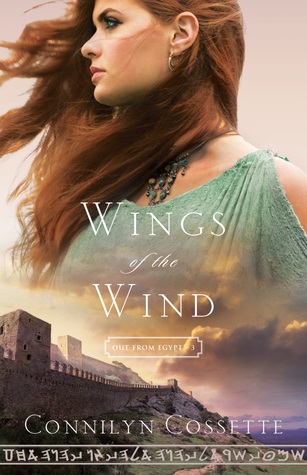
Wings of the Wind by Connilyn Cossette, 2017

Click to view
on Goodreads 
Alanah, a Canaanite, is no stranger to fighting and survival. When her family is killed in battle with the Hebrews, she disguises herself and sneaks onto the battlefield to avenge her family. The one thing she never counted on was surviving.
Tobiah, a Hebrew warrior, is shocked to find an unconscious, wounded woman among the Canaanite casualties. Compelled to bring her to a Hebrew healer back at their camp, he is soon confronted with a truth he can’t ignore: the only way to protect this enemy is to marry her.
Unused to being weak and vulnerable, Alanah submits to the marriage—for now. As she comes to know and respect Tobiah and his people, however, she begins to second-guess her plans of escape. But when her past has painfully unanticipated consequences, the tentative peace she’s found with Tobiah, the Hebrews, and Yahweh is shaken to the core. Can Alanah’s fierce heart and strength withstand the ensuing threats to her life and all she’s come to love?

(352 pages)

I have read very, very few books set before the lifetime of Christ.

Actually, make that books set before the Renaissance. Or maybe even books set before the 1700s. Really, most of the novels I read seem to either be fantasy stories (i.e. not set in our timeline) or based in more modern times. That's why I was really intrigued by Wings of the Wind, which promised to tell a fascinating romance story set during the battles between the Canaanites and the Israelites near the end of the forty years in the desert after God's people had fled from Egypt.

And it delivered. I honestly really, really enjoyed reading Wings of the Wind. I have no idea how historically accurate it was, but it seemed well-researched and relatively plausible. The characters are all realistic, and though I saw some of the plot twists coming from a mile away I definitely didn't foresee how everything wound wind up tying back to the biblical narrative. The romance between Alanah and Tobiah is relatively gradual and realistic, and not as creepy as the whole forced marriage plotline could have gone. I liked them together and was rooting throughout everything for them to stay together throughout everything that was happening. I also really liked the depiction of Yahweh, because he was so active in the Israelites' lives during this period and I think Cossette depicted his powerful justice and simultaneous mercy very skillfully.

That being said, I do want to warn potential readers that this book doesn't pull any punches. There are many references to what soldiers do to unarmed women they come across, and of Alanah's desperation not to let that happen to her, especially at the beginning of the book. Then there are some scenes that describe a couple in love and some *ahem* morning after scenes. Later in the book, Alanah encounters another city that is teeming with vice and prostitutes. Basically, there are a lot of references to both having sex and avoiding molestation throughout the book that I thought were a little bit much. In her author's note, however, Cossette explains her choice to include the atrocities committed by the Canaanites by describing her desire to provide a clear-eyed look at the people who were being wiped out. I still don't know that I can totally be okay with wiping out a whole people in order to steal their land, but I suppose God must have known what he was doing.

Anyway, this is one of the most well-written and fascinating Christian fiction/romance books I've ever read, and–with a warning about the mature material it includes–I do recommend it highly. If you're in the mood for this sort of book, then just know that Wings of the Wind is one of the good ones.


Disclaimer: I received a complimentary copy of this novel from the publisher in exchange for an honest review.

17 February 2017

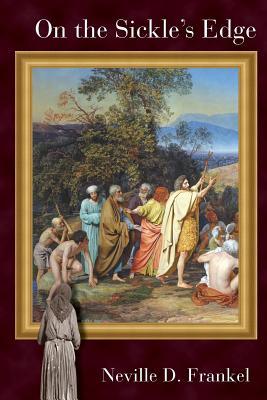
On the Sickle's Edge by Neville D. Frankel, 2017

Click to view
on publisher's site  
What we cannot keep. What we cannot lose.
A sweeping masterwork of love and loss, secrets and survival, On the Sickle's Edge is told through the voices of three characters who lay bare their family's saga: the endearing, scrappy South-African born Lena, transported to Latvia and later trapped in the USSR; her granddaughter Darya, a true Communist whose growing disillusionment with Soviet ideology places her family at mortal risk; and Steven, a painter from Boston who inadvertently stumbles into the tangled web of his family's past. Against the roiling backdrop of twentieth-century Russia and Eastern Europe, the novel delivers equal parts historical drama, political thriller and poignant love story.
(432 pages)

Okay, first, full disclosure: there is no way on earth that I would have finished reading On the Sickle's Edge if it weren't for the fact that I hadn't promised to review it for a TLC book tour. As it is, I wound up skipping in the second half. It's not that the book is poorly written, because it actually grabs the attention very well for an over 400-page historical novel. I've always been fascinated by the horrors of life under the USSR regime (in part because they're given far too little attention in literature due to WWII), and the actual story of this increasingly-growing Jewish family hiding in plain sight in Moscow is gripping and very meaningful for me to read. My favorite point-of-view was Lena's, because she had the most dramatic and fascinating life of all three of the main characters. Also, most of the drama Darya and Steven faced was self-inflicted; Lena was the true innocent of the story, the girl whose life was ripped away from her by the cruelty of the USSR dictatorship.

So . . . what happened? Why did I almost put On the Sickle's Edge down, and why did I finish it with a sour taste in my mouth? I think a lot of my distaste for the book boils down to the fact that it's an adult novel, and I very much prefer middle-grade and young-adult books. I forgot, in my excitement about this book's topic, that so many fictional adult books have way more graphic content than I'm used to. And I'm not talking about violence–there was that too, of course, but that was to be expected. No, I'm talking about sex. For one thing, all three characters are way to easy about it; Steven is particularly promiscuous. I could still mostly forgive the book for its characters' loose morals, excusing them away as accurate depictions of the way people in their situations behaved, but what I can't be okay with are the graphic sex scenes (including ones between distant cousins–still kind of ew!) that are sprinkled into the text. I have no desire to read content like that, so I did my best to skip over them and plow through in honor of my pledge to review the book. When the author started throwing important dialogue pieces into the middle of those scenes, though, that's when I got really frustrated and started skipping pages to just get through the book already. There's some horrible stuff in there, including several times where Darya's husband clearly rapes her, and I just don't want to read that!

Call me a baby if you want, but that's how I feel. I don't have much more to say about the book, besides the fact that it's so complex and historically significant that more liberal readers than I will probably love it. Oh, and also that Darya's husband was so evil I actually found him very unrealistic. Were there men like him in the USSR? Maybe, but it seems strange that he never showed even the slightest sign of humanity or weakness–ever.

Maybe I'm just not the right audience for this book, so maybe you will like it more than I did. If you've read the description, and what I've described doesn't turn you off, then try On the Sickle's Edge for yourself. Be sure to comment below with your thoughts once you've finished it!

Disclaimer: I received a complimentary copy of this novel for the purpose of participating in a TLC Book Tour.

07 November 2014

A Faraway Island by Annika Thor, 2009

Synopsis (from Amazon)

It's the summer of 1939. Two Jewish sisters from Vienna—12-year-old Stephie Steiner and seven-year-old Nellie—are sent to Sweden to escape the Nazis. They expect to stay there six months, until their parents can flee to Amsterdam; then all four will go to America. But as the world war intensifies, the girls remain, each with her own host family, on a rugged island off the western coast of Sweden.
Nellie quickly settles in to her new surroundings. Not so for Stephie, who finds it hard to adapt; she feels stranded at the end of the world, with a foster mother who's as unforgiving as the island itself. It's no wonder Stephie doesn't let on that the most popular girl at school becomes her bitter enemy, or that she endures the wounding slights of certain villagers. Her main worry, though, is her parents—and whether she will ever see them again.

11/1/14
I just finished A Faraway Island, and I really liked it. It's not going on my top ten list of 
favorites, but it was really good. I've already begun the sequel, but I'll review A Faraway Island once I've finished that.

A few days later:
Okay, I have now finished the sequel (The Lily Pond) and am bemoaning the fact that the third and fourth books of the series have not been translated into English yet. You see, they were originally written in Swedish!

The book is written in third person present tense, from the point of view of the fictional twelve-year-old Stephie. Stephie and her sister Nellie are two of only five hundred Austrian children who were offered asylum by the Swedish, and I frankly hadn't known anything about the Swedish point of view of World War II. It was very interesting for me to read about the lives of the Swedish during WWII, in part because I am actually half Swedish.

The characterization in the book was good, but not to the point of drawing attention away from the story. Stephie is essentially supposed to be a stand-in for the reader - or at least, that's what she was for me. When I was reading this book I forgot that I was reading about someone else, and became Stephie. I felt perfect empathy with her, despite the fact that I've never been to Austria, World War II has been over for decades, and my real parents were literally in the same house as me for most of the duration of my reading. That didn't matter, because I was sucked in and I felt Stephie's pain. And that's why I enjoyed this book so much.

The secondary characters are still good, but not perfect. My favorite is probably Auntie Marta (with a mark over the "a"), because she's so much deeper than she seems at first (and because I have a thing for tough-love characters). Nellie was shallow and callous, and didn't care at all that she was losing her very heritage as she dropped her native German tongue for the more popular Swedish language. Then again, she was seven years old so what can you expect? She acted her age, even though I might not like it. There's some pretty interesting side threads with two of Stephie's school friends, neither of which I really loved. One of the girls she makes friends with is the illegitimate daughter of a man who died at sea before he married his fiance. She and her mother are sort of the scum of the town, but Stephie doesn't care. It's a nice story line, it just felt kind of dry and cliche.

The other friend Stephie makes at school is more on the in crowd. She's a bit of a goody-goody, and there's a scene later in the book she says that Stephie needs to do something or otherwise Jesus will be mad at her. Forget the fact that I don't agree with the Pentecostal religion that the people on the island follow (seriously, who is this girl to say whether Jesus will be mad at Stephie?!), I just think that's so obnoxious. Stephie. a Jew who was baptized before she even spoke English, gets very mad at her friend and tells her that Jesus doesn't exist. Of course she regrets that later, and I do believe that Jesus exists, but I'm still on her side in that scene.

As a whole, this is a great WWII book. You get to see a lot of the struggles that children who were separated from their families went through, and I never felt like it was fake. The sequel is also well-written, but I didn't find the subject matter as a whole (Stephie delves a bit more into the tween crush phase than I really enjoy reading about) as compelling as this book.

Are you interested in WWII books? Post your favorites in the comments, or ask for recommendations!