Showing posts with label history. Show all posts

21 September 2021

Mudlarking: Lost and Found on the River Thames by Lara Maiklem, 2019

Click to view 
on Goodreads
A lyrical and evocative narrative history of London and its people, told through objects found on the banks of the Thames by the city's most prominent mudlark
For thousands of years human beings have been losing their possessions and dumping their rubbish in the River Thames, making it the longest and most varied archaeological site in the world. For those in the know, the muddy stretches provide a tangible link with the past, a connection to the natural world, and an oasis of calm in a chaotic city...
For fifteen years, Lara Maiklem has walked the Thames foreshore, spending innumerable hours peering into the mud for items discarded by past generations of Londoners. The list of things Lara has rescued from the river is long and varied: from Neolithic flints, Roman hair pins and medieval shoe buckles to Tudor buttons, Georgian clay pipes, seventeenth-century love tokens and discarded war medals.
Mudlarking is the story of the River Thames and its people, told through the objects that Lara has eased from its muddy clutches over the years. Weaving her story through and around the history of the River, from prehistory to the present day, she uses her finds to bring the ordinary lives of long forgotten Londoners to life.
(295 pages)

I moved to London last month. I've been looking forward to this for six months, and it seems like there are a million reasons to be excited to be here. One of the biggest to me, however, is the history of the city. I love the idea that I live somewhere people have been making history for literally thousands of year. I've been fascinated with the idea of mudlarking the Thames since I learned about it several years ago on a VlogBrothers video, and it was one of the first things I wanted to try once I arrived.

That's why I snagged a copy of this book when I was at a bookshop in my first week here. And I'm glad I did. Because Maiklem's love and knowledge of the Thames leaks through every page, heightening my own excitement to discover the history that's "up for grabs" every time the shore recedes. It's a delightfully meandering exploration of some of her favourite mudlarking spots, complete with descriptions of the items she's found in specific spots (and the history she's either researched or imagined for each one). Some of her exploits sound more appealing to me than others - I don't think I'm quite as hardcore as she is as far as miles of mud and fast-moving tides are concerned - but overall I finished the book feeling super pumped to go out there and find some items of my own.

I've only gone out once yet so far, and that was just for twenty minutes. But I found some nails and bits of pottery that lit up my imagination and left me excited for more. The history of London is insane, and I'm obsessed with the idea that the tangible pieces of its past have been left behind in the Thames for me to find them. Mailkem's narrative has enhanced my excitement for this. I just bought her Field Guide to Larking, which I'm looking forward to using to learn how to mudlark myself.

18 January 2019

Dreaming in Code: Ada Byron Lovelace, Computer Pioneer by Emily Arnold McCully, 2019

Click to view
on Goodreads 
This illuminating biography reveals how the daughter of Lord Byron, Britain's most infamous Romantic poet, became the world's first computer programmer.

Even by 1800s standards, Ada Byron Lovelace had an unusual upbringing. Her strict mother worked hard at cultivating her own role as the long-suffering ex-wife of bad-boy poet Lord Byron while raising Ada in isolation. Tutored by the brightest minds, Ada developed a hunger for mental puzzles, mathematical conundrums, and scientific discovery that kept pace with the breathtaking advances of the industrial and social revolutions taking place in Europe. At seventeen, Ada met eccentric inventor Charles Babbage, a kindred spirit. Their ensuing collaborations resulted in ideas and concepts that presaged computer programming by almost two hundred years, and Ada Lovelace is now recognized as a pioneer and prophet of the information age. Award-winning author Emily Arnold McCully opens the window on a peculiar and singular intellect, shaped -- and hampered -- by history, social norms, and family dysfunction. The result is a portrait that is at once remarkable and fascinating, tragic and triumphant.

(176 pages)

As a girl studying computer science, I have become more and more aware of Ada Lovelace's name over the past few years. Going into Dreaming in Code, I knew that she was considered one of the forebears of computer science, and that she had worked alongside a man named Charles Babbage to develop an early prototype.

Those facts, I've found, are only partially right. I have to admit that I'm not as impressed with her as I hoped I'd be. Ada Lovelace was a very intelligent woman, with a passion for math and engineering, who basically kept up a correspondence with Babbage while he was working on his inventions. She was remarkable in her ability to comprehend the complex working of his machines and his ideas, in a time when almost no one else did, but the only real advancement that she herself ever really made in the field was her series of observations about Babbage's machines in the end notes of a translation she did of L. F. Menabrea's "Sketch of the Analytical Engine Invented by Charles Babbage." It's pretty cool to read the very first algorithm, in Note G, and to see her use the concepts of looping and branching that we still use all the time in programming today. But other than that, and an assertion that computers can only ever do what we already know how to program them how to do (something which has been contested since Alan Turing, and which machine learning has certainly destroyed), she really didn't do much else for computing.

I hate to say it, because I loved the idea of learning about this kick-butt woman defying all the odds to become the mother of computing, but it sounds like Babbage was actually much more dedicated, productive, and, frankly, important to the history of computing. Lovelace got obsessed with Babbage's work and was a good sounding board for him, and she certainly made some important leaps of logic that he might not have been able to find, but I don't really see why her work is considered so pivotal. If she hadn't been involved, it sounds like computers still would have developed just fine.

Anyway, I'm sorry I come across so negative in this review. I'm just disappointed that the famed Ada Lovelace I've heard so much about didn't quite live up to the hype. But anyway, I did really like this book which took a practical, chronological approach to describing her life. I recommend it for anyone interested in her work, though I do have to warn you that it may not be suitable for children. There are quite a few references to infidelity, both on the part of Ada's father, Lord Byron (quite egregiously) and, to a much lesser extent, Ada herself. There is also a mention of the rumors that Byron fathered a girl with his own half-sister, which is just so yuck. Also, this isn't so inappropriate but still very frustrating, her mother was a completely narcissistic controlling monster who didn't even tell Ada that her father was Lord Byron until she was an adult. So there's that.

Disclaimer: I received a complimentary copy of this book from the publisher in exchange for an honest review.

27 November 2017

Crossing the Line by Bibi Belford, 2017

Click to view
on Goodreads 
Billy’s family has fallen on hard times, what with his da hospitalized after the war and his ma barely scraping by. But it’s no hardship for him when there’s not enough money to pay the tuition for Nativity of Our Lord, the private Catholic school everyone in his neighborhood attends. Billy’s not big on education.

When he transfers to James Ward, a Chicago public school, he finds out there’s a big difference at public school: the kids aren’t all Irish—in fact, they aren’t even all white. It isn’t long before Billy’s found a new best friend in Foster, another fifth grader who also doesn’t have any money, loves baseball, and just happens to be black.


Billy is pretty sure skin color doesn’t matter. Not when he and Foster are just horsing around, playing baseball, working on the docks of the canal, and building a raft at their secret hideout on Bridgeport’s Bubbly Creek. But in the Red Summer of 1919, it does matter.


Whew. I had no idea what I was getting into when I picked up Crossing the Line: I thought it was going to be a rather run-of-the-mill middle-grade novel about some kids who learn to be friends across color lines and defend their choices to the outside world (along the lines of Kristin Levine's The Lions of Little Rock). I suppose it did feature those topics, but there's so much more going on in Crossing the Line than just "crossing social boundaries."

The main character Billy learns some very hard truths over the course of the book. Truths like that some of his friends and family are racist. And that in 1919, with not enough money or jobs to go around, racism can rear its head in terrible, gruesome ways. He learns to walk a thin line, staying pleasant to his racist white friends and keeping distant from his black friends in public but spending all of his free time playing in the woods with his best friend Foster (who is black) and Foster's two older brothers. He hates hiding his friendship with the black boys, feels like a coward for pretending not to know them in public, but he grows to realize over time that by being "selfish" and protecting himself he's actually protecting them from all sorts of terrible things at the hands of the racists.

Belford has said that she decided to write Crossing the Line after gradually becoming aware of her own white privilege, and I definitely see that influence in the book. Billy is forced throughout the story to notice and despise all the ways, little and big, that the color of his skin grant him access to both places and freedoms that Foster isn't allowed. He goes from being nearly oblivious to the inequalities in his world to seeing them everywhere, and he struggles with feeling guilty and trying to find ways to help Foster and his brothers that don't put them in even more danger.

Billy's struggle to recognize, internalize, and prevent the evils of racism is the biggest focus of the book, but there are many other themes tied into the story that make it even more meaningful and thought-provoking. There are no absolutes in this book, no pure good guys and very few total bad guys. Billy's racist best friend Tommy seems like a monster when he's talking about "the blacks who steal our jobs," but he also comes from a deeply troubled, abusive home and has still been a wonderful friend to Billy in some of his most vulnerable moments (including when his da returned with debilitating shell-shock from WWI). Billy's da himself was a wonderful man on the race issue, teaching his children to respect people of all races, but he was also quite sexist: he didn't think his oldest daughter needed to go to high school because all a woman needed to know was how to cook and keep house. And don't even get me started on the policeman, the secretive Russian lodger, Billy's put-upon older sister Mary, and the myriad other side characters who are each drawn with their own nuanced personalities.

Honestly, I absolutely loved Crossing the Line. It's gritty and real and honest in a way that's still okay for younger readers. But that same grittiness and realness and honesty forces me to put a qualification on my recommendation of it: beware giving this book to the gentle children you know, because I promise it will upset (and possibly traumatize) them. There's a scene involving a puppy getting hit with a glass bottle that's not described in detail, but which could also be very upsetting for animal lovers. But once a kid is old enough, this is a book that they need to read. Honestly, I would say that this is a book that everyone needs to read at some point or another. It's definitely far and away one of the best books I've read this year–and that's really saying something.

Disclaimer: I received a complimentary copy of this novel from the publisher in exchange for an honest review.

13 November 2017

A Promising Life by Emily Arnold McCully, 2017

Click to view
on Goodreads 
For as long as he can remember, Jean Baptiste Charbonneau has been told that a promising future lies ahead of him. After all, his mother is the great Sacagawea, who accompanied Lewis and Clark on their expedition of discovery. And thanks to his mother, Baptiste's life changes forever when Captain Clark offers him an education in the bustling new city of St. Louis.

There, his mother charges him to "learn everything" - reading, writing, languages, mathematics. His life becomes a whirl of new experiences: lessons, duels, dances, elections. He makes friends and undertakes unexpected journeys to far-off places.

But he also witnesses the injustices Clark, as a US agent for Indian Affairs, forces upon the Osage, the Arikara, the Mandan, and so many others. He sees the effect of what some call "progress" on the land and on the people who have lived there for generations. And he must choose what path he will take and what place he will have in a rapidly changing society.

(304 pages)

When a copy of A Promising Life showed up on my doorstep a few weeks ago, I was intrigued by the idea of reading a book about Sacagawea's son set during a time period I knew very little about.

It wasn't much like what I was expecting, since Sacagawea disappears from the story almost immediately and the 300-page book covers a huge span of time from Baptiste's childhood to when he's about 25-30 years old. I did learn some valuable new things about history, like the fact that Sacagawea was actually the slave of a Frenchman (who was also Baptiste's father) and that the real-life Jean Baptiste Charbonneau lived an absolutely fascinating–and very international!–life.

Unfortunately, I can't say I really loved the book. I never got a good handle on the characters because it felt like there were just too many people and events going on. I also don't feel like there's a good rising action, climax, falling action, etc., because the author essentially just took all the historical facts known about Baptiste and filled in the gaps with her own ideas. Real life doesn't often fall into easy plot organization, does it?

Anyway, I feel like A Promising Life is a very educational book but it just wasn't quite my cup of tea. It felt a bit mature at times (especially when Baptiste fathers a baby in a one-night stand–though details are given!). It also introduced me to a lot of fascinating historical characters, though, so I'm still happy to have had the opportunity to read it.

Disclaimer: I received a complimentary copy of this novel from the publisher in exchange for an honest review.

10 November 2017

League of American Traitors by Matthew Landis, 2017

Click to view
on Goodreads 
When seventeen year-old Jasper is approached at the funeral of his deadbeat father by a man claiming to be an associate of his deceased parents, he’s thrust into a world of secrets tied to America’s history—and he’s right at the heart of it.

First, Jasper finds out he is the sole surviving descendant of Benedict Arnold, the most notorious traitor in American history. Then he learns that his father’s death was no accident. Jasper is at the center of a war that has been going on for centuries, in which the descendants of the heroes and traitors of the American Revolution still duel to the death for the sake of their honor.

His only hope to escape his dangerous fate on his eighteenth birthday? Take up the research his father was pursuing at the time of his death, to clear Arnold’s name.

Whisked off to a boarding school populated by other descendants of notorious American traitors, it’s a race to discover the truth. But if Jasper doesn’t find a way to uncover the evidence his father was hunting for, he may end up paying for the sins of his forefathers with his own life.

Like a mash-up of
National Treasure and Hamilton, Matthew Landis’s debut spins the what-ifs of American history into a heart-pounding thriller steeped in conspiracy, clue hunting, and danger.
(256 pages)

Okay, let me start by getting rid of the elephant in the room: Hamilton. I have actually never seen Hamilton (or listened to its full soundtrack), but I know enough about the musical to hazard a pretty good guess that League of American Traitors is nothing like it. Sure, the book's got some mentions of Revolutionary War-era historical figures, but they're definitely not the focus of the book. Instead, League of American Traitors is basically a modern-day adventure/spy novel trying hard to capture some of the vibe of National Treasure while really reminding me of a rather watered-down nonmagical Harry Potter.

I'm sorry, was that overly negative? I don't mean to be, but I'm having a hard time swallowing my disappointment. I was really excited for League of American Traitors, I thought it would be thrilling and realistic and educational at the same time. It may have been education at parts (when the author wasn't, you know, making stuff up to serve the plot), and thrilling occasionally, but I just couldn't get past all the unrealistic and ridiculous stuff that the book expected me to accept. My biggest issue with the plot is the whole premise: a league of the descendants of "good guys" from history decided to hunt down every single descendant of the "bad guys" of American history and force them to participate in one duel. If they win, they're left in peace; if they lose, they're dead; if they flee, they spend the rest of their life on the run.

You know what my biggest problem with this premise is? The idea that people who are descended from famous figures from 300 years ago care so much about some ancient grudge that they're willing to make all of their children participate in duels to the death. That just wouldn't happen. Also, why is everyone so hung up on the past, anyway? We are not our ancestors. We are not responsible for what they did in the past. If you trace my family tree far enough back, I've got some bad people back there, too. But I don't define myself by the choices made by my distant ancestors hundreds of years ago, and I don't see why the people in the book do either!

The other issue I have with the book is the fact that it takes all of history at face value. All the historical figures are sorted into either the "good guy" or the "bad guy" category with no room for nuance. Jasper does bemoan this at one point, when he questions why Benedict Arnold is remembered only for his betrayal and not for any of the amazing battles he won for the cause before then, but I would have liked to take things a step further: why does everyone assume that the "good guys" were good? Why is fighting against Britain inherently better than remaining a Loyalist? Is it just because we won the Revolutionary War, so history was written by the victors? I for one would have probably been a Loyalist, if we're being perfectly honest–I just don't really think our excuses for breaking off from Britain were as great as everyone thought. And some of the classifications seemed very arbitrary, like the fact that Thomas Paine (author of the extremely patriotic Common Sense) was classified as a traitor for a pamphlet he wrote after the war that the patriots didn't agree with, or that one "traitor" ancestor was a slave who fled his patriot owners and fought for the British because he was promised freedom afterword. I think it's frankly horrible that this poor man was branded a "traitor" to some cause he really couldn't care less about and his descendants were forced to participate in this gruesome tradition of deadly duels. And setting all this aside, I think it's ridiculous that all of these people who pride themselves on being descended from the people who fought for American freedoms (only for white male landowners at the beginning, but still) are completely disrespecting those same freedoms to force people into duels against their will.

Honestly, though, I should stop and talk about the positives. I did like some of the side characters, though Jasper seemed like a very bland character without much personality of his own–and I completely disagree with an immoral choice that he made during the climax. I would say that the book could be good for younger kids who love spy stories and history, but it's got some pretty terrible languge (including several instances of the f-word), so I don't want to recommend it to anyone who's not ready for that. Basically, if you've read my semi-ranting review and still think you'd like to read the book, and you don't mind some bad language, then go ahead and give League of American Traitors a try. Maybe you can find something in it that I couldn't.

Disclaimer: I received a complimentary copy of this novel from the publisher in exchange for an honest review.

23 October 2017

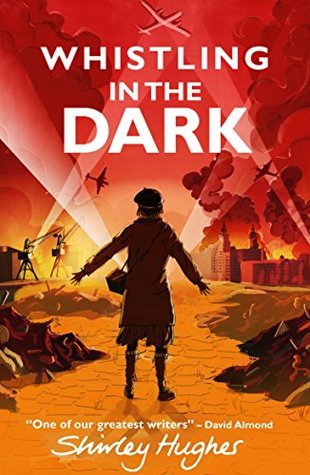
Whistling in the Dark by Shirley Hughes, 2015

Click to view
on Goodreads 
"Well-written and well worth reading." The Bookseller. Liverpool, 1940: thirteen-year-old Joan’s home is under threat from the Nazi’s terrifying nightly air-raids. It is not an easy time to be a teenager, especially with the sweet rationing, strict curfews and blackouts. Joan and best friend Doreen love going to the cinema until the bombings intensify and then even that becomes too dangerous, especially when an army deserter is found lurking near their home. Who is he and why does he think Joan can help him? As the Blitz worsens, Joan and her friends make a discovery that will tear the whole community apart…
(240 pages)

I've read a lot of historical fiction book centered around WWII, and they all take a slightly different angle on the terrible time. A lot of them involve the homefront in some way, so I was a little worried that Whistling in the Dark would struggle to carve its own unique spot in the literature, but I needn't have worried.

One thing I didn't know going into the book is that the author, Shirley Hughes, actually lived through WWII as a teenager living in Liverpool (the town where the book is set). I think that detail adds a little spark to the story that many other books about the time period don't have, just because we know the author really knows what she's talking about when she describes life there at the time.

And really, though it's a little book, there's quite a lot going on. I don't really want to go into the individual plotlines very much, because there would be lots of spoilers, but suffice it to say that Joan is confronted with issues ranging from personal/familial crises to meeting a loner refugee girl in school who doesn't speak English to dealing with the army deserter who is lurking around. They're all resolved in satisfactory and interesting ways, and I really liked reading about it.

Honestly, with all the amazing WWII books out there, I can't say that Whistling in the Dark stands out from the crowd a huge amount. But it's a good book, especially for younger readers who aren't prepared for the full horror of, say, a European Jewish girl's experiences during the war, and I for one really liked it. If you read it, please let us know your thoughts in the comments section down below!

Disclaimer: I received a complimentary copy of this novel from the publisher in exchange for an honest review.

16 October 2017

The Nutcracker Mice by Kristin Kladstrup, 2017

Click to view
on Goodreads 
Hidden in Saint Petersburg's famed Mariinsky Theater are the world's tiniest ballet fans: the Mariinsky mice, including Esmeralda, a rising dancer in the Russian Mouse Ballet Company. Despite being unable to control her tail, Esmeralda has just been assigned the lead role of Clara in a ballet debuting at Christmas: The Nutcracker. But when she learns that the new ballet features mice as villains, her excitement turns to horror: the mice of Saint Petersburg will never come to see such a production. Meanwhile, nine-year-old Irina is convinced that the mice she's seen in the Mariinsky -- the mice her father, the custodian, is supposed to exterminate -- are not only fans of the ballet, but dancers themselves. No one will believe her, so it falls to Irina to help save the mice everyone else considers vermin . . . and perhaps to help Esmeralda ensure the future of the mouse company. Sweet and inventive, Kristin Kladstrup's ballet fantasy features artwork by beloved illustrator Brett Helquist, old-fashioned drama, and just a touch of holiday magic.
(336 pages)

This is the sort of cozy book I would have devoured as a little girl. There's something so appealing about a story set in a far-off country (in this case Russia) during a far-away time (1892) that features anthropomorphic creatures (ballet-dancing talking mice!). Add all the dancing and ballet details to that, plus the one human girl who suspects the truth about the mice, and it's even more absorbing. In addition to all that, the scenario of mice preparing to perform The Nutcracker during its first human performance adds a delicious familiarity and Christmas feeling to the story because I attended performances of The Nutcracker almost every year when I was small.

Thus, before I even try to analyze The Nutcracker Mice objectively, I have to just say that I fell in love with the simple magic the story offers. After so many YA novels and adult nonfiction books, I needed to reading something so simple and pure as The Nutcracker Mice. It felt like a breath of fresh air.

Now, as for the story itself. First you have to get past the implausibility of the idea that mice are not only intelligent, human-like creatures who put on elaborate productions using the music played during the human performances, but also that all the theater mice are trained to read and understand both Russian and French. For some, I suppose that could be a pretty big hurdle; as for me, I counted it as part of the story's charm. I thought it was interesting that Esmerelda is an adult in the story because normally children's books feature protagonists who are in middle school. It made the (pretty slight) romance much stronger, in my opinion, and also made Esmerelda's adventures much more above-board and legit–she wasn't lying to any parents or sneaking out after hours, for example. It was also a little disconcerting, though, because I kept forgetting she was older until random moments when something would remind me.

I also really liked the bits of the story about Irina, the girl who spots Esmerelda practicing her ballet moves one day. She's written very realistically, and the drama surrounding her father's job is very well done.

Honestly, I have a hard time being very objective about The Nutcracker Mouse. It may not be perfect, or unpredictable, but it's a good solid book that I enjoyed and that I know for a fact I would have been completely in love with even a few years ago. If you know a kid with a fanciful imagination, then The Nutcracker Mouse would be a wonderful present for them–especially now while we're close to Christmas time!

Disclaimer: I received a complimentary copy of this novel from the publisher in exchange for an honest review.

02 October 2017

Remember the Ladies by Angela P. Dodson, 2017

Click to view
on Goodreads 
2017 begins the centennial celebrations of women first winning the right to vote, culminating in national suffrage three years later. This book documents the milestones in that hard won struggle and reflects on women's impact on politics since.

From the birth of our nation to the recent crushing defeat of the first female presidential candidate, this book highlights women's impact on United States politics and government. It documents the fight for women's right to vote, drawing on historic research, biographies of leaders, and such original sources as photos, line art, charts, graphs, documents, posters, ads, and buttons. It presents this often-forgotten struggle in an accessible, conversational, relevant manner for a wide audience. Here are the groundbreaking convention records, speeches, newspaper accounts, letters, photos, and drawings of those who fought for women's right to vote, all in their own words, arranged to convey the inherent historical drama. The accessible almanac style allows this entertaining history speak for itself. It is full of little-known facts. For instance: When the Constitutional Convention of the thirteen colonies convened to draft the Constitution, Abigail Adams admonished her husband John Adams to "remember the ladies" (write rights for women into the Constitution!). Important for today's discussions, REMEMBER THE LADIES does not extract women's suffrage from the inseparable concurrent historic endeavors for emancipation, immigration, and temperance. Its robust research documents the intersectionality of women's struggle for the vote in its true context with other progressive efforts.
(448 pages)


As a young American woman in the 21st century, I take my right to vote for granted. My ability to participate in politics, whether through voting or campaigning or running for office, is such an obvious right that I struggle to imagine a time when I wouldn't have been able to even speak in public before men.

I suppose that's a sign of how far we've come, right? I don't usually like to think about that, though, because it makes me strangely uncomfortable to think that I would have been considered a second-class citizen even a hundred years ago. My great-grandmother was twenty years old when the Nineteenth Amendment was passed giving her the right to vote. Twenty! That's just inconceivable to me.

The entire focus of Remember the Ladies is on detailing the fight for woman's rights. It includes descriptions of the small attempts made in the country's early years, focuses mainly on the 70+ year battle for enfranchisement/legal rights, and then discusses the roles modern women play in politics. It's the historical details that I find so fascinating, and which are so crucial for me to learn about. I don't really agree with Dodson that Hillary Clinton lost the 2016 presidential election because she's a woman–I'd guess it has more to do with how wildly unlikeable she is and how strictly conservative a lot of Americans are–but that is literally my only complaint about Dodson's viewpoint. In the rest of the book, she does a very good job describing all the different suffragists and their organizations, conflicts, splits, allies, and conflicting causes (as issues like temperance and abolitionism alternately aided and undermined the fight for suffrage).

I mean, the suffrage movement lasted over seventy years. As Dodson herself points out, that is a very long time for a single movement. It progressed in clunky fits and starts at first, but it made it to victory despite the chaotic (and pressing!) distractors of the Civil War, Reconstruction, anti-immigration sentiment, and World War I. It's amazing to read about all the strands of activism that wove themselves through the background of U.S. history until the suffragist movement finally achieved its main goal. And I think it's important for me to read a book like Remember the Ladies once in a while so I can appreciate all the people in the past who fought for rights that I take for granted today.

Actually, I think everyone should read a book like Remember the Ladies once in a while, be they male or female. It's good for all of us to get a reality check now and again, to gain an appreciation for how far gender equality has progressed in just the last 100 years.

Disclaimer: I received a complimentary copy of this book from the publisher in exchange for an honest review.

29 September 2017

42 is Not Just a Number by Doreen Rappaport, 2017

Click to view
on Goodreads 
An eye-opening look at the life and legacy of Jackie Robinson, the man who broke the color barrier in Major League Baseball and became an American hero.

Baseball, basketball, football -- no matter the game, Jackie Robinson excelled. His talents would have easily landed another man a career in pro sports, but such opportunities were closed to athletes like Jackie for one reason: his skin was the wrong color. Settling for playing baseball in the Negro Leagues, Jackie chafed at the inability to prove himself where it mattered most: the major leagues. Then in 1946, Branch Rickey, manager of the Brooklyn Dodgers, recruited Jackie Robinson. Jackie faced cruel and sometimes violent hatred and discrimination, but he proved himself again and again, exhibiting courage, determination, restraint, and a phenomenal ability to play the game. In this compelling biography, award-winning author Doreen Rappaport chronicles the extraordinary life of Jackie Robinson and how his achievements won over -- and changed -- a segregated nation.

(128 pages)

I always knew in a vague sort of way that Jackie Robinson was the first African American baseball player, and that this was a Big Deal back in its time. I've never been much into sports, so I never knew much more about Jackie than those basic facts.

42 is Not Just a Number does a really good job of going beyond the basic facts and giving us a good sense of who Jackie was and what he experienced throughout his life–or at least the first few decades of his life; the last twenty years are pretty much skipped over. I think the parts that fascinated me the most, though, were actually the earliest days: his childhood and days in the military before he joined the Dodgers. You know what the single most fascinating thing I learned about Jackie Robinson was? His older brother Mack won a silver Olympic medal in the 200-meter dash in 1936. He received no support from the city of Pasadena when he went off to the Olympics, no ticker-tape parade when he returned, and once he finished competing he literally wound up sweeping the streets of the city at night.

I suppose it's just because of the glory and fame that follows all the Olympic athletes (regardless of race) nowadays, but the sad mental image of this amazing athlete coming so far only to be turned away by every white person in Pasadena is particularly stark and hateful to me. Even now, we all know about Jackie Robinson–but do we know about his brother Mack Robinson, an equally talented athlete in his own right? No, we don't. Not at all.

The other interesting scene that particularly caught my attention was when Jackie got in huge trouble when he sat on a bus next to a black woman whom the driver perceived to be white. Basically, when he got pulled before an authority figure in the army for this "crime," he was disrespectful of the charges and disobedient when ordered to stay in a different room where he wouldn't be allowed to argue his case. He eventually actually went to trial for the offences, and while he was acquitted he was left behind by his platoon. It all ended well, I suppose, since that indirectly led to his becoming a professional baseball player, but the injustice still rankles.

Basically, this is a straightforward and fairly simple, yet still detailed, description of Jackie Robinson's most formative moments. It does skim over some times that I think would have been interesting to know more about, but on the whole it does a good job and makes for an interesting read. If you or someone you know is interested in learning more about Jackie Robinson the human being, then I recommend 42 is Not Just a Number.

Disclaimer: I received a complimentary copy of this book from the publisher in exchange for an honest review.

04 September 2017

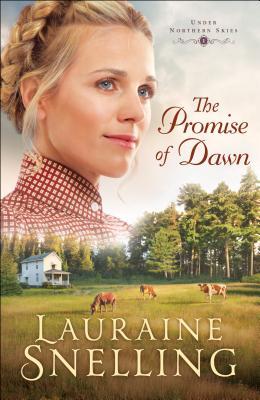
The Promise of Dawn by Lauraine Snelling, 2017

Click to view
on Goodreads 
When Signe, her husband, Rune, and their three boys arrive in Minnesota from Norway to help a relative clear his land of lumber, they dream of owning their own farm and building a life in the New World. But Uncle Einar and Aunt Gird are hard, demanding people, and Signe and her family soon find themselves worked nearly to the bone in order to repay the cost of their voyage. At this rate, they will never have land or a life of their own.

Signe tries to trust God but struggles with anger and bitterness. She has left behind the only life she knew, and while it wasn't an easy life, it wasn't as hard as what she now faces. When a new addition to the family arrives, Signe begins to see how God has been watching over them throughout their ordeal. But after all that has happened, can she still believe in the promise of a bright future?

(276 pages)

Going into reading The Promise of Dawn, I didn't really have a good idea what it would be like. I won it in a giveaway on LibraryThing, and when I entered I'd just kind of assumed it was one of those fluffy Christian romantic historical fictions. I thought it would be kind of meh, but still entertaining, so I took the two seconds to click "Request It."

It turns out that The Promise of Dawn is a lot more serious than I originally expected, and it's not really a romance novel since the main characters are already married with three sons old enough to work for Uncle Einar. It is indeed a Christian novel, though, but the religion in the book is not as cloying as it is in most from the genre. And it is definitely a historical fiction story–which is what I loved best about it!

You see, I'm nearly 1/2 Swedish by descent. My great-grandfather and his family moved from Sweden to Nebraska around the same time Signe and Rune's family move from Norway to Minnesota, so it's easy for me to read about this family's fictional struggles on the American frontier and imagine my own ancestors into their place. True, my great-grandfather was a farmer in a tree-less state while Uncle Einar  is a tree logger, but that's small potatoes. The comparison is still real to me.

Plus, I actually really liked watching Signe fight to bring orderliness and civility into a house that was truly disgusting when she first arrived. Gird is bed-ridden, miserable, and miserly when they arrive; Einar is curt, unpleasant, and solely focused on his tree-logging endeavors to the point of abandoning everything (and everyone) else. It's impossible not to cheer for Signe as she puts the house and farm to rights with the help of her two younger sons and begins the process of helping Gird regain her strength. I also loved watching the way her sons always obeyed her, even though they were growing big and tall and lived during a time when women weren't always given much respect. Seeing the give-and-take of Signe and Rune's relationship was also very satisfying. I also just really liked getting such a different angle on frontier life, focused on the individual struggles of the people making their lives on the frontier rather than on the more publicized "drama" of cowboys and Native American struggles/raids and the like. This is the authentic story of the West, because it's the story of the individual family.

Basically, if you're looking for an character-focused book about Scandinavians moving to the American frontier in the early twentieth century, then The Promise of Dawn fits the bill to a T. Let me know what you think if you read it!


Disclaimer: I received a complimentary copy of this novel through the BookLook Early Reviewers program.

10 March 2017

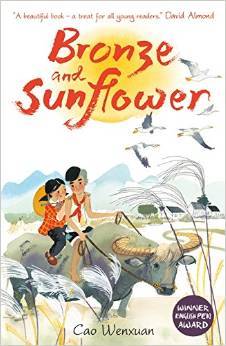
Bronze and Sunflower by Cao Wenxuan, 2017

Click to view
on Goodreads 
When Sunflower, a young city girl, moves to the countryside, she grows to love the reed marsh lands - the endlessly flowing river, the friendly buffalo with their strong backs and shiny, round heads, the sky that stretches on and on in its vastness. However, the days are long, and the little girl is lonely. Then she meets Bronze, who, unable to speak, is ostracized by the other village boys. Soon the pair are inseparable, and when Bronze's family agree to take Sunflower in, it seems that fate has brought him the sister he has always longed for. But life in Damaidi is hard, and Bronze's family can barely afford to feed themselves. Can the little city girl stay here, in this place where she has finally found happiness?
A classic, heartwarming tale set to the backdrop of the Chinese cultural revolution.

(384 pages)

I honestly have no idea how to review Bronze and Sunflower.

I don't know what it is about the book, but I just can't wrap my head around it. I'm actually a little puzzled by the ending, which is still not entirely clear to me even after I've read it a few times. I think that's a translation trouble–in fact, I think a lot of my confusion comes either from translation ambiguousness or cultural differences. Since I know nothing about the Chinese cultural revolution–or indeed about anything in Chinese history, culture, or politics–I have the overwhelming feeling that all sorts of important themes and references are passing right over my head throughout the story.

Because of that, I advise you to take my review with a grain of salt. After all, I'll be the first to admit that I am on very shaky ground here. But anyway, I did enjoy the book. It was very different from my usual fare, rather strange to my American mind (though Chinese readers might find it perfectly normal, I don't know), and very interesting. It felt like a fairytale in many parts, in large part due to its fairly unrealistic characters. Both Bronze and Sunflower seem unrealistically perfect (never squabbling, never selfish, never unpleasant). The levels of sacrifice they're willing to go through for each other makes their relationship very sweet, but also makes both of them ring false to me.

The troubles they face definitely aren't fairytale-like, though. The family is very poor, and they struggle to afford school (eventually deciding to send just Sunflower because, you know, they hadn't thought about the fact that Bronze wouldn't be able to attend school too before they invited her to stay with them). Toward the middle of the story a swarm of locusts comes through and devours everyone's crops, and people begin to starve. Things get really hard, and Wenxuan doesn't pull any punches when he describes what it's like for them.

I may have a few issues with the choices made by the adults throughout the book, but those pale in comparison to the sense of wonder I feel reading a book that was written in an entirely different language from my own, in a world and a culture entirely distinct from mine, and which has given me a peek into the world of Chinese literature. I loved diving into the world of Bronze and Sunflower for a time, as theirs was an engrossing story that provided a fascinating cultural insight for me, but now I'm ready to set it down and return to my usual fare that strikes closer to home. I'l definitely be keeping an eye out for more international novels in the future.


Disclaimer: This is an Amazon affiliate link, and I received a complimentary copy of this novel from the publisher in exchange for an honest review.

20 February 2017

A Note Yet Unsung by Tamera Alexander, 2017

Click to view
on Goodreads 
Despite her training as a master violinist, Rebekah Carrington was denied entry into the Nashville Philharmonic by young conductor Nathaniel Whitcomb, who bowed to public opinion. Now, with a reluctant muse and a recurring pain in his head, he needs her help to finish his symphony. But how can he win back her trust when he's robbed her of her dream?
(448 pages)

I want to start by saying this book is not quite as "soft" a story as the cover and description suggest. It's true that it's essentially a love story, and that most of the pages are full of character descriptions and increasing romantic tension between the two leads, but we also get (relatively vague) flashbacks to the time Rebekah's step-father attempted to rape her in her childhood. There are a few more "modern-day" creepy scenes with the man sprinkled throughout the book, despite Rebekah's attempts to avoid his company at all costs, and the material is still pretty heavy even though it's handled as gently as possible.

Besides Rebekah's relationship with Tate (i.e. Nathaniel Whitcomb), which I'll get to in a moment, there were several storylines that received generous time in the spotlight throughout the book. I was impressed by that, because I always hate when books seem completely wrapped up in the romance with a plot only thrown in as an afterthought. We get to watch Rebekah struggle in a man-dominated world, trying to find a way to join a symphony in an age where women were considered too "delicate" for such grueling work. We also get glimpses (though not quite as much as I would have liked) at Rebekah's strained relationship with her mother, who is completely oblivious to her husband's abuse and bitter about Rebekah's independent and liberal life choices. That storyline doesn't really get a conclusion, which is too bad. We also get to see Rebekah working to tutor a young girl on the violin, but–again–this isn't given as much page space I would have liked.

The biggest "side issue" that's in the book, actually, is probably race relations. The story takes place about a decade or so after the Civil War ended, in Nashville, and Rebekah's own family used to own slaves. They still keep on one or two of them as "servents," and Alexander is careful to depict Rebekah as an open-minded woman who sees African Americans as human beings (and who dearly loves the black housekeeper who essentially raised her). I can't say for sure what struck me as being a little off about the treatment of African Americans in the book, because I honestly think the author did make her heroine as liberal as she possibly could while remaining within the confines of historical realism, but reading about how Rebekah's mother beat her when she went to sing in the slave quarters as a little girl, or about what happened to the black slave who protected her from her stepfather that night, it's sad to see snippets of the racist, slave-upholding society of the period. I suppose my discomfort is more with the basic facts of slavery and of racial discrimination, though, so I don't hold them against A Note Yet Unsung–in fact, I think the book provides a good starting point for thinking about such issues.

Now for the romance. I've left it until the last for a reason, and it's a simple one: I really don't care much for romance. I don't dislike stories about people falling in love per se–I've read many Grace Livingston Hill books just for their cute old-fashioned romances, for example–but I truly hate descriptions of people panting after each other, of how their bodies "thrum" every time they touch or of how their minds stray, in the middle of conversations, to fantasizing about getting physical with the other person. It's fine for characters to be attracted to each other, of course, but when they keep focusing on each others' bodies then that debases the romance for me, turning it from a beautiful meeting of sympathetic minds to a baser lust. I will definitely say that the romance in A Note Yet Unsung is far less obnoxious than many others I've read, and that the main characters clearly clicked on professional and emotional levels before their thoughts got too mushy. They had some ridiculous thoughts, not just about kissing each other but also about realizing "I truly love him!" despite having despised each other for most of their relatively short acquaintance. These lapses into foolishness were relatively few, though, and even near the end of the book they didn't become as cloying as I'd dreaded. The author never loses her grip on the plot of the book, and she introduces some very serious issues throughout the story to keep all readers–even those not interested in the mushy thoughts–hooked.

I won't say this is the best book I've ever read, but I will say it's probably one of the best Christian historical fiction romance novels I've come across. I was impressed with how much substance the book had, despite the fact that it's essentially marketed as a sparkly romance novel, and I'm glad I decided to take the plunge and try a genre I don't usually read. If more books in the Christian romance genre were like this one, then I'd probably read them a little more often.

Disclaimer: I received a complimentary copy of this novel from the publisher in exchange for an honest review.

23 January 2017

American Patriots by Rick Santorum, 2012

Click to view
on Goodreads 
The United States of America was founded and established by ordinary citizens just like you and me. In their struggle for independence, these heroic men and women willingly shed their blood, sweat, and tears--often sacrificing their own lives and fortunes in order to hand down the precious legacy of freedom we all enjoy today. Now is the time for a new generation of American patriots to rise up and join in the fight. Now is the time for every American to return to the virtues, values, and ideals that formed our foundation of freedom, and enable America to remain a great nation, a powerful democracy, and a beacon of hope for the world.

American Patriots highlights the heroic men and women who valiantly fought to secure our God-given rights of life, liberty, and the pursuit of happiness--not only for themselves and their children, but for countless future generations. Their stories are a true reminder of the extraordinary faith, courage, and determination that set this country on the path to greatness centuries ago, and an inspiration for future generations of great American patriots.
(148 pages)

This may not put me in the best light here, but when I chose to receive a copy of American Patriots I honestly didn't know that Rick Santorum was a politician. His name on the cover looked vaguely familiar, so I assumed he was some historian or author I'd read something from a long time ago. When I actually cracked the cover open and read the author description, I realized my mistake. He's a pretty conservative Republican, right? I honestly haven't read up on him at all, but after reading this book I'm pretty sure that must be the case.

Basically, he takes everything and makes it about religion. And I guess that's not entirely unreasonable, since people were so focused on faith back then and several of the patriots he described were literally pastors, but when he started explaining how "the pursuit of happiness" from the Declaration really meant "the pursuit of virtue," he lost me. I'm a Christian, sure, but I don't believe in twisting history to make it fit your personal outlook. Then again, I don't worship either the Declaration or the Constitution (and there's no way I think all those slave-owning men really meant for the rights given to "all men" to go to minorities and women!), so I'm probably not Santorum's target audience. Every time he mentioned how modern-day America is "under attack" from liberals who want to destroy the principles established by the Founding Fathers, I could barely suppress an eye roll. I'm not exactly stirred to action by that sort of rhetoric; I'm mainly just annoyed by the constant finger-pointing and devil-calling that goes on in modern politics.

Anyway, that aside, I did enjoy reading about all these little-known people from history. I think the only historical figures I recognized in the entire book were Phillis Wheatley and Nathan Hale; the rest of them were completely new to me. My favorite was probably Haym Salomon, the Polish-born Jew who single-handedly kept the revolution financially stable through the war and into its first years as a nation. He seemed like a great guy! Each little chapter focuses on a different historical character (or sometimes a couple characters who have attributes in common). There's a little description of their backstory, key details about their dramatic contributions to the revolution, and then a summary of what happened to them later in life.

Also, just a note: out of twenty-five people mentioned in the book, only six of them are women–and only one of them get a chapter to themselves. Four of them (Emily Geiger, Elizabeth Maxwell Steele, Phillis Wheatley, and Elizabeth Lewis) were lumped into a single chapter. I know that the world was a much more man-dominated place in the 18th century, so it might have been impossible to get enough details to flesh out a lot of character sketches of women patriots, but I for one would have  liked to see a little more emphasis given to the women from history.

Basically, I enjoyed learning some more about important characters from history (even if I'm a little hesitant to apply the word "hero" to all of them). If you don't mind the messages Santorum is trying to mix in with his history lesson, then you might love this handy little anthology. Otherwise, though, it's probably best to steer clear.

Disclaimer: I received a copy of this book through the Tyndale Rewards program (click here to check it out, and by using my link to make an account you'll get 25 credits (enough to order a book) just to start and I'll get 10!).

21 October 2016

Our Man in Charleston by Christopher Dickey, 2015

Click to view
on Goodreads 
Between the Confederacy and recognition by Great Britain stood one unlikely Englishman who hated the slave trade. His actions helped determine the fate of a nation.
As the United States threatened to break into civil war, the Southern states found themselves in an impossible position: Their economic survival would require reopening the slave trade, banned in America since 1807, but the future of the Confederacy could not be secured without official recognition from Great Britain, which would never countenance such a move. How, then, could the first be achieved without dooming the possibility of the second? Believing their cotton monopoly would provide sufficient leverage, the Southerners publically declared the slave trade dead, even as rapacious traders quickly landed more and more ships on the American coast.
The unlikely man at the roiling center of this intrigue was Robert Bunch, the ambitious young British consul in Charleston, S.C. As he soured on the self-righteousness of his slave-loving neighbors, Bunch used his unique perch to thwart their plans, sending reams of damning dispatches to the Foreign Office in London and eventually becoming the Crown's best secret source on the Confederacy—even as he convinced those neighbors that he was one of them.
In this masterfully told story, Christopher Dickey introduces Consul Bunch as a key figure in the pitched battle between those who wished to reopen the floodgates of bondage and misery, and those who wished to dam the tide forever. Featuring a remarkable cast of diplomats, journalists, senators, and spies,
Our Man in Charleston captures the intricate, intense relationship between great powers as one stood on the brink of war.
(400 pages)

I actually read this over the summer, but I was just so busy working on applications and starting my classes that I couldn't find time to review it. Then I got a bunch more books to review, with actual deadlines staring me in the face, that kept distracting me from doing Our Man in Charleston. I'm finally getting more organized now–I put all the books I have for review into a calendar, and I force myself to methodically go through and read/review them in that order–and it's made me actually efficient at something for once, so now I'm reviewing Our Man in Charleston.

And honestly, I loved it. Every single word. This is the sort of historical nonfiction I adore, full of character studies and firsthand quotes and vivid descriptions that make it feel like a fictional novel. Books like Our Man in Charleston (and The Family Romanov, and A Night to Remember) are so amazing, because they really make the events they describe feel real. When I put down Our Man in Charleston, I not only finally understood the American Civil War (the motives, the conflict, the nature of the fighting), but I also saw how it fit into a grander global context. Before reading this, I had no idea that the rest of the world was even watching the Civil War, let alone how close Britain came to coming into it on the side of the South.

It's a horrible book at times, though. Bunch lived in Charleston, the heart of Southern rebellion, and some of the stories he tells about the way Southerners treated their slaves are absolutely sickening. Also, one of the biggest conflicts that sprung up between the North and the South, and one of the most hotly debated ones inside the South, was the question of whether or not America should reopen the slave trade with Africa. I kid you not, there was a shortage of slave labor and the most common Southern reaction was "okay, let's just go capture fresh Africans and ship them here. That will solve all of our problems!" I just . . . can't even think of anything to say about that. It takes a special kind of evil to think like that.

I don't know what else to say, besides read this! If you're at all confused by the forces behind the Civil War, read it. If you're a Civil War geek looking for an intimate, international angle, read it. If you're still trying to argue that the war had nothing to do with slavery and was really just about the right to secede, then please read it–and I dare you to come out the other side still talking about the "War of Northern Aggression."

I don't usually quote specific lines from the books I review, but I'll do it just this once because there's a quote I want to end with that perfectly encapsulate's South Carolina's attitude at the onset of the Civil War:
"Other nations, especially those enlightened and more old-fashioned in their notions, rebel, fight, and die for Liberty," wrote Bunch, while South Carolina "is prepared to do the same for slavery."
Disclaimer: I received a complimentary copy of this book from the publisher through the Blogging for Books program in exchange for an honest review. 

06 October 2016

Dive! by Deborah Hopkinson, 2016


Welcome to the eleventh stop on the Dive! blog tour! My task today is to review Dive!, so let's jump straight into it.

~~~~~~~~~~~~~~~~~~~~~~~~~~~~~~~~~~~~~~~~~~~~~~~~~~~~~~~~~~~~~~~~~~~~~~~~~~~

Dive! World War II Stories of Sailors & Submarines in the Pacific tells the incredible story of America's little known "war within a war" -- US submarine warfare during World War II.
Following the attack on Pearl Harbor, the US entered World War II in December 1941 with only 44 Naval submarines -- many of them dating from the 1920s. With the Pacific battleship fleet decimated after Pearl Harbor, it was up to the feisty and heroic sailors aboard the US submarines to stop the Japanese invasion across the Pacific.
Using first-person accounts, archival materials, official Naval documents, and photographs, award-winning author Deborah Hopkinson brings the voices and exploits of these brave men to life.
(384 pages)


This is a really hard book to review.

I can't analyze the characters, or question the plot, or take note of the writing style. I can't do any of that because this isn't a fictional novel. Everything in Dive! is true, which makes it a thousand times harder for me to critique.

Did I enjoy reading it? Sort of. It is a book about submariners in WWII, you know. So many people died in the war–and the casualty rates for men serving aboard submarines was way higher than for those in any other service. It's really depressing to read about all these men on board the ships, living their strange claustrophobic lives deep under water and fighting to protect the country they loved. About half of the book is actual firsthand quotes from submariners; the tragedy is that the book features accounts from so few men. There were several times when I went "ooh, why don't we have a firsthand account from XYZ's point of view?" But then a chapter or two later Hopkinson would say "on its next patrol, his submarine was sunk and everyone aboard died." That really put a downer on, well, everything.

Dive! was a very good book, though. Amazing, really, from a historical perspective. As I said before, the text is about half made up of direct quotes from men who actually served in the submarines and lived through the events that made history. The other half of the text, then, is Hopkinson's own descriptions of people and events that couldn't be described firsthand. Interspersed throughout the regular narrative are also inserts ranging in length from a single paragraph to two-page entries, discussing everything from the way attack strategies changed after Pearl Harbor to opportunities for African American submariners during the war to a detailed description of the logistics involved in having an ice cream maker installed aboard the USS Trigger. There's also a plethora of black-and-white pictures, which are absolutely breathtaking to look at. The images are both fascinating and horrible, full of grinning captains, relaxing submariners, sinking ships, and slim metal ships. Fascinating, because we get such an intimate look at what life was like for the submariners; horrible, because we find out over the course of the book that oh-so-many of those grinning young men died in the very metal ships in which they were photographed.

The narrative focuses on military tactics, but it also dives (pun intended!) into all the various other ways submarines were used during the war. My favorite side topics were refugees (there's a fascinating chapter about Lucy Wilson, a nurse evacuated from Corregidor) and pets (so many adorable dogs were adopted by the crews of the different ships!).  Scattered throughout the book are tips for researching deeper into specific topics, links to sites and museums connected to submarines, etc. The end of each "part"–a part being one year of the war–there's a handy timeline that lists out all the main events that happened in the year that has just been covered. In the end section there's also a plethora of resources that includes a list of all the submarines lost throughout the war, a "Facts and Figures" sheet, a roster of all the people (and animals) discussed throughout the book, a diagram of a submarine, a list of the most successful submarines, a glossary, extra resource links . . . yikes, my fingers are getting tired just listing these all out! Let's see, almost done: a (very robust) bibliography, about eighteen pages of source notes (like I said, there were a lot of firsthand quotes in this book!), and an index.

Whew. As you can probably tell, this book is designed to be the perfect starting point for studying all things submarine. And as you can probably also tell, it succeeds with flying colors. Dive! is an amazing resource, full of everything I could have ever wanted to know about submarines during WWII and then some. For those who want more, it's also packed full of advice and resources for doing so. In my book, that earns it an extra gold star. This is a serious research book, but it's still completely approachable as a middle grade read–and, in the midst of some pretty horrible stuff, it still managed to be downright hilarious from time to time. All in all, it's an amazing read and I'm glad I had the opportunity to read it. If you're interested at all in WWII submarines, then you absolutely need to check it out!

About the Author:
Deborah Hopkinson is as award-winning of picture books, fiction, and nonfiction for young readers. In 2013 she received a Robert F. Sibert Honor and YALSA Excellence in Nonfiction Award honor for Titanic: Voices from the Disaster.
She has won the SCBWI Golden Kite Award for Picture Book Text twice, for A Band of Angels and Apples to Oregon. Sky Boys, How They Built the Empire State Building, was a Boston Globe/Horn Book Honor awardee. She lives near Portland, Oregon.
The Great Trouble, A Mystery of London, the Blue Death, and a Boy Called Eel won the OCTE Oregon Spirit Award and was named a Best Book of 2013 by School Library Journal and an Oregon Book Award finalist.
Visit her on the web at www.deborahhopkinson.com and follow her on Twitter at @deborahopkinson.

~~~~~~~~~~~~~~~~~~~~~~~~~~~~~~~~~~~~~~~~~~~~~~~~~~~~~~~~~~~~~~~~~~~~~~~~~~~

Thanks again to Deborah Hopkinson for appearing! For other stops on the Dive Blog Tourplease check DeborahHopkinson.com.

Disclaimer: I received a complimentary copy of this novel so I could participate in the blog tour.

19 October 2015

The Betrayal of Richard III by V.B. Lamb, 2015

Click to view
on Goodreads 
In this classic work, the late V B Lamb and Peter Hammond survey the life and times of Richard III and examine the contemporary evidence for the events of his reign, tracing the origins of the traditional version of his career as a murderous tyrant and its development since his death. The evident grief of the citizens of York on hearing of the death of Richard III - recording in the Council Minutes that he had been 'piteously slane and murdered to the Grete hevynesses of this citie' - is hardly consistent with the view of the archetypal wicked uncle who murdered his nephews, the Princes in the Tower, and there is an extraordinary discrepancy between this monster and the man as he is revealed by contemporary records. An ideal introduction to one of the greatest mysteries of English history, this new edition is revised by Peter Hammond and includes an introduction and notes.
(160 pages)

My dad is really into history, and he recently discovered something that is mega-cool to me: I am, very very likely (barring some uncertainty in the immigration records of the 1600s) descended from British nobility. We're descended from King John - the one who signed the Magna Carta (or, for you non-history people, the "evil prince John" in Robin Hood). Pretty cool, huh? That means that all of the current monarchs are my distant (very, very, very distant) cousins, which I think is awesome. It totally gives me an excuse for being obsessed with British royal history, right? I wish I could say that's why I wrote an English capstone project arguing on behalf of Richard III's innocence, but sad to say that was before I even knew about the connection. Oh, well. I'm a geek - I don't think my sort-of-relation to anyone would hide that.

If you read my blog regularly, my interest (okay, possibly obsession) with Richard III is not new. At the end of the last school year, neck-deep in research, I wound up writing a few rambling book reviews tying everything back to Richard III (like this review of Margaret Peterson Haddix's Claim to Fame - it doesn't get much more random than that!).When I e-mailed my finished project to my ex-AP European History teacher, she recommended I read The Betrayal of Richard III. I just now got my hands on it, because my library was so slow about purchasing a copy.

I disagree with the author on a few matters of interpretation, but he did bring up some interesting ideas that I hadn't thought of before. He pooh-poohs away my pet theory (that Henry killed the boys shortly after taking the throne) with barely a pause, but I have a hard time following his own suggestion. Something about the boys escaping to France and trying to secretly gather forces? At times Lamb's arguments become a bit circular (like when he suggests that Richard was so loyal to his brother that he didn't even want to take the throne, and only did so to prevent Civil War - this optimistic view relies on Lamb's assumption that Richard was a good guy, but he's using it as evidence for why the reader should think Richard was good), but he still does a great job bringing up all of the primary source documents we have to paint the fullest picture possible of Richard's life and death.

What I really loved about The Betrayal of Richard III, actually, was the richness of details. The first half of the little book traces Richard's life, from his childhood under a troubled regime to his brother's stormy ascension to the throne, to the great military feats he achieved while still in his teens, to his (by all accounts) happy and devoted marriage, all the way through his famous death during the Battle of Bosworth Field. Every single other detail I had to hunt down and pin together myself from various sources while writing my own paper are brought together in one place in this book. Lamb's conclusions might sometimes be slightly different from my own, but he's got the groundwork all beautifully laid out for examining the entire situation. I think I would recommend it on the strength of this research alone.

The second half of the book examines the controversies around Richard, and the way his name was maligned after his death. I found it really fascinating to see the tactics that Henry and his men used to blemish Richard's previously clean name, and even though I already knew most of the things that Lamb describes I still got a much clearer picture of how everything worked together. This is the section that possibly provides the most compelling argument of all on Richard's behalf, because it presents such a clear and complete picture of a process that would take even the nicest man on Earth and turn him into something from a Brothers Grimm fairytale.

Do I agree with every single conclusion Lamb comes to? No. Do I think he is rather biased in parts? Absolutely! But part of my research into Richard III has taught me that every historian has his own strong biases; no matter what anyone says, there's no such thing as an entirely impartial history book. The Betrayal of Richard III has a lot fewer strange biases than some of the books I read last year, and it certainly works harder to back each and every one up with as much evidence as possible. I highly recommend it to anyone interested in studying the enigma of Richard III and his legacy.

18 October 2014

The Thief by Megan Whalen Turner, 2005

After Gen's bragging lands him in the king's prison, the chances of escape look slim. Then the king's scholar, the magus, needs the thief's skill for a seemingly impossible task -- to steal a hidden treasure from another land. To the magus, Gen is just a tool. But Gen is a trickster and a survivor with a plan of his own.


This is what I wrote two years ago after my first time reading it. As you can tell, I wasn't a great fan. I was also a bit annoyed because my mother said it had to be good because it was a Newberry award winner:


"I'm not sure I should even write a review for this book, because my response to it is so different from all the other responses I've seen.

Gen is the classic witty, clever orphan. He goes on an adventure to get something, and is bullied into doing it. This book won a Newberry. That seems, to me, just about all you need to know to make your decision about whether to read it, and even whether to like it. Maybe it's because I had just read the fantastic False Prince by Jennifer A Nielsen that I had such trouble getting into this book, because they share enough aspects that it felt really blase. Guy forcing main character to do things he doesn't want to? Got it. Some sort of sidekicks that turn out to be different than how they originally seem? Nice, but seen it! A twist ending? Sorry, but it wasn't handled very well. I had to read it through twice to figure out what the big surprise was, and I'm still confused exactly what "that" entails.

I'm not saying this is a bad book, I just personally didn't connect with it. I have been told that "it's a Newberry. It's good. End of story," but I don't really accept that as the instant makings of a classic."

Now, it's a few years later. I've lived, I've learned, and I've perhaps acquired some patience. Plus, I really liked the sequelSo, approaching the book with an open mind, I did realize that it wasn't as dry and uninteresting as I first found it to be. The rest of the books in the series gave me a lot of serious respect for Gen, so when he was all whiny in this first book (honestly though, there is a lot of whining going on in this book!) I took it with a grain of salt. It's all part of the plan, right?

I really can't go into any more detail about the book, because practically everything holds a second meaning after you finish the book. I am still a bigger fan of the the Ascendance trilogy,  and I always will be, but the Thief series is no longer cast aside in my regard. I will never be the biggest fan of The Thief, because it really isn't my cup of tea. But I can respect good writing, and I know when to pass it on to those who will enjoy it more than me.

17 January 2014

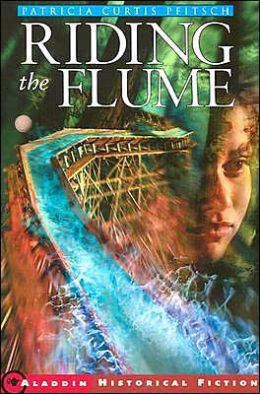
Riding the Flume by Patricia Curtis Pfitsch, 2002

Don't tell anyone -- the only safety is in secrecy. During the summer of 1894 the giant sequoia trees -- the oldest living things on earth -- are being felled for lumber in northern California. When fifteen-year-old Francie finds a note hidden in the stump of an old sequoia, she immediately recognizes her sister's handwriting. But Carrie died in an accident six years ago. Could Carrie's secret still be important?

Francie's search for the truth turns dangerous, and she needs to get to St. Joseph fast. She's faced with the choice of either giving up, or riding the flume, a rickety track that carries lumber from the mills in the mountains to the lumberyard in St. Joseph. Should Francie risk her life for the secret her sister fought to keep?


This is a beautiful book that I first read 6/7 years ago, and I have loved it ever since.

Francie lives in a logging town situated by a large forest of sequoia trees which are rapidly being cut down for lumber. Her father runs a hotel that prospers due to the logging, and is all for it. Francie is not as enthusiastic as her father, but there is nothing she can do. She is busy helping at the hotel and counting the tree rings on a dead sequoia for a man who is writing a newspaper article to try to make people see how bad it is to cut down the trees. But Francie also has a ghost to live with - a memory of her older sister Carrie, the headstrong, adventurous girl who died years before in a land slide up on the mountain. As the years have passed Francie has grown to resemble Carrie a great deal, much to the sorrow of her parents. In little things like wearing her hair differently she tries to mask the resemblance, but she knows that every time they look at her, they see her more vibrant, more alive sister - the one she thinks more deserved to live.


This is a touching, sad story about a girl finding her own place in a world that will always remember her vibrant sister, and about learning to step up to the plate and speak your mind about things. Because when Francie and her cousin (Carrie's best friend) find a note Carrie wrote before her death, they uncover a secret - a beautiful tree, a king of the forest, that Carrie claims belonged to her. And the loggers will do anything to bring it down.

Although the actual flume riding is a very small portion of the book, I can't think of any title that would fit this book better. Parents, this book has nothing bad in it whatsoever, except for dealing with Francie and her family's very real pain, and the horror they feel from Carrie's accident. It is not gruesome, it is not vulgar, there is absolutely no romance, and it even mixes in some very real history that makes you want to google the real sequoias! I read it at seven, and absolutely adored it. Of course, don't take this to mean older people won't like it! I started reading very young, and as I get older I discover more layers to the books I read when I was younger, things I skipped as a little girl. This is a wonderful book that will make you cry, and will leave you with a great feeling of finality and triumph.