Showing posts with label WWI. Show all posts

02 July 2018

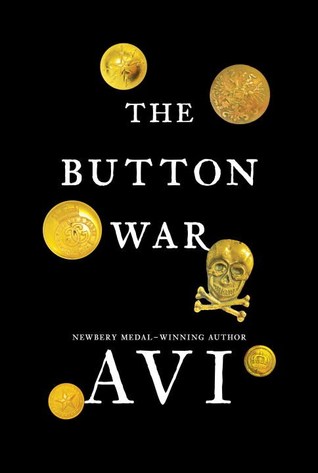
The Button War by Avi, 2018

Click to view
on Goodreads 
Renowned, award-winning author Avi pens a stark, unflinching tale of ordinary boys living in wartime as tensions — and desperations — mount among them.

Twelve-year-old Patryk knows little of the world beyond his tiny Polish village; the Russians have occupied the land for as long as anyone can remember, but otherwise life is unremarkable. Patryk and his friends entertain themselves by coming up with dares — some more harmful than others — until the Germans drop a bomb on the schoolhouse and the Great War comes crashing in. As control of the village falls from one nation to another, Jurek, the ringleader of these friends, devises the best dare yet: whichever boy steals the finest military button will be king. But as sneaking buttons from uniforms hanging to dry progresses to looting the bodies of dead soldiers — and as Jurek’s obsession with being king escalates — Patryk begins to wonder whether their “button war” is still just a game. When devastation reaches their doorstep, the lines between the button war and the real war blur, especially for the increasingly callous Jurek. Master of historical fiction Avi delivers a fierce account of the boys of one war-torn village who are determined to prove themselves with a simple dare that spins disastrously out of control.
(240 pages)

I'll be perfectly honest: I had very, very high expectations for The Button War because it's written by Avi. Most people love Avi for The True Confessions of Charlotte Doyle, but the truth is that I barely even remember that book; no, the reason I had high hopes for this new Avi read was because I was obsessed with his The Secret School when I was little. It grabbed my fascination in a big way, with its tale of children banding together to trick their parents into letting them continue to get an education after their teacher leaves.

I suppose that in some ways The Button War is the opposite of The Secret School. Where the earlier book showed children banding together to improve themselves, devoting themselves to their studies and staying relatively well-behaved, The Button War tells the story of a band of school-aged boys who, when left to their own devices, egg each other on to do reckless, stupid things–like the titular competition to steal the brightest, fanciest buttons from the uniforms of the various armies invading their small town.

It's frankly not very fun to read, because I spent most of the book wanting to reach out and smack Jurek–and the other boys for caring enough about his words to put themselves and their families in danger like that. It's one thing to read about people putting themselves in danger during WWII to save Jews from the Holocaust, but watching Patryk's band of friends get in danger for the sake of such a stupid game was just painful. I suppose it's a reflection of the violence they've grown up around, that they've become so desensitized to it and reckless that they would behave in this way, but I didn't really enjoy it.

I think The Button War is a pretty good book, but I for one just found it so frustrating that I didn't get much out of it. You might like it more than I did, though.

Disclaimer: I received a complimentary copy of this book from the publisher in exchange for an honest review.

03 November 2017

Innocent Heroes by Sigmund Brouwer, 2017

Click to view
on Goodreads 
A unique celebration of the important role animals play in war, and an insightful look at the taking of Vimy Ridge from the perspective of 3 men in a Canadian platoon.

Never before have the stories of animal war heroes been collected in such a special way. This book consists of eight connected fictional stories about a Canadian platoon in WW1. The Storming Normans have help from some very memorable animals: we meet a dog who warns soldiers in the trench of a gas attack, a donkey whose stubbornness saves the day, a cat who saves soldiers from rat bites, and many more. Each story is followed by nonfiction sections that tell the true story of these animals from around the world and of the Canadian soldiers who took Vimy Ridge. Through the friendship that grows between three of these soldiers in particular, we get a close-up look at life in the trenches, the taking of Vimy Ridge, the bonds between soldiers and their animals and what it meant to be Canadian in WW1.

(208 pages)

This was an interesting blend of fiction and truth, interspersing a made-up, animal-centric storyline about men in a Canadian platoon during WWI with real facts about the animals featured in the different chapters.

On one hand, I really loved learning about all those different animals from WWI–and the Canadian platoon they were with, since I barely even knew before now that Canada participated in WWI! But then at times I felt like the way it was done, switching between chapters of fictional stories and then nonfictional explanations, made the narrative feel really disjointed. I kept forgetting who the various people were for quite a long time because I didn't read about them for so long in between chapters.

Also, and I suppose this is just an interesting cultural perspective, there is a lot of emphasis put on the supposed superiority of Canadian military tactics (basically, the generals see their soldiers as equals and give them room to interpret assignments as they wish) over the much more top-down American and British structures. While it does sound like the Canadian system is the one I would like to be in, I really don't know enough about military tactics to know which is ideal; I do, however, know from reading the book that Brouwer is definitely heavily in favor of Canada. And it's actually really interesting to read about WWI and military tactics from such a different angle than I usually do. I mean, let's be honest, there's really not much material out there about the Canadian perspective on most of the big wars.

Basically, it's a good book with a lot of interesting details that gets bogged down at times by the alternating format it's written in. I still liked it, though, and I suspect a lot of other people–especially kids with a passion for army history–will too, If you read it, please be sure to let us know your thoughts in the comments section down below!

Disclaimer: I received a complimentary copy of this book from a LibraryThing Early Reviewer giveaway.

31 July 2017

A Name Unknown by Roseanna M. White, 2017

Click to view
on Goodreads 
Edwardian Romance and History Gains a Twist of Suspense

Rosemary Gresham has no family beyond the band of former urchins that helped her survive as a girl in the mean streets of London. Grown now, they concentrate on stealing high-value items and have learned how to blend into upper-class society. But when Rosemary must determine whether a certain wealthy gentleman is loyal to Britain or to Germany, she is in for the challenge of a lifetime. How does one steal a family's history, their very name?

Peter Holstein, given his family's German blood, writes his popular series of adventure novels under a pen name. With European politics boiling and his own neighbors suspicious of him, Peter debates whether it might be best to change his name for good. When Rosemary shows up at his door pretending to be a historian and offering to help him trace his family history, his question might be answered.

But as the two work together and Rosemary sees his gracious reaction to his neighbors' scornful attacks, she wonders if her assignment is going down the wrong path. Is it too late to help him prove that he's more than his name?

(432 pages)

I was a little wary of reading A Name Unknown because I get rather frustrated with the cheesy, unrealistic nature of a lot of historical fiction novels (and most especially Christian historical fiction novels). I really liked the premise, though, so I decided to take the plunge and review it.

And I'm very glad I did. While the writing was indeed slightly cheesy in parts (mainly in the few–rather skippable–scenes where the characters were talking/writing about religion), I was impressed by how normal A Name Unknown really was. I didn't read it thinking "ick, this is cringe-worthy but it's fluffy enough that I'm enjoying it;" rather, I was so engaged by the story and its characters that I wasn't really thinking anything to myself at all. I believe I can unequivocally say that A Name Unknown is not only the best Christian fiction novel I've read in a very long time, but it's also straight-up one of the best romances I've read in a while.

I think a huge reason for this is the male lead. Most books feature male protagonists who are handsome and brooding, rich and intelligent, well-spoken and clever. Peter Holstein is many of these things–he's middlingly handsome, quite wealthy, very smart, and extremely clever–but all of this is hidden from the world by his terrible stutter. That's right, Peter has a stutter. Like, a really bad one. And I love that, because it makes him so much more real and vulnerable. I mean, the man communicates important things to people by letters because he can't make his tongue trip out all the right words! Peter is also definitely not some high-society golden boy: he's basically scorned by everyone but a close few, because his family and last name tie him too closely to the hated Germans (the book's set during the lead-up to WWI, a fascinating time I know far too little about).

I also love that we get to watch Peter and Rosemary develop a very natural relationship over the course of over 400 pages–there's zero insta-love involved. They don't look at each other for the first time and get a strange spike in their heartbeat, they don't find themselves yearning to be close to each other, they don't rush to fall in love with someone they just met because they're physically attracted to them. During the first half of the book their relationship grows carefully, slowly, respectably, and genuinely. It's a beautiful thing to watch.

Now for a few negatives. I have to say, A Name Unknown does fall for the usual trap of having the characters start saying stupid, unrealistic things after things have developed a bit: Rosemary and Peter express their high opinions of each other in terms that are way too frank, for example. The only other bad dialogue comes in once or twice when Rosemary is supposed to be showing off her street smarts and cleverness–her dialogue in those scenes reads more like something from a movie than anything from real life. Come to think of it, Peter was a little too perfect as well.

But I'm really not complaining too loudly. He's a sweet, humble bookworm, for crying out loud. A bookworm and an author. And they grow to know each other by reading books and talking about them, which is like my ideal romance. So I'm just going to make a passing reference to the political stuff that I've completely ignored (and which was actually quite fascinating, by the way!) and end the review here.

Disclaimer: I received a complimentary copy of this book from the publisher in exchange for an honest review.
17 February 2017

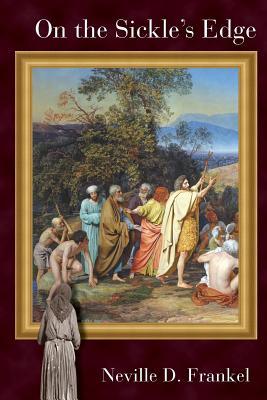
On the Sickle's Edge by Neville D. Frankel, 2017

Click to view
on publisher's site  
What we cannot keep. What we cannot lose.
A sweeping masterwork of love and loss, secrets and survival, On the Sickle's Edge is told through the voices of three characters who lay bare their family's saga: the endearing, scrappy South-African born Lena, transported to Latvia and later trapped in the USSR; her granddaughter Darya, a true Communist whose growing disillusionment with Soviet ideology places her family at mortal risk; and Steven, a painter from Boston who inadvertently stumbles into the tangled web of his family's past. Against the roiling backdrop of twentieth-century Russia and Eastern Europe, the novel delivers equal parts historical drama, political thriller and poignant love story.
(432 pages)

Okay, first, full disclosure: there is no way on earth that I would have finished reading On the Sickle's Edge if it weren't for the fact that I hadn't promised to review it for a TLC book tour. As it is, I wound up skipping in the second half. It's not that the book is poorly written, because it actually grabs the attention very well for an over 400-page historical novel. I've always been fascinated by the horrors of life under the USSR regime (in part because they're given far too little attention in literature due to WWII), and the actual story of this increasingly-growing Jewish family hiding in plain sight in Moscow is gripping and very meaningful for me to read. My favorite point-of-view was Lena's, because she had the most dramatic and fascinating life of all three of the main characters. Also, most of the drama Darya and Steven faced was self-inflicted; Lena was the true innocent of the story, the girl whose life was ripped away from her by the cruelty of the USSR dictatorship.

So . . . what happened? Why did I almost put On the Sickle's Edge down, and why did I finish it with a sour taste in my mouth? I think a lot of my distaste for the book boils down to the fact that it's an adult novel, and I very much prefer middle-grade and young-adult books. I forgot, in my excitement about this book's topic, that so many fictional adult books have way more graphic content than I'm used to. And I'm not talking about violence–there was that too, of course, but that was to be expected. No, I'm talking about sex. For one thing, all three characters are way to easy about it; Steven is particularly promiscuous. I could still mostly forgive the book for its characters' loose morals, excusing them away as accurate depictions of the way people in their situations behaved, but what I can't be okay with are the graphic sex scenes (including ones between distant cousins–still kind of ew!) that are sprinkled into the text. I have no desire to read content like that, so I did my best to skip over them and plow through in honor of my pledge to review the book. When the author started throwing important dialogue pieces into the middle of those scenes, though, that's when I got really frustrated and started skipping pages to just get through the book already. There's some horrible stuff in there, including several times where Darya's husband clearly rapes her, and I just don't want to read that!

Call me a baby if you want, but that's how I feel. I don't have much more to say about the book, besides the fact that it's so complex and historically significant that more liberal readers than I will probably love it. Oh, and also that Darya's husband was so evil I actually found him very unrealistic. Were there men like him in the USSR? Maybe, but it seems strange that he never showed even the slightest sign of humanity or weakness–ever.

Maybe I'm just not the right audience for this book, so maybe you will like it more than I did. If you've read the description, and what I've described doesn't turn you off, then try On the Sickle's Edge for yourself. Be sure to comment below with your thoughts once you've finished it!

Disclaimer: I received a complimentary copy of this novel for the purpose of participating in a TLC Book Tour.

11 January 2016

I Don't Know How the Story Ends by J.B. Cheaney, 2015

Click to view
on Goodreads 
The bustling beginning of Hollywood comes to life in this funny yet touching novel.
When Isobel Ransom is dragged on a long vacation to Hollywood, she anticipates nothing more than homesickness, especially with her father away at war. But that's before she meets her cousin, Ranger. Ranger's making his very own motion picture, and he insists that Isobel and her little sister, Sylvie, be a part of this secret project. But it soon appears that Ranger hasn't yet found a story to tell - that is, until Isobel's injured father returns from the front. Movie stars, eccentric directors, and the wild-west atmosphere of early Hollywood form a lively context to this story of learning how to make sense of an unexpected world.

(288 pages)

I know pretty much nothing about the history of filmmaking. What little I do know comes from Brian Selznick's The Invention of Hugo Cabret. I know much more now, though - I Don't Know How the Story Ends is a very educational book! That's not its priority, though, that's not what it's first and foremost meant to be. It's just that it's set during WWI, in Hollywood, and the main characters happen to be making a movie.

This is a rather strange book, filled with a mixture of old movie-making and timeless relationship issues. Isobel is torn apart between missing her father - who is serving as a doctor in the war - being proud of him, and worrying that her mother is forgetting about him. Charlie Chaplin approaches Isobel's mother partway through the story, offering her a role in his next movie, and Isobel is afraid to see her mother blushing and laughing with him. When her father comes home injured - pretty mutilated, really - Isobel's internal conflict takes center stage for a while as she can't cope with the fact that her handsome father has been turned into such a scarred, hideous creature.

As I'm completely uninterested in movie-making both past and present, some parts of the story kind of dragged for me as the kids wandered around filming shot after shot. By the end of the story I was a little more invested in the movie-making process, though, and the movie itself intrigued me because it was like a puzzle: they had all these scenes, shot out of order, and no idea what sort of story they would make. It was pretty cool seeing the story evolve as shooting went along. The movie they eventually produced was really great, too, though the scene where they reveal it fell a bit flat for me. I'm not sure why - perhaps I just wasn't invested in the characters enough.

That's probably my main issue with the book, really, is that I wasn't quite as absorbed into the story and the characters as I usually am. Perhaps it was just me, perhaps I was having an off-day, but I never truly reached the place where I abandoned my surroundings and dived whole-heartedly into Isobel's. I liked Isobel, but I kind of hated the way she reacted toward her father; I liked Ranger, but he sometimes struck me as being a rather contrived character; I like Isobel's little sister Sylvie, but - actually, no buts there. Sylvie was perfect, just as annoying and gullible and precious as any real-life little sister. I think she may have actually been my favorite character.

Anyway, I do recommend this book to you if you like the history of filmmaking or reading about the families of men who went off to war. I think many people will like this book more than I did, so don't skip it because I liked but didn't love it. There are a lot of different things to chew on in I Don't Know How the Story Ends, a lot of different themes that different people will draw out of the story, but I personally didn't get anything out of it besides a few hours of entertainment.

And really, a few hours of entertainment is benefit enough all on its own.