Showing posts with label Candlewick Press. Show all posts

25 January 2019

Secret Soldiers: How the U.S. Twenty-Third Special Troops Fooled the Nazis by Paul B. Janeczko, 2019

Click to view
on Goodreads 
What do set design, sound effects, and showmanship have to do with winning World War II? Meet the Ghost Army that played a surprising role in helping to deceive -- and defeat -- the Nazis.

In his third book about deception during war, Paul B. Janeczko focuses his lens on World War II and the operations carried out by the Twenty-Third Headquarters Special Troops, aka the Ghost Army. This remarkable unit included actors, camouflage experts, sound engineers, painters, and set designers who used their skills to secretly and systematically replace fighting units -- fooling the Nazi army into believing what their eyes and ears told them, even though the sights and sounds of tanks and war machines and troops were entirely fabricated. Follow the Twenty-Third into Europe as they play a dangerous game of enticing the German army into making battlefield mistakes by using sonic deceptions, inflatable tanks, pyrotechnics, and camouflage in more than twenty operations. From the Normandy invasion to the crossing of the Rhine River, the men of the Ghost Army -- several of whom went on to become famous artists and designers after the war -- played an improbable role in the Allied victory.

(304 pages)

Okay, this is actually really funny. When I read Secret Soldiers, I made a mental note to mention another book that I read for review last year which was what first taught me about the role of deception in wars, including World War II. I just looked it back up, and it's called Double Cross: Deception Techniques in War (here's my review).

The funny part? It was also written by Janeczko! The man clearly has a focused passion for deception tactics in combat, which is a strangely specific topic, but I said in my review of Double Cross that I learned a lot from reading it and enjoyed myself in the process and I would say that holds roughly true for Secret Soldiers as well.

It was a bit harder to keep track of all the moving parts since the Twenty-Third was split into several smaller groups that specialized in different parts of the deception (building the dummies, playing the audio sounds, etc.). It almost became a bit tedious at times, too, since several of their missions basically consisted of showing up, getting all set up, and then leaving pretty soon afterwards. And then, because of miscommunication with the regular soldiers they were working with, they were often not deployed where they could be the most helpful so all of their efforts may or may not have actually done anything.

There were certainly some times when they definitely made a difference, though, and it was cooler to learn about those. And I appreciated Janeczko's thoroughness, for the sake of a complete history book, even if it didn't all thrill me.

He does a good job of including details about all the people in the Twenty-Third. There were so many people who would go on to be famous artists, or actors, and he gives many of them their own inserts so we get to learn their unique stories alongside the story of the "Ghost Army" as a mass.

All in all, this is a well-researched and cohesive book that will be perfect for some readers, and perhaps a bit dry for others. If you're at all interested in the Ghost Army, though, then this is definitely a great place to start.

Disclaimer: I received a complimentary copy of this book from the publisher in exchange for an honest review.

11 January 2019

The Day War Came by Nicola Davies, 2018

Click to view
on Goodreads 
A moving, poetic narrative and child-friendly illustrations follow the heartbreaking, ultimately hopeful journey of a little girl who is forced to become a refugee.

The day war came there were flowers on the windowsill and my father sang my baby brother back to sleep.

Imagine if, on an ordinary day, after a morning of studying tadpoles and drawing birds at school, war came to your town and turned it to rubble. Imagine if you lost everything and everyone, and you had to make a dangerous journey all alone. Imagine that there was no welcome at the end, and no room for you to even take a seat at school. And then a child, just like you, gave you something ordinary but so very, very precious. In lyrical, deeply affecting language, Nicola Davies's text combines with Rebecca Cobb's expressive illustrations to evoke the experience of a child who sees war take away all that she knows.
(32 pages)


This book arrived the day I left for college in September, so it's taken me a while to get back and get around to reviewing it. My parents and sister did read it, though, and they reported over FaceTime that they found it actually kind of hilarious–hilariously depressing, that is. My sister actually read the whole book to me while I was in the airport, half laughing at it the whole time.

It's not that my family takes pleasure from the pain of children, or that my sister actually thinks the book was meant to be a humorous one. The Day War Came is a very sad story about a girl whose entire world is destroyed, and who struggles to find a place to belong because people don't care about immigrants. Davies is very much making a statement with this book, and she tells a gritty, depressing story to make that statement.

And I think that's what my sister–and I–find so ridiculous about this book: it's a picture book. It's written for kids who barely know how to read. Each page has just a few lines for a child to potentially struggle through on their own. And yet the story it tells is not really age-appropriate for children that small, nor is the tone one that they would enjoy. I can very easily see this book (supported by Help Refugees) traumatising children in its target audience, and for what? Toddlers have absolutely no control over immigration, and stories like this are only going to upset them (or, at best, bore them). And the political agenda is so blatant that it's definitely not going to convince anyone to change their stance on immigration. I suppose the best to hope for is that it might soften the parent's behavior toward an immigrant child they might meet someday?

As an example of the tonal issue, I flipped to a random page and found a picture of the protagonist kneeling in the rubble of her destroyed home. Ash rises to the sky, lumps of rubble surround her, and the words on the two page layout are as follows:
I can't say the words that tell you / about the blackened hole / that had been my home.
All I can say is this: / War took everything. / War took everyone. / I was ragged, bloody, all alone.
I surely can't be the only one, politics aside, who has no interest in reading this to any child, ever.

Disclaimer: I received a complimentary copy of this book in exchange for an honest review.


05 November 2018

Speechless by Adam P. Schmitt, 2018

Click to view
on Goodreads 
How do you give a eulogy when you can't think of one good thing to say? A poignant, funny, and candid look at grief, family secrets, difficult people, and learning to look behind the facade.

As if being stuffed into last year's dress pants at his cousin's wake weren't uncomfortable enough, thirteen-year-old Jimmy has just learned from his mother that he has to say a few words at the funeral the next day. Why him? What could he possibly say about his cousin, who ruined everything they did? He can't recall one birthday party, family gathering, or school event with Patrick that didn't result in injury or destruction. As Jimmy attempts to navigate the odd social norms of the wake, he draws on humor, heartfelt concern, and a good deal of angst while racking his brain and his memory for a decent and meaningful memory to share. But it's not until faced with a microphone that the realization finally hits him: it's not the words that are spoken that matter the most, but those that are truly heard.

(304 pages)

You'd think a book set at a young boy's wake would be way too morbid to be entertaining.

Somehow, Speechless isn't. It's sad, of course, but Schmitt straddles that line between sorrowful and funny very carefully. Little details, like Jimmy's aunt who is an "expert wake-goer" and Jimmy's ongoing struggles with the dress pants he's outgrown, add a morbid sort of humor to the present-day scenes.

The flashbacks to memories with Patrick start out as comedic interludes as well, but they grow increasingly sadder as the book progresses, painting a picture of Patrick's struggles with what was probably undiagnosed ADHD, or something similar. I got so mad at his parents, because they did such an awful job helping him.

The narrative jumps around a lot, as Jimmy flashes back to all these different memories of Patrick, but since the flashbacks go roughly in order it never becomes too confusing. I thought it was very well done, and by the end of the book I felt like I knew all the members of both Jimmy's and Patrick's families quite well. I got very mad at some of the parents at times (especially Patrick's father and Jimmy's mother!), but it was clear that they were all doing the best that they could and I appreciated that level of realism–no one was ever turned into a stereotype, for good or bad.

Speechless takes material that would normally be overwhelmingly depressing and manages to make it entertaining. It's still sad, of course–Patrick's death was a colossal tragedy. But the tragedy is handled near perfectly, and it's wonderful. Don't read this book if you're dealing with death in your own life, of course, but I think most other readers could definitely get something out of Speechless.

Disclaimer: I received a complimentary copy of this book from the publisher in exchange for an honest review.

29 October 2018

Louisiana's Way Home by Kate DiCamillo, 2018

Click to view
on Goodreads 
From two-time Newbery Medalist Kate DiCamillo comes a story of discovering who you are — and deciding who you want to be.

When Louisiana Elefante’s granny wakes her up in the middle of the night to tell her that the day of reckoning has arrived and they have to leave home immediately, Louisiana isn’t overly worried. After all, Granny has many middle-of-the-night ideas. But this time, things are different. This time, Granny intends for them never to return. Separated from her best friends, Raymie and Beverly, Louisiana struggles to oppose the winds of fate (and Granny) and find a way home. But as Louisiana’s life becomes entwined with the lives of the people of a small Georgia town — including a surly motel owner, a walrus-like minister, and a mysterious boy with a crow on his shoulder — she starts to worry that she is destined only for good-byes. (Which could be due to the curse on Louisiana’s and Granny’s heads. But that is a story for another time.)

Called “one of DiCamillo’s most singular and arresting creations” by The New York Times Book Review, the heartbreakingly irresistible Louisiana Elefante was introduced to readers in Raymie Nightingale — and now, with humor and tenderness, Kate DiCamillo returns to tell her story.

(240 pages)

I've been enjoying Kate DiCamillo's books for many years now, ever since we did Because of Winn-Dixie as a read-aloud in second grade. From her picture books to her novels, she always crafts a story that is accessible to younger readers, enjoyable, and still somehow meaningful.

She has definitely continued this trend with Louisiana's Way Home. The book may skate dangerously close in parts to the "Southern quirky charm" cliche that I've grown really sick of, but it never crosses that line to become annoying. DiCamillo does a wonderful job of blending quirky-funny characters with situations (and even other characters) which are legitimately frustrating/challenging, rather than just playing off their charms. Louisiana meets many adults over the course of her attempts to return home, some of whom try to help her and others who look down their noses and suspect her of ulterior motives.

I should talk briefly about Granny's role in the book. She's one of those "quirky" characters whose actions become quite questionable, and I appreciated that DiCamillo had Louisiana struggle with her problematic behavior. I would have liked even more discussion of how some of Granny's actions were completely irresonsible and dangerous, but I suppose that would have been too much of a drag for a book ultimately written for children.

Honestly, my main complaint is that the book is too short. This is a common issue I have with books written for younger readers, and I think my frustration with the book's length just serves as evidence that it was good enough that I wanted to read more! Fans of Because of Winn-Dixie will definitely enjoy this newest novel from DiCamillo.

Have you read any books by Kate DiCamillo? If so, comment below which is your favorite!

Disclaimer: I received a complimentary copy of this novel from the publisher in exchange for an honest review.

19 October 2018

The Bigfoot Files by Lindsay Eagar, 2018

Click to view
on Goodreads 
The Loch Ness Monster. The Frogman. Bigfoot. Twelve-year-old Miranda Cho used to believe in it all, used to love poring over every strange footprint, every stray hair, everything that proved that the world was full of wonders. But that was before her mother's obsession with monsters cost Miranda her friends and her perfect school record, before Miranda found the stack of unopened bills and notices of foreclosure in the silverware drawer. Now the fact that her mom's a cryptozoologist doesn't seem wonderful -- it's embarrassing and irresponsible, and it could cost them everything. So Miranda agrees to go on one last creature hunt, determined to use all her scientific know-how to prove to her mother, once and for all, that Bigfoot isn't real. Then her mom will have no choice but to grow up and get a real job -- one that will pay the mortgage and allow Miranda to attend the leadership camp of her dreams. But when the trip goes horribly awry, will it be Miranda who's forced to question everything she believes?
(384 pages)

Um . . . okay.

I mean, I don't believe in the Loch Ness Monster or the Frogman or Bigfoot or any other fantastic creature for that matter. I like books that play with their existence, or that work them into the plot, but I don't believe they're real.

Miranda's mother does, and she's gone really nuts about proving that they are. And that's great and all, and the book is a nice story about mother-daughter bonding, but at the same time I still don't really agree with the mother at all.

Like, just because something exists doesn't mean you need to prove it's real (especially when it's clearly trying so hard to stay hidden). And you definitely should not be dragging your young daughter around to do it, continually disrupting her education and messing with her plans and making her panic your failing finances just because you need to go on yet another search for a crazy creature. But somehow they both think that if these creatures are real, what Miranda's mother has done make sense. It doesn't.

I couldn't really get over that. I also thought that Miranda's attempts at using the scientific method were kind of spotty, and I actually really related to her love for list-making but even I thought her approach to planning everything down to the nano-detail was a bit much.

It was an interesting enough read, but for my tastes it was a little too zany to be a good realistic novel and a little too realistic to be a fun zany novel. By all means do give it a go if you're curious about it, though.

Disclaimer: I received a complimentary copy of this book from the publisher in exchange for an honest review.

15 October 2018

Begone the Raggedy Witches by Celine Kiernan, 2018

Click to view
on Goodreads 
On the night that Aunty dies the Raggedy Witches come for Mup's mam. Pale, cold, relentless, they will do anything to coax Mam back to Witches Borough. When they kidnap Mup's dad, Mup and her mam must leave the mundane world to rescue him. But everything is odd in the strange, glittery Witches Borough, even Mam. Even Mup herself. In a world of rhyming crows, talking cats, and golden forests, it's all Mup can do to keep her wits about her. And even if she can save her dad, Mup's not sure if anything will ever be the same again. First in a new trilogy by Irish author Celine Kiernan, this tale of family and forbidden magic charts a fresh path through the landscape of beloved fantasy tradition–and promises to bewitch any reader in search of stories to love.
(288 pages)

I used to gulp down books by the dozen about girls who discover their family has secret ties to a fantasy realm and they have to go on some sort of quest in it. You know the type: there's usually a unicorn involved, and/or a couple of fairies or other fantastic creatures, and someone is always related to royalty.

Begone the Raggedy Witches uses some of these tropes, but plays with them so much that they're nearly unrecognizable. I really love the fact that Mup's mother is the "special one," rather than Mup herself being it. For most of the story Mup is basically a distraction/side character on her mother's quest. That sounds like it would be boring, but it's not. Because Mup's innocent, childish observation of the strife in Witches Borough, and her mother's role in returning to save her husband, is a wonderful way to lighten what could have very easily turned into a depressingly dark book.

It's still quite dark in places, with some death and discussion of child abandonment and questions about what it means to be family. Mup's aunt died right before the book began, but her ghost accompanies the family on much of its quest; Mup sees the moral conflict that her aunt's decision to run away from home entailed, as she saved herself and her sister but left the rest of her friends and people behind to face her mother's wrath.

There are people who can turn into animals and men who are forced to say everything in rhyme, and the magical world is just so interesting and miserable at the same time that I was fascinated by it. Even when the story veered into predictable territory (as it did, essentially, follow the pattern left by many books before it), it did so in a way that was still novel and intriguing.

All in all, Begone the Raggedy Witches is an interesting new story that I enjoyed reading (even when it got rather dark). I'm looking forward to continuing the trilogy!

Disclaimer: I received a complimentary copy of this book in exchange for an honest review.

12 October 2018

Voices from the Second World War from Candlewick Press, 2018

Click to view
on Goodreads 
In an intergenerational keepsake volume, witnesses to World War II share their memories with young interviewers so that their experiences will never be forgotten.

The Second World War was the most devastating war in history. Up to eighty million people died, and the map of the world was redrawn. More than seventy years after peace was declared, children interviewed family and community members to learn about the war from people who were there, to record their memories before they were lost forever. Now, in a unique collection, RAF pilots, evacuees, resistance fighters, Land Girls, U.S. Navy sailors, and survivors of the Holocaust and the Hiroshima bombing all tell their stories, passing on the lessons learned to a new generation. Featuring many vintage photographs, this moving volume also offers an index of contributors and a glossary.

(320 pages)

I both really loved this book and also didn't really like it.

I really love what it's doing. It takes the stories of people alive during WWII and records them in a format that is accessible for children (though perhaps sometimes a bit too heavy for them, for obvious reasons), saving them for posterity. There are stories from all different angles, from people who were soldiers during the war and people who were children, Jews and Germans and Poles and Brits and Americans and more telling their individual slivers of the grand narrative of the war.

On the other hand, I didn't really like it in parts because some of the stories–especially toward the beginning–were kind of boring: basically, "I was evacuated and lived on a farm for a while." Plus there was clearly some strong editing done, because most of the narratives were told in the same way, even though they came from vastly different people and were recorded in the first-person narrative.

I flipped forward after a while, and once we get into the later parts of the war and its end, then the really impactful stories begin. There are stories from several Jewish children who survived death camps, or whose parents went into them. There are pictures of the people back then, too, which made the stories so much more real. The one that is absolutely most shattering is a two-page spread of Hungarian Jews fresh off the cattle trucks at Auschwitz-Birkenau, waiting to be sorted. The caption informs us that only the strong were spared from being immediately sent to the gas chambers, and it's a thousand times more horrifying than just reading the fact because you can look into the faces of all these people about to be murdered.

It's - it's pretty hard, to be honest. Some of the material in this book is extremely horrifying and depressing. Add in a little bit of bad language (mainly a couple of "hell"s) and this is definitely not a book you should be handing off to your young children any time soon. But it is a pretty good collection of stories from across the war, tied together with explanations of the historical context, and I think it is important that we carry these stories with us into the future generations.

Disclaimer: I received a complimentary copy of this book in exchange for an honest review.

17 September 2018

The Dollar Kids by Jennifer Richard Jacobson, 2018

Click to view
on Goodreads 
When a family buys a house in a struggling town for just one dollar, they’re hoping to start over — but have they traded one set of problems for another?

Twelve-year-old Lowen Grover, a budding comic-book artist, is still reeling from the shooting death of his friend Abe when he stumbles across an article about a former mill town giving away homes for just one dollar. It not only seems like the perfect escape from Flintlock and all of the awful memories associated with the city, but an opportunity for his mum to run her very own business. Fortunately, his family is willing to give it a try. But is the Dollar Program too good to be true? The homes are in horrible shape, and the locals are less than welcoming. Will Millville and the dollar house be the answer to the Grovers’ troubles? Or will they find they’ve traded one set of problems for another? From the author of
Small as an Elephant and Paper Things comes a heart-tugging novel about guilt and grief, family and friendship, and, above all, community.
(416 pages)

This is the second book by Jacobson that I've read; the first was Small As An Elephant, which I found to be sad and meaningful but in a way that was pretty generic and forgettable. I saw some promise in it, though, so when I was offered the chance to read The Dollar Kids I decided to give it a go.

And I'm very glad I did, because it hits all the right notes this time. There's sadness as Lowen struggles to cope with Abe's violent death, abandoning his artwork in mourning, but that sorrowful plotline is woven gently into a broader story about moving, small-town life, and struggling to fit in. I thought it was all very well done.

I suppose I'm biased to like this book from the start simply because it provides a relatively realistic depiction of what it's like to be the new kid. The Grovers and the other Dollar families are initially viewed with curiosity, and then suspicion. Some of the kids are incorporated into the town life, if they find an in with the established friend groups; the rest are consigned to outsider status forever. Lowen's mother's Cornish Eatery is a delightful place, which customers quickly grow to love, but the business struggles because the locals feel social pressure to frequent the restaurant run by a woman who has lived in the town for ages.

I've never experienced this same level of outcast status, but I moved across state lines six times before my eighteenth birthday, so I certainly know what it's like to be the new kid–and I can say that the feeling of being a "new" person is awful, and it takes forever to go away (and sometimes never does).

Many other reviewers will probably dedicate more space to the gun violence aspect of the book, so I won't discuss it too much other than to say that I thought some potentially controversial material was handled very smoothly. It's a tragic story, and we see the emotional impact of the loss firsthand through Lowen. I think the family's revulsion toward guns is presented logically and with no real chest-thumping rhetoric so it hopefully shouldn't offend gun rights supporters too much. Also, one of the Dollar families is a lesbian couple with children, but that isn't really a big focus of the story, either.

All in all, The Dollar Kids is a really great book. It's the kind of book you read and get thoroughly absorbed into, without worrying too much about the mechanics of it. Read it and enjoy it. That's really all I can say.

Disclaimer: I received a complimentary copy of this novel from the publisher in exchange for an honest review.

24 August 2018

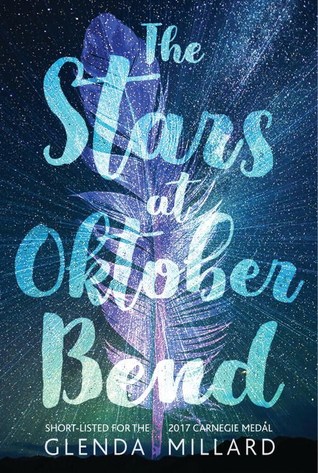
The Stars at Oktober Bend by Glenda Millard, 2018

Click to view
on Goodreads 
i am the girl manny loves. the girl who writes our story in the book of flying. i am alice.

Alice is fifteen, with hair as red as fire and skin as pale as bone. Something inside Alice is broken: she remembers words, but struggles to speak them. Still, Alice knows that words are for sharing, so she pins them to posters in tucked-away places: railway waiting rooms, fish-and-chips shops, quiet corners. Manny is sixteen, with a scar from shoulder to elbow. Something inside Manny is broken, too: he once was a child soldier, forced to do terrible, violent things. But in a new land with people who care for him, Manny explores the small town on foot. And in his pocket, he carries a poem he scooped up, a poem whose words he knows by heart. The relationship between Alice and Manny will be the beginning of love and healing. And for these two young souls, perhaps, that will be good enough.
(288 pages)

I'm struggling to review The Stars at Oktober Bend.

I really don't know what to say. Is it a good book? I think so. Did I personally enjoy it? Not all that much. Can I even remember half of what happens? Nope. Does that make me a bad person? Hopefully not.

Basically, it's the sort of meaningful, lyrical, poignant book that we're all supposed to fall head over heels for. Alice's story is tragic and haunting, and Manny's is equally so.

Or at least, it is once we find out what it is. Unfortunately, so much time is taken up with Alice–her muddled narration, her backstory, her vivid memories and those she blocked out–that there isn't nearly as much focus on Manny. We learn that he was a child soldier, that he is traumatized, and that he quickly falls for Alice. And that's almost all the details we get in the entire book.

Perhaps that is the root of my troubles with the book, my apathy toward their relationship. I cared about Alice, but not so much about Manny because I didn't know him. And besides, I was really just so mad at all the people who did wrong by both of them throughout their lives that I struggled to find much to enjoy.

I genuinely do think this is a good book–it's lyrical and meaningful and poignant, and its exploration of Alice's family dynamics in particular is very well-drawn. But the book and I didn't entirely click. If you're interested (and won't be triggered by mentions of rape), then, by all means, do give it a go. Hopefully you will be able to get more out of it than I did.

Disclaimer: I received a complimentary copy of this novel from the publisher in exchange for an honest review.

16 July 2018

My Year in the Middle by Lila Quintero Weaver, 2018

Click to view
on Goodreads 
In a racially polarized classroom in 1970 Alabama, Lu's talent for running track makes her a new best friend — and tests her mettle as she navigates the school's social cliques.

"Miss Garrett's classroom is like every other at our school. White kids sit on one side and black kids on the other. I'm one of the few middle-rowers who split the difference."

Sixth-grader Lu Olivera just wants to keep her head down and get along with everyone in her class. Trouble is, Lu's old friends have been changing lately — acting boy crazy and making snide remarks about Lu's newfound talent for running track. Lu's secret hope for a new friend is fellow runner Belinda Gresham, but in 1970 Red Grove, Alabama, blacks and whites don't mix. As segregationist ex-governor George Wallace ramps up his campaign against the current governor, Albert Brewer, growing tensions in the state — and in the classroom — mean that Lu can't stay neutral about the racial divide at school. Will she find the gumption to stand up for what's right and to choose friends who do the same?
(288 pages)

I don't know what it is about this book, but it's taken me literally six months to work up the energy to review it. Even now, I'm only doing it because it's worked its way to the top of my review calendar.

Perhaps I've just read one too many books about desegregation in the South. It's an interesting topic, but there reaches a point where all these books about white girls learning to stand against racism for the sake of their one black friend become a little repetitive.

That's not to say that My Year in the Middle is derivative or bad, because it really isn't. Weaver adds a very interesting angle by making her protagonist an Argentinian immigrant, because it adds a layer of complexity to the story that similar books don't have. I also feel like Lu and Belinda's relationship is very realistic, since they share a passion for running (definitely a hobby I have no interest in sharing!). Plus, the politics of the upcoming election and the racist mud-slinging are interesting (and hard) to read. I can't believe that the author's note says she didn't make them up.

Also, can we just stop to acknowledge the fact that public schools in Red Grove, Alabama weren't desegregated until the 1969/1970 school year? That is ridiculously close to modern day. This book is set in 1970, but it feels like 1950 for all the racism Belinda has to face. Seriously, Alabama?!

Honestly, My Year in the Middle is a great book. Looking back now, I think my reluctance to review it largely stemmed from the fact that I hate thinking about how much racism there still was just a couple of decades ago. It's a good book, though, well-written and entertaining while also thought-provoking. I definitely recommend it!

Disclaimer: I received a complimentary copy of this novel from the publisher in exchange for an honest review.

02 July 2018

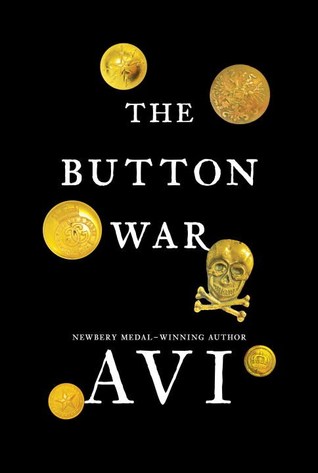
The Button War by Avi, 2018

Click to view
on Goodreads 
Renowned, award-winning author Avi pens a stark, unflinching tale of ordinary boys living in wartime as tensions — and desperations — mount among them.

Twelve-year-old Patryk knows little of the world beyond his tiny Polish village; the Russians have occupied the land for as long as anyone can remember, but otherwise life is unremarkable. Patryk and his friends entertain themselves by coming up with dares — some more harmful than others — until the Germans drop a bomb on the schoolhouse and the Great War comes crashing in. As control of the village falls from one nation to another, Jurek, the ringleader of these friends, devises the best dare yet: whichever boy steals the finest military button will be king. But as sneaking buttons from uniforms hanging to dry progresses to looting the bodies of dead soldiers — and as Jurek’s obsession with being king escalates — Patryk begins to wonder whether their “button war” is still just a game. When devastation reaches their doorstep, the lines between the button war and the real war blur, especially for the increasingly callous Jurek. Master of historical fiction Avi delivers a fierce account of the boys of one war-torn village who are determined to prove themselves with a simple dare that spins disastrously out of control.
(240 pages)

I'll be perfectly honest: I had very, very high expectations for The Button War because it's written by Avi. Most people love Avi for The True Confessions of Charlotte Doyle, but the truth is that I barely even remember that book; no, the reason I had high hopes for this new Avi read was because I was obsessed with his The Secret School when I was little. It grabbed my fascination in a big way, with its tale of children banding together to trick their parents into letting them continue to get an education after their teacher leaves.

I suppose that in some ways The Button War is the opposite of The Secret School. Where the earlier book showed children banding together to improve themselves, devoting themselves to their studies and staying relatively well-behaved, The Button War tells the story of a band of school-aged boys who, when left to their own devices, egg each other on to do reckless, stupid things–like the titular competition to steal the brightest, fanciest buttons from the uniforms of the various armies invading their small town.

It's frankly not very fun to read, because I spent most of the book wanting to reach out and smack Jurek–and the other boys for caring enough about his words to put themselves and their families in danger like that. It's one thing to read about people putting themselves in danger during WWII to save Jews from the Holocaust, but watching Patryk's band of friends get in danger for the sake of such a stupid game was just painful. I suppose it's a reflection of the violence they've grown up around, that they've become so desensitized to it and reckless that they would behave in this way, but I didn't really enjoy it.

I think The Button War is a pretty good book, but I for one just found it so frustrating that I didn't get much out of it. You might like it more than I did, though.

Disclaimer: I received a complimentary copy of this book from the publisher in exchange for an honest review.

22 June 2018

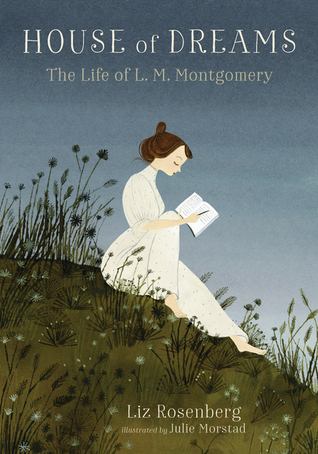
House of Dreams: The Life of L.M. Montgomery by Liz Rosenberg, 2018

Click to view
on Goodreads 
An affecting biography of the author of Anne of Green Gables is the first for young readers to include revelations about her last days and to encompass the complexity of a brilliant and sometimes troubled life.

Once upon a time, there was a girl named Maud who adored stories. When she was fourteen years old, Maud wrote in her journal, "I love books. I hope when I grow up to be able to have lots of them." Not only did Maud grow up to own lots of books, she wrote twenty-four of them herself as L. M. Montgomery, the world-renowned author of Anne of Green Gables. For many years, not a great deal was known about Maud’s personal life. Her childhood was spent with strict, undemonstrative grandparents, and her reflections on writing, her lifelong struggles with anxiety and depression, her "year of mad passion," and her difficult married life remained locked away, buried deep within her unpublished personal journals. Through this revealing and deeply moving biography, kindred spirits of all ages who, like Maud, never gave up "the substance of things hoped for" will be captivated anew by the words of this remarkable woman.

(352 pages)

I've always loved the story of Anne of Green Gables, ever since I first saw the CBC tv version when I was so young I barely understood what was going on. Few things make me feel more nostalgic than popping in the old DVD and watching Megan Follows sitting in her attic bedroom, gazing into her reflection and musing about kindred spirits. Once I got a little older, I found the L.M. Montgomery books at my local library and worked my way through quite a few of the many Green Gables books. I even picked up Emily of New Moon, though by that point I was pretty oversaturated on Montgomery's books.

While I love the premise and execution of the Anne of Green Gables series, I always felt like the series dragged on way too long. So it's very interesting to learn that Maud was never really interested in or planning on writing such a long series–she really just meant to write a standalone, but it was so popular and lucrative that she was pushed to write more and more over the years.

Really, it's just so sad to read about Maud's life. In many places, she actually feels more like a character from one of her books than a living, breathing person. Her childhood was extremely similar to Anne's, as she was raised by emotionally distant grandparents on stunningly beautiful Prince Edward Island. However, Maud was not an outsider to the island; rather, she was descended from the closest thing to "royal families" the island had–and was related to basically everyone else on the island. And while she loved her grandparents, their emotional distance was much harsher than Marilla and Matthew's was from Anne. Because she was female, Maud's grandfather even tried his absolute hardest to block her from getting an education. She managed to go to college despite him, with her grandmother's help, but it was a very hard road.

Once she reached adulthood, Maud's path became no easier. She shuffled around teaching in one-room schoolhouses, finding various happiness in the different towns. Over the course of her adolescence and early adulthood she had many suitors or almost-romances, but they were all nipped in the bud for one reason or another (often by her own choice). Her love life was truly tragic, and her life as a whole became darker and sadder the further along the story went. By the end of it, I felt choked and angry from even imagining myself in her shoes. She may have been one of the rare early female writers who found fame and relative fortune through her writings while still alive, but that just can't balance out the rest of her terrible life.

Maud was a victim of her own decisions as well as her upbringing. She was quite the coquette at times, and she flirted extremely close to sleeping with a man while engaged to somebody else. It was certainly enlightening to lift back the curtain on L.M. Montgomery's life, and depressing to see how a delicate kindred spirit can be crushed when it is not properly nourished by a wonderful support system like Anne's. I appreciated the chance to learn Maud's story, even if it is depressing, but I am also glad that I didn't learn it until I was out of my childhood. Please, whatever you do, don't pass House of Dreams on to any young readers who are still in the process of falling in love with Green Gables. Don't ruin the magic for them.

Now I need to go back and rewatch the tv show to recapture some of that magic for myself. Let's do that here, too: if you've seen or read any of the Anne of Green Gables installments. what's your favorite scene?

Disclaimer: I received a complimentary copy of this book from the publisher in exchange for an honest review.

30 April 2018

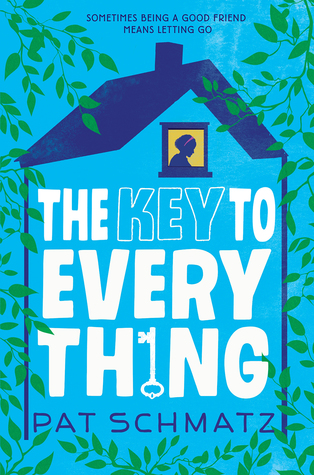
The Key to Everything by Pat Schmatz, 2018

Click to view
on Goodreads 
For eleven-year-old Tash, Cap'n Jackie isn't just the elderly next-door neighbor — she's family. When she disappears, only Tash holds the key that might bring her back.

Tash didn't want to go to camp, didn't want to spend the summer with a bunch of strangers, didn't want to be separated from the only two people she has ever been able to count on: her uncle Kevin, who saved her from foster care, and Cap'n Jackie, who lives next door. Camp turns out to be pretty fun, actually, but when Tash returns home, Cap'n Jackie is gone. And Tash needs her — the made-up stories of dolphin-dragons, the warm cookies that made everything all right after a fight, the key Cap'n Jackie always insisted had magic in it. The Captain always said all Tash had to do was hold it tight and the magic would come. Was it true? Could the key bring Cap'n Jackie back? In a heartfelt and stunningly written story, Pat Schmatz introduces readers to a tenacious, fiercely loyal girl struggling to let go of the fantasies and fears of her childhood . . . and say yes to everything that lies ahead.

(208 pages)

Hmm. I enjoyed reading The Key to Everything while I was in it, but once I set it down I frankly just put it out of my mind entirely. I'm actually reviewing it several months after I read it, because I had no interest in reviewing it for so long and now I kind of have to.

It's hard to understand why I had this reaction after putting the book down, because it really is an interesting and engaging read. It does rather jump straight into the middle of a story by cutting to Tash's return home from summer camp after a big row with her next door neighbor/mother figure Cap'n Jackie. We basically just have to pick up the pieces of the story as the book goes along, which is fine but kind of disorienting at first because Tash's home situation is quite unique.

Cap'n Jackie is suddenly in a nursing home, and Tash is desperate to figure out how to reach her and save her, using the "magic" key from their childhood stories and finding a way to apologize for the nasty things she said before leaving for camp. It's an interesting and engaging (and emotional!) premise, and it's fairly well done.

But at the same time, I think I just didn't have enough personal experience with the characters and their dynamics to feel the full impact of the blows the Captain's injuries caused. I felt bad for Tash, but I also didn't really know Tash well enough to be fully invested in her story.

Perhaps that's just the curse of shorter books, which I'm not used to reading. Whatever it is, I do still recommend The Key to Everything if you're interested (with the caveat that there is a gay couple, so be warned if that's something you don't want). Maybe you can get more out of it than I did.

I'm surely not the only person who's enjoyed a book well enough but put it down feeling rather empty.  If that has happened to you, I want to hear about it in the comments!

Disclaimer: I received a complimentary copy of this novel from the publisher in exchange for an honest review.

23 March 2018

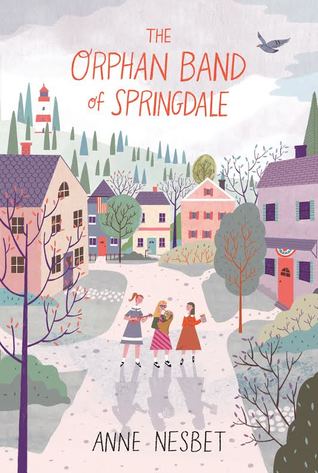
The Orphan Band of Springdale by Anne Nesbet, 2018

Click to view
 on Goodreads 
With the United States on the verge of World War II, eleven-year-old Gusta is sent from New York City to Maine, where she discovers small-town prejudices — and a huge family secret.

It’s 1941, and tensions are rising in the United States as the Second World War rages in Europe. Eleven-year-old Gusta’s life, like the world around her, is about to change. Her father, a foreign-born labor organizer, has had to flee the country, and Gusta has been sent to live in an orphanage run by her grandmother. Nearsighted, snaggletoothed Gusta arrives in Springdale, Maine, lugging her one precious possession: a beloved old French horn, her sole memento of her father. But in a family that’s long on troubles and short on money, how can a girl hang on to something so valuable and yet so useless when Gusta’s mill-worker uncle needs surgery to fix his mangled hand, with no union to help him pay? Inspired by her mother’s fanciful stories, Gusta secretly hopes to find the coin-like “Wish” that her sea-captain grandfather supposedly left hidden somewhere. Meanwhile, even as Gusta gets to know the rambunctious orphans at the home, she feels like an outsider at her new school — and finds herself facing patriotism turned to prejudice, alien registration drives, and a family secret likely to turn the small town upside down.

(448 pages)

I'll be honest: I didn't really know what I was in for when I picked up The Orphan Band of Springdale, and I kind of thought it was going to be a little bit boring. I like historical fiction, but some areas (such as orphans going to live with a troubled family in a small town) have been done nearly to death by this point.

I'm very happy to report, though, that The Orphan Band of Springdale avoids a lot of the pitfalls of its niche. Some of the plot devices and twists may look familiar, but the book as a whole is done in a fairly original and definitely gripping manner. It handles a lot of messy, complicated issues such as anti-German sentiment in the 1940s, the handling of sensitive family history, and the labor organization movement. All of these are done very well, I thought, and woven together very tightly and interspersed with the right amount of humor to keep things from becoming too dark for its target audience.

I think my favorite thing about this book is that it works very hard to show both sides of every issue and paint the characters as complex and nuanced. There are almost no pure villains or amazing heroes in Springdale; people make their decisions out of love, out of fear, out of necessity; sometimes those decisions are good ones that improve life for everyone involved, and sometimes those decisions are bad ones which wind up hurting people around them. But they always have reasons for the choices they make, and sometimes those reasons are actually very reasonable (even if we may not like their results). For example, it's not really fair that Gusta–an innocent child–gets bullied because of her German last name, but it is true that her father is literally from Germany and WWII has already started; fears that her family might be connected to the Nazis aren't entirely unreasonable. As the granddaughter of a Swiss-German American who lost the German language which had been handed down for generations, because schoolteachers and parents decided it wasn't a good idea to let their kids speak German in the 1940s, I can mourn for the loss of cultural heritage people of German ancestry experienced during WWII–and the discrimination some, like Gusta, experienced–but I also understand that it was necessary to a certain extent. I think Nesbet does a good job walking the line between the two perspectives, showing us the atmosphere of the time and its results.

The Orphan Band of Springdale is a good book, a nuanced book, and I really enjoyed reading it. It may be a bit long for some younger readers, but if they can make it through the 450 pages then I recommend it. Let me know in the comments below if you or anyone you know has read it, and give us your thoughts!

Disclaimer: I received a complimentary copy of this novel from the publisher in exchange for an honest review.

09 March 2018

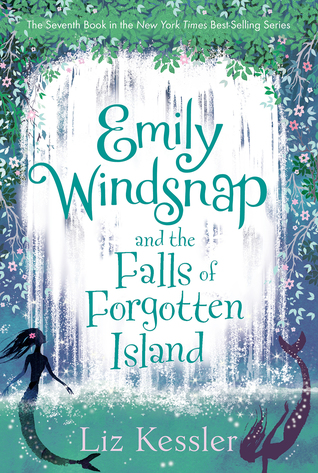
Emily Windsnap and the Falls of Forgotten Island by Liz Kessler, 2018

Click to view
on Goodreads 
While on vacation, Emily Windsnap finds herself swept up in an ancient prophecy as the New York Times best-selling series continues.

Emily is headed to a tropical island for a relaxing vacation with friends and family. And this time, Emily promises her best friend, Shona, there will be absolutely no adventure — just plenty of fun. But somehow excitement always seems to find Emily, and before she knows it, she ends up on the other side of a powerful waterfall on a forgotten island no one else can get to. Well, no one that isn't a half-mer like Emily and her boyfriend, Aaron. The people who live on the island believe in a prophecy that foretells how they can be saved from an imminent, devastating earthquake — and this prophecy seems to revolve around Emily and Aaron, as well as a mysterious, mythic giant. Will they be able to find the giant — and fulfill the prophecy — before it's too late?

(320 pages)

I read the original The Tail of Emily Windsnap novel many, many years ago–back when I was actually in its target audience. It honestly read like a standalone, so I was a little nonplussed when a sequel came out, but I went ahead and read and enjoyed it. The story yet again seemed finished, which I was okay with, but then a few years later another book came out. Then another. And another. And another. And now this one. If you haven't been keeping count, that means Falls of Forgotten Island is the seventh book in a series while always seems to be wrapped up and finished at the end of every new installment.

The thing is, though, the reason Kessler can get away with writing so many of these books is that they really are enjoyable reads–especially for a certain demographic of readers, largely made up of tweenage girls. There's always something very appealing about the story of an ordinary girl who can secretly turn into a mermaid and live a whole nother life beneath the waves. Add in the romance plotline which has sprung up in the later books, with Emily's boyfriend Aaron, and it's sure to be a hit with kids who have always secretly wanted Emily's life.

As for me, I have to say that I'm getting rather sick of the Emily Windsnap books by this point. The drama seems rather contrived in this one, with Emily seeming to get into fights with everyone for reasons that are not entirely in her control. Shona get really mad at her for stumbling into yet another dangerous problem in need of a hero to save the day. It's hard to sympathize with her anger, or her desire to basically just leave the island to be destroyed.

At the same time, I do agree with Shona that it's getting kind of ridiculous how many times Emily has stumbled into a deadly scenario that only she (plus Aaron sometimes) can prevent. The premise may be getting rather old, but there's certainly nothing wrong with it. I don't plan on re-reading Falls of Forgotten Island anytime soon,  but I won't warn anyone away from it either. If you're a fan of the Emily Windsnap series, let us know in the comments what you think of this latest instalment!

Disclaimer: I received a complimentary copy of this novel from the publisher in exchange for an honest review.

23 October 2017

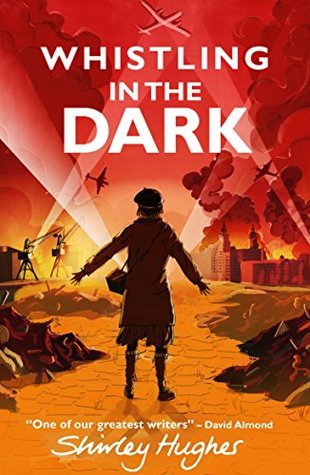
Whistling in the Dark by Shirley Hughes, 2015

Click to view
on Goodreads 
"Well-written and well worth reading." The Bookseller. Liverpool, 1940: thirteen-year-old Joan’s home is under threat from the Nazi’s terrifying nightly air-raids. It is not an easy time to be a teenager, especially with the sweet rationing, strict curfews and blackouts. Joan and best friend Doreen love going to the cinema until the bombings intensify and then even that becomes too dangerous, especially when an army deserter is found lurking near their home. Who is he and why does he think Joan can help him? As the Blitz worsens, Joan and her friends make a discovery that will tear the whole community apart…
(240 pages)

I've read a lot of historical fiction book centered around WWII, and they all take a slightly different angle on the terrible time. A lot of them involve the homefront in some way, so I was a little worried that Whistling in the Dark would struggle to carve its own unique spot in the literature, but I needn't have worried.

One thing I didn't know going into the book is that the author, Shirley Hughes, actually lived through WWII as a teenager living in Liverpool (the town where the book is set). I think that detail adds a little spark to the story that many other books about the time period don't have, just because we know the author really knows what she's talking about when she describes life there at the time.

And really, though it's a little book, there's quite a lot going on. I don't really want to go into the individual plotlines very much, because there would be lots of spoilers, but suffice it to say that Joan is confronted with issues ranging from personal/familial crises to meeting a loner refugee girl in school who doesn't speak English to dealing with the army deserter who is lurking around. They're all resolved in satisfactory and interesting ways, and I really liked reading about it.

Honestly, with all the amazing WWII books out there, I can't say that Whistling in the Dark stands out from the crowd a huge amount. But it's a good book, especially for younger readers who aren't prepared for the full horror of, say, a European Jewish girl's experiences during the war, and I for one really liked it. If you read it, please let us know your thoughts in the comments section down below!

Disclaimer: I received a complimentary copy of this novel from the publisher in exchange for an honest review.

20 October 2017

Race to the Bottom of the Sea by Lindsay Eagar, 2017

Click to view
on Goodreads 
Can a clever young inventor uncover a ruthless pirate’s heart of gold?

Thrilling sea adventure takes on a hint of steampunk in the second book by the author of the acclaimed Hour of the Bees.

When her parents, the great marine scientists Dr. and Dr. Quail, are killed in a tragic accident, eleven-year-old Fidelia Quail is racked by grief — and guilt. It was a submarine of Fidelia’s invention that her parents were in when they died, and it was she who pressed them to stay out longer when the raging Undertow was looming. But Fidelia is forced out of her mourning when she’s kidnapped by Merrick the Monstrous, a pirate whose list of treasons stretches longer than a ribbon eel. Her task? Use her marine know-how to retrieve his treasure, lost on the ocean floor. But as Fidelia and the pirates close in on the prize, with the navy hot on their heels, she realizes that Merrick doesn’t expect to live long enough to enjoy his loot. Could something other than black-hearted greed be driving him? Will Fidelia be able to master the perils of the ocean without her parents — and piece together the mystery of Merrick the Monstrous before it’s too late?

(432 pages)

First I just want to say that Race to the Bottom of the Sea was actually really good. I didn't know exactly what it was going in–I knew lots of water was involved, and was actually envisioning a 20,000 Leagues Under the Sea-esque submarine–but the whimsical description drew me to the book to try it out in the first place. And I'm glad I did!

You'd think that this would be a really sad and depressing book considering how much death appears/is mentioned, but it's actually not. It's an entertaining read that becomes rather serious and thoughtful, but never painful to read. My younger sister is an extraordinarily picky reader (and basically sticks mainly to nonfiction books about animals), but she voluntarily borrowed Race to the Bottom of the Sea from me and downed the whole thing in a couple of days. I think that in and of itself says a lot about the book's reception by its target audience.

As for me, while I did enjoy Race to the Bottom of the Sea, I had a little bit of a harder time suspending my disbelief long enough to accept the pseudo-science plot contrivances and the usual "genius-inventor child" trope that pops up in a lot of children's books. I liked Fidelia fine, and normally she struck me as a very nice, normal girl, but her inventions were frankly pretty ridiculous.

But really, the book has everything a child could want from a story involving pirates and treasure troves (and, of course, several foes). It's a lot more palatable for sensitive readers than, say, Treasure Island but it still doesn't speak down to them. I recommend it for pretty much anyone who is looking for a pirate-y book and who doesn't mind a certain amount of death (including parental death/grieving in the beginning of the book!).

Disclaimer: I received a complimentary copy of this novel from the publisher in exchange for an honest review.

16 October 2017

The Nutcracker Mice by Kristin Kladstrup, 2017

Click to view
on Goodreads 
Hidden in Saint Petersburg's famed Mariinsky Theater are the world's tiniest ballet fans: the Mariinsky mice, including Esmeralda, a rising dancer in the Russian Mouse Ballet Company. Despite being unable to control her tail, Esmeralda has just been assigned the lead role of Clara in a ballet debuting at Christmas: The Nutcracker. But when she learns that the new ballet features mice as villains, her excitement turns to horror: the mice of Saint Petersburg will never come to see such a production. Meanwhile, nine-year-old Irina is convinced that the mice she's seen in the Mariinsky -- the mice her father, the custodian, is supposed to exterminate -- are not only fans of the ballet, but dancers themselves. No one will believe her, so it falls to Irina to help save the mice everyone else considers vermin . . . and perhaps to help Esmeralda ensure the future of the mouse company. Sweet and inventive, Kristin Kladstrup's ballet fantasy features artwork by beloved illustrator Brett Helquist, old-fashioned drama, and just a touch of holiday magic.
(336 pages)

This is the sort of cozy book I would have devoured as a little girl. There's something so appealing about a story set in a far-off country (in this case Russia) during a far-away time (1892) that features anthropomorphic creatures (ballet-dancing talking mice!). Add all the dancing and ballet details to that, plus the one human girl who suspects the truth about the mice, and it's even more absorbing. In addition to all that, the scenario of mice preparing to perform The Nutcracker during its first human performance adds a delicious familiarity and Christmas feeling to the story because I attended performances of The Nutcracker almost every year when I was small.

Thus, before I even try to analyze The Nutcracker Mice objectively, I have to just say that I fell in love with the simple magic the story offers. After so many YA novels and adult nonfiction books, I needed to reading something so simple and pure as The Nutcracker Mice. It felt like a breath of fresh air.

Now, as for the story itself. First you have to get past the implausibility of the idea that mice are not only intelligent, human-like creatures who put on elaborate productions using the music played during the human performances, but also that all the theater mice are trained to read and understand both Russian and French. For some, I suppose that could be a pretty big hurdle; as for me, I counted it as part of the story's charm. I thought it was interesting that Esmerelda is an adult in the story because normally children's books feature protagonists who are in middle school. It made the (pretty slight) romance much stronger, in my opinion, and also made Esmerelda's adventures much more above-board and legit–she wasn't lying to any parents or sneaking out after hours, for example. It was also a little disconcerting, though, because I kept forgetting she was older until random moments when something would remind me.

I also really liked the bits of the story about Irina, the girl who spots Esmerelda practicing her ballet moves one day. She's written very realistically, and the drama surrounding her father's job is very well done.

Honestly, I have a hard time being very objective about The Nutcracker Mouse. It may not be perfect, or unpredictable, but it's a good solid book that I enjoyed and that I know for a fact I would have been completely in love with even a few years ago. If you know a kid with a fanciful imagination, then The Nutcracker Mouse would be a wonderful present for them–especially now while we're close to Christmas time!

Disclaimer: I received a complimentary copy of this novel from the publisher in exchange for an honest review.

13 October 2017

Sinking the Sultana by Sally M. Walker, 2017

Click to view
on Goodreads 
The worst maritime disaster in American history wasn't the Titanic. It was the steamboat Sultana on the Mississippi River -- and it could have been prevented.

In 1865, the Civil War was winding down and the country was reeling from Lincoln's assassination. Thousands of Union soldiers, released from Confederate prisoner-of-war camps, were to be transported home on the steamboat
Sultana. With a profit to be made, the captain rushed repairs to the boat so the soldiers wouldn't find transportation elsewhere. More than 2,000 passengers boarded in Vicksburg, Mississippi . . . on a boat with a capacity of 376. The journey was violently interrupted when the boat's boilers exploded, plunging the Sultana into mayhem; passengers were bombarded with red-hot iron fragments, burned by scalding steam, and flung overboard into the churning Mississippi. Although rescue efforts were launched, the survival rate was dismal -- more than 1,500 lives were lost. In a compelling, exhaustively researched account, renowned author Sally M. Walker joins the ranks of historians who have been asking the same question for 150 years: who (or what) was responsible for the Sultana's disastrous fate?
(208 pages)

Going into this book, I knew absolutely nothing about the Sultana. I had just finished studying AP US History, but our coverage of the Civil War remained focused on the big things–the politics, the generals, and the major battles. The sinking of the Sultana may have been terrible for the people who experienced it (as well as for the friends and families who lost loved ones on it), but it had no real lasting impression on the course of American history.

But still. I can't believe I'd literally never learned anything about the Sultana before. I used to be obsessed with the Titanic, yet I'd never heard of the largest American maritime disaster?

Anyway, on to the book itself. It's a good length, long enough to include lots of interesting details but not so long as to bore readers who are new to the subject. The first few chapters set the stage, introducing us to some of the prisoners of war and the squalid conditions they were subjected to, before moving on to the end of the war and the liquidation of the prison camps. There were some politics involved with the ships, some pressure placed on the men in authority to pack the Sultana as full as they possibly could as opposed to moving some of the men to other ships.

Then there's the description of the actual disaster, which is simply brutal. I had tears in my eyes reading about all the gruesome scenes that confronted the survivors, all the people–including innocent children–who died horrible deaths that night. It was a terrible scene, a truly horrific one, and I still can't believe that I never knew anything about it before now. I'm sad to have read the book in a way, because it was so horrifying, but also glad that I did and learned about this little-known dark moment in my nation's history.

Disclaimer: I received a complimentary copy of this book from the publisher in exchange for an honest review.

29 September 2017

42 is Not Just a Number by Doreen Rappaport, 2017

Click to view
on Goodreads 
An eye-opening look at the life and legacy of Jackie Robinson, the man who broke the color barrier in Major League Baseball and became an American hero.

Baseball, basketball, football -- no matter the game, Jackie Robinson excelled. His talents would have easily landed another man a career in pro sports, but such opportunities were closed to athletes like Jackie for one reason: his skin was the wrong color. Settling for playing baseball in the Negro Leagues, Jackie chafed at the inability to prove himself where it mattered most: the major leagues. Then in 1946, Branch Rickey, manager of the Brooklyn Dodgers, recruited Jackie Robinson. Jackie faced cruel and sometimes violent hatred and discrimination, but he proved himself again and again, exhibiting courage, determination, restraint, and a phenomenal ability to play the game. In this compelling biography, award-winning author Doreen Rappaport chronicles the extraordinary life of Jackie Robinson and how his achievements won over -- and changed -- a segregated nation.

(128 pages)

I always knew in a vague sort of way that Jackie Robinson was the first African American baseball player, and that this was a Big Deal back in its time. I've never been much into sports, so I never knew much more about Jackie than those basic facts.

42 is Not Just a Number does a really good job of going beyond the basic facts and giving us a good sense of who Jackie was and what he experienced throughout his life–or at least the first few decades of his life; the last twenty years are pretty much skipped over. I think the parts that fascinated me the most, though, were actually the earliest days: his childhood and days in the military before he joined the Dodgers. You know what the single most fascinating thing I learned about Jackie Robinson was? His older brother Mack won a silver Olympic medal in the 200-meter dash in 1936. He received no support from the city of Pasadena when he went off to the Olympics, no ticker-tape parade when he returned, and once he finished competing he literally wound up sweeping the streets of the city at night.

I suppose it's just because of the glory and fame that follows all the Olympic athletes (regardless of race) nowadays, but the sad mental image of this amazing athlete coming so far only to be turned away by every white person in Pasadena is particularly stark and hateful to me. Even now, we all know about Jackie Robinson–but do we know about his brother Mack Robinson, an equally talented athlete in his own right? No, we don't. Not at all.

The other interesting scene that particularly caught my attention was when Jackie got in huge trouble when he sat on a bus next to a black woman whom the driver perceived to be white. Basically, when he got pulled before an authority figure in the army for this "crime," he was disrespectful of the charges and disobedient when ordered to stay in a different room where he wouldn't be allowed to argue his case. He eventually actually went to trial for the offences, and while he was acquitted he was left behind by his platoon. It all ended well, I suppose, since that indirectly led to his becoming a professional baseball player, but the injustice still rankles.

Basically, this is a straightforward and fairly simple, yet still detailed, description of Jackie Robinson's most formative moments. It does skim over some times that I think would have been interesting to know more about, but on the whole it does a good job and makes for an interesting read. If you or someone you know is interested in learning more about Jackie Robinson the human being, then I recommend 42 is Not Just a Number.

Disclaimer: I received a complimentary copy of this book from the publisher in exchange for an honest review.