Showing posts with label World War II. Show all posts

25 January 2019

Secret Soldiers: How the U.S. Twenty-Third Special Troops Fooled the Nazis by Paul B. Janeczko, 2019

Click to view
on Goodreads 
What do set design, sound effects, and showmanship have to do with winning World War II? Meet the Ghost Army that played a surprising role in helping to deceive -- and defeat -- the Nazis.

In his third book about deception during war, Paul B. Janeczko focuses his lens on World War II and the operations carried out by the Twenty-Third Headquarters Special Troops, aka the Ghost Army. This remarkable unit included actors, camouflage experts, sound engineers, painters, and set designers who used their skills to secretly and systematically replace fighting units -- fooling the Nazi army into believing what their eyes and ears told them, even though the sights and sounds of tanks and war machines and troops were entirely fabricated. Follow the Twenty-Third into Europe as they play a dangerous game of enticing the German army into making battlefield mistakes by using sonic deceptions, inflatable tanks, pyrotechnics, and camouflage in more than twenty operations. From the Normandy invasion to the crossing of the Rhine River, the men of the Ghost Army -- several of whom went on to become famous artists and designers after the war -- played an improbable role in the Allied victory.

(304 pages)

Okay, this is actually really funny. When I read Secret Soldiers, I made a mental note to mention another book that I read for review last year which was what first taught me about the role of deception in wars, including World War II. I just looked it back up, and it's called Double Cross: Deception Techniques in War (here's my review).

The funny part? It was also written by Janeczko! The man clearly has a focused passion for deception tactics in combat, which is a strangely specific topic, but I said in my review of Double Cross that I learned a lot from reading it and enjoyed myself in the process and I would say that holds roughly true for Secret Soldiers as well.

It was a bit harder to keep track of all the moving parts since the Twenty-Third was split into several smaller groups that specialized in different parts of the deception (building the dummies, playing the audio sounds, etc.). It almost became a bit tedious at times, too, since several of their missions basically consisted of showing up, getting all set up, and then leaving pretty soon afterwards. And then, because of miscommunication with the regular soldiers they were working with, they were often not deployed where they could be the most helpful so all of their efforts may or may not have actually done anything.

There were certainly some times when they definitely made a difference, though, and it was cooler to learn about those. And I appreciated Janeczko's thoroughness, for the sake of a complete history book, even if it didn't all thrill me.

He does a good job of including details about all the people in the Twenty-Third. There were so many people who would go on to be famous artists, or actors, and he gives many of them their own inserts so we get to learn their unique stories alongside the story of the "Ghost Army" as a mass.

All in all, this is a well-researched and cohesive book that will be perfect for some readers, and perhaps a bit dry for others. If you're at all interested in the Ghost Army, though, then this is definitely a great place to start.

Disclaimer: I received a complimentary copy of this book from the publisher in exchange for an honest review.

12 October 2018

Voices from the Second World War from Candlewick Press, 2018

Click to view
on Goodreads 
In an intergenerational keepsake volume, witnesses to World War II share their memories with young interviewers so that their experiences will never be forgotten.

The Second World War was the most devastating war in history. Up to eighty million people died, and the map of the world was redrawn. More than seventy years after peace was declared, children interviewed family and community members to learn about the war from people who were there, to record their memories before they were lost forever. Now, in a unique collection, RAF pilots, evacuees, resistance fighters, Land Girls, U.S. Navy sailors, and survivors of the Holocaust and the Hiroshima bombing all tell their stories, passing on the lessons learned to a new generation. Featuring many vintage photographs, this moving volume also offers an index of contributors and a glossary.

(320 pages)

I both really loved this book and also didn't really like it.

I really love what it's doing. It takes the stories of people alive during WWII and records them in a format that is accessible for children (though perhaps sometimes a bit too heavy for them, for obvious reasons), saving them for posterity. There are stories from all different angles, from people who were soldiers during the war and people who were children, Jews and Germans and Poles and Brits and Americans and more telling their individual slivers of the grand narrative of the war.

On the other hand, I didn't really like it in parts because some of the stories–especially toward the beginning–were kind of boring: basically, "I was evacuated and lived on a farm for a while." Plus there was clearly some strong editing done, because most of the narratives were told in the same way, even though they came from vastly different people and were recorded in the first-person narrative.

I flipped forward after a while, and once we get into the later parts of the war and its end, then the really impactful stories begin. There are stories from several Jewish children who survived death camps, or whose parents went into them. There are pictures of the people back then, too, which made the stories so much more real. The one that is absolutely most shattering is a two-page spread of Hungarian Jews fresh off the cattle trucks at Auschwitz-Birkenau, waiting to be sorted. The caption informs us that only the strong were spared from being immediately sent to the gas chambers, and it's a thousand times more horrifying than just reading the fact because you can look into the faces of all these people about to be murdered.

It's - it's pretty hard, to be honest. Some of the material in this book is extremely horrifying and depressing. Add in a little bit of bad language (mainly a couple of "hell"s) and this is definitely not a book you should be handing off to your young children any time soon. But it is a pretty good collection of stories from across the war, tied together with explanations of the historical context, and I think it is important that we carry these stories with us into the future generations.

Disclaimer: I received a complimentary copy of this book in exchange for an honest review.

28 September 2018

The Length of a String by Elissa Brent Weissman, 2018

Click to view
on Goodreads 
Imani knows exactly what she wants as her big bat mitzvah gift: to meet her birthparents. She loves her family and her Jewish community in Baltimore, but she has always wondered where she came from, especially since she's black and almost everyone she knows is white. When her mom's grandmother--Imani's great-grandma Anna--passes away, Imani discovers an old diary among her books. It's Anna's diary from 1941, the year she was twelve--the year she fled Nazi-occupied Luxembourg alone, sent by her parents to seek refuge in Brooklyn. Written as a series of letters to the twin sister she had to leave behind, Anna's diary records her journey to America and her new life with an adopted family. Anna's diary and Imani's birthparent search intertwine to tell the story of two girls, each searching for family and identity in her own time and in her own way.
(384 pages)

I loved it.

There's no point beating around the bush. I really, really enjoyed reading this book. I love reading about Imani's struggles to fit in as a black adoptee in a white Jewish neighborhood. I love how Weissman portrayed Imani's thirst for knowledge about her birth family, while still loving her adoptive family more than anything. I love that her little brother is also adopted but has no interest in his birth parents, which represents the diversity in outlooks of adoptees.

Anna's story is a lot less fun to read than Imani's in places, but it was just as well done. Her story was similar to many other WWII refugee books I've read over the years, but there were enough details–such as the coat piecing plant, where Anna comes to help her foster father and the stingy uncles.

The uncles themselves were a great addition to the story, because they were both horrible and pathetic. I love nuance in a children's book. The details about Anna's family and her relationship with her siblings (especially her identical twin Belle) were both wonderfully done and incredibly sad. Watching her unravel her parents' thought process as they chose which of their children to send to safety was especially heartbreaking. So was seeing Anna's struggle to balance her love for America with her homesickness and, later, her sorrow for what European Jews were being subjected to.

It was kind of cool to be learning Anna's story alongside Amani, as Amani read each entry in her great-grandmother's diary and reacted emotionally to each new development. When there was information we readers needed that wasn't available from Anna's diary perspective, Amani would Google a topic or ask an older family member to get the answer. It was a smart storytelling technique, a story within a story, and I kind of wish more books did it.

Having made it very clear that there was a lot I liked about The Length of a String, I should add a few negatives. Anna's story is an interesting one but, as I said before, I've read a lot of WWII refugee books. Without Amani's story and reactions to reading her diary, I probably would have been a little less absorbed with it. Also, I felt like Amani was pretty selfish, digging into her adoption against her mother's express wishes. I would have preferred if she had been brave enough to convince her parents before she started searching, rather than reacting after she was caught. But then, she's only twelve and she has her heart set on finding her biological roots. It makes sense that her decision-making process isn't quite as mature as it could have been. Anyway, I really loved how that storyline was concluded.

All in all, this is just such a nice, solid, thought-provoking read which I very much enjoyed. If you like the looks of the description, then you probably will enjoy it, too!

Disclaimer: I received a complimentary copy of this book in exchange for an honest review.

31 August 2018

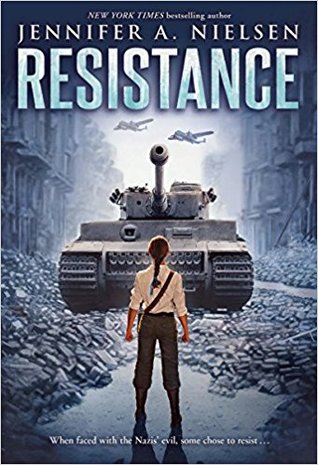
Resistance by Jennifer A. Nielsen, 2018

Click to view
on Goodreads 
Chaya Lindner is a teenager living in Nazi-occupied Poland. Simply being Jewish places her in danger of being killed or sent to the camps. After her little sister is taken away, her younger brother disappears, and her parents all but give up hope, Chaya is determined to make a difference. Using forged papers and her fair features, Chaya becomes a courier and travels between the Jewish ghettos of Poland, smuggling food, papers, and even people.

Soon Chaya joins a resistance cell that runs raids on the Nazis' supplies. But after a mission goes terribly wrong, Chaya's network shatters. She is alone and unsure of where to go, until Esther, a member of her cell, finds her and delivers a message that chills Chaya to her core, and sends her on a journey toward an even larger uprising in the works -- in the Warsaw Ghetto.

Though the Jewish resistance never had much of a chance against the Nazis, they were determined to save as many lives as possible, and to live -- or die -- with honor.

(400 pages)

Wow.

Just, wow. I mean, I've been a fan of Nielsen's for ages, and I adored her East Berlin book A Night Divided, so I knew going in that I was going to love Resistance. But I had no idea how blown away by it I was going to be.

World War II is pretty well-trodden ground by this point, but Nielsen still managed to find an aspect–the Jewish resistance movement–that I didn't know anything about. I never knew that the Jews worked so hard to organize themselves and fight against the Nazis, but they did. They were incredibly brave, risking their lives every day to undermine the war effort, warn the people imprisoned in ghettos about the death camps, and smuggle some out into safe houses.

Chava and her fellow fighters know from day one that they will most likely die for their cause, but they know that they will face death no matter what they do–they want to use their lives to do the most good before they are killed, either for fighting or for being Jewish. It's a horrible situation, the ultimate "rock and a hard place" dilemma, and they are beyond brave for choosing to do what they can to help.

I love how Nielsen doesn't just leave it at that, though. Over the course of Chaya and Esther's journey, they meet lots of different people from all walks of life and religion. They meet some Poles who ignore them, others who attack them for being Jewish, and still others who risk life and limb to help them. They meet some Jews who refuse to fight back out of fear, and some who don't fight out of disbelief, but also some who won't fight because their faith forbids murder–so they fight for the Jewish religion by not taking up arms. Nielsen's focus on these moral nuances, on portraying the various ways people responded to the Nazis without judging them, is a great strength throughout the book.

I realize I haven't really discussed the main characters much yet. It's hard to focus on them when there are so many incredible details about history to pull from Resistance's pages, but Chava is the perfect core to the book. She doesn't see herself as a hero, and she doesn't romanticize anything. She is a very pragmatic person, treating herself almost like an object and calculating how best to use herself for the good of the Jews and downfall of the Nazis. Her initial impatience with/distaste for Esther is completely reasonable, since the younger girl really is pretty useless, but I loved watching them come to understand and respect each other as the story went on. I rooted for both of them, as well as for their cause, though I knew the story couldn't possibly have a picture-perfect happy ending.

I wouldn't recommend Resistance for very young readers, just because the vast majority of the characters in this book either die or expect themselves to die at any moment (and the climax, which is masterfully done by the way, is set in the Warsaw Ghetto during a doomed revolt). There's no bad language or graphic descriptions of the gruesome scenes Chava encounters, though, so as far as books about Polish Jews during WWII goes, this is about as "clean" as it's going to get.

I'm sure it's no surprise when I say that I highly recommend Resistance. I try to always list pros and cons in my reviews, but I literally don't have any cons for this one. It's a wonderfully well-written book, and it gives proper due to the incredible men and women who fought for their people. I hope many children read Resistance and learn the story of these heroes.

Disclaimer: I received a complimentary copy of this novel from the publisher in exchange for an honest review.

23 March 2018

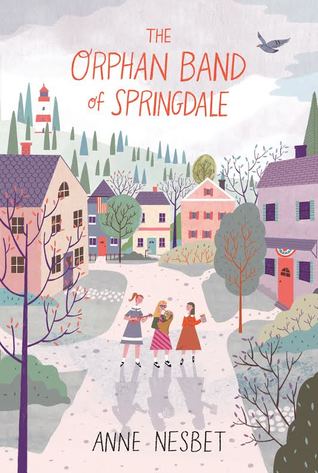
The Orphan Band of Springdale by Anne Nesbet, 2018

Click to view
 on Goodreads 
With the United States on the verge of World War II, eleven-year-old Gusta is sent from New York City to Maine, where she discovers small-town prejudices — and a huge family secret.

It’s 1941, and tensions are rising in the United States as the Second World War rages in Europe. Eleven-year-old Gusta’s life, like the world around her, is about to change. Her father, a foreign-born labor organizer, has had to flee the country, and Gusta has been sent to live in an orphanage run by her grandmother. Nearsighted, snaggletoothed Gusta arrives in Springdale, Maine, lugging her one precious possession: a beloved old French horn, her sole memento of her father. But in a family that’s long on troubles and short on money, how can a girl hang on to something so valuable and yet so useless when Gusta’s mill-worker uncle needs surgery to fix his mangled hand, with no union to help him pay? Inspired by her mother’s fanciful stories, Gusta secretly hopes to find the coin-like “Wish” that her sea-captain grandfather supposedly left hidden somewhere. Meanwhile, even as Gusta gets to know the rambunctious orphans at the home, she feels like an outsider at her new school — and finds herself facing patriotism turned to prejudice, alien registration drives, and a family secret likely to turn the small town upside down.

(448 pages)

I'll be honest: I didn't really know what I was in for when I picked up The Orphan Band of Springdale, and I kind of thought it was going to be a little bit boring. I like historical fiction, but some areas (such as orphans going to live with a troubled family in a small town) have been done nearly to death by this point.

I'm very happy to report, though, that The Orphan Band of Springdale avoids a lot of the pitfalls of its niche. Some of the plot devices and twists may look familiar, but the book as a whole is done in a fairly original and definitely gripping manner. It handles a lot of messy, complicated issues such as anti-German sentiment in the 1940s, the handling of sensitive family history, and the labor organization movement. All of these are done very well, I thought, and woven together very tightly and interspersed with the right amount of humor to keep things from becoming too dark for its target audience.

I think my favorite thing about this book is that it works very hard to show both sides of every issue and paint the characters as complex and nuanced. There are almost no pure villains or amazing heroes in Springdale; people make their decisions out of love, out of fear, out of necessity; sometimes those decisions are good ones that improve life for everyone involved, and sometimes those decisions are bad ones which wind up hurting people around them. But they always have reasons for the choices they make, and sometimes those reasons are actually very reasonable (even if we may not like their results). For example, it's not really fair that Gusta–an innocent child–gets bullied because of her German last name, but it is true that her father is literally from Germany and WWII has already started; fears that her family might be connected to the Nazis aren't entirely unreasonable. As the granddaughter of a Swiss-German American who lost the German language which had been handed down for generations, because schoolteachers and parents decided it wasn't a good idea to let their kids speak German in the 1940s, I can mourn for the loss of cultural heritage people of German ancestry experienced during WWII–and the discrimination some, like Gusta, experienced–but I also understand that it was necessary to a certain extent. I think Nesbet does a good job walking the line between the two perspectives, showing us the atmosphere of the time and its results.

The Orphan Band of Springdale is a good book, a nuanced book, and I really enjoyed reading it. It may be a bit long for some younger readers, but if they can make it through the 450 pages then I recommend it. Let me know in the comments below if you or anyone you know has read it, and give us your thoughts!

Disclaimer: I received a complimentary copy of this novel from the publisher in exchange for an honest review.

23 October 2017

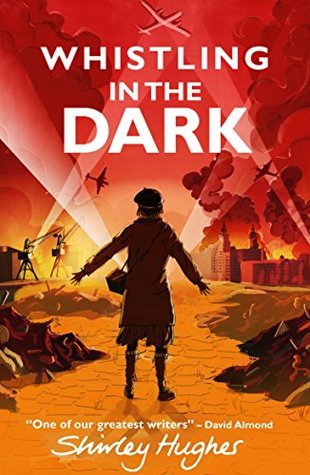
Whistling in the Dark by Shirley Hughes, 2015

Click to view
on Goodreads 
"Well-written and well worth reading." The Bookseller. Liverpool, 1940: thirteen-year-old Joan’s home is under threat from the Nazi’s terrifying nightly air-raids. It is not an easy time to be a teenager, especially with the sweet rationing, strict curfews and blackouts. Joan and best friend Doreen love going to the cinema until the bombings intensify and then even that becomes too dangerous, especially when an army deserter is found lurking near their home. Who is he and why does he think Joan can help him? As the Blitz worsens, Joan and her friends make a discovery that will tear the whole community apart…
(240 pages)

I've read a lot of historical fiction book centered around WWII, and they all take a slightly different angle on the terrible time. A lot of them involve the homefront in some way, so I was a little worried that Whistling in the Dark would struggle to carve its own unique spot in the literature, but I needn't have worried.

One thing I didn't know going into the book is that the author, Shirley Hughes, actually lived through WWII as a teenager living in Liverpool (the town where the book is set). I think that detail adds a little spark to the story that many other books about the time period don't have, just because we know the author really knows what she's talking about when she describes life there at the time.

And really, though it's a little book, there's quite a lot going on. I don't really want to go into the individual plotlines very much, because there would be lots of spoilers, but suffice it to say that Joan is confronted with issues ranging from personal/familial crises to meeting a loner refugee girl in school who doesn't speak English to dealing with the army deserter who is lurking around. They're all resolved in satisfactory and interesting ways, and I really liked reading about it.

Honestly, with all the amazing WWII books out there, I can't say that Whistling in the Dark stands out from the crowd a huge amount. But it's a good book, especially for younger readers who aren't prepared for the full horror of, say, a European Jewish girl's experiences during the war, and I for one really liked it. If you read it, please let us know your thoughts in the comments section down below!

Disclaimer: I received a complimentary copy of this novel from the publisher in exchange for an honest review.

10 July 2017

My Brother's Keeper by Rod Gragg, 2016

Click to view
on Goodreads 
Thirty captivating profiles of Christians who risked everything to rescue their Jewish neighbors from Nazi terror during the Holocaust. 

MY BROTHER'S KEEPER unfolds powerful stories of Christians from across denominations who gave everything they had to save the Jewish people from the evils of the Holocaust. This unlikely group of believers, later honored by the nation of Israel as "The Righteous Among the Nations," includes ordinary teenage girls, pastors, priests, a German army officer, a former Italian fascist, an international spy, and even a princess.
In one gripping profile after another, these extraordinary historical accounts offer stories of steadfast believers who together helped thousands of Jewish individuals and families to safety. Many of these everyday heroes perished alongside the very people they were trying to protect. There is no doubt that all of their stories showcase the best of humanity--even in the face of unthinkable evil.
(352 pages)

I asked to review My Brother's Keeper because it looked like a really great compilation of nonfictional stories from WWII, but once it actually showed up on my doorstep I continually put off cracking it open because I thought it would be too depressing (and also because it looked kind of boring).

It wasn't boring, though. Come to think of it, I've never read a book about the treatment of Jews during WWII that was boring–everything was just so horrific back then that even the most snooze-inducing historian couldn't dull the horrifying tales. As for my other concern, yes, My Brother's Keeper was definitely depressing. Its description of the systematic hunting down and wiping out of an entire race is horrifyingly detailed, and primary source quotes and images are used hauntingly throughout the book. Every chapter opens with a black and white image, occasionally of the featured person/family but often of German soldiers or real children who were murdered in concentration camps. In the beginning of the chapter there's a little bit of background on the featured figures, a detailed description of the historical context and the evils that they faced (including some truly horrific descriptions of German murder techniques), and then a detailed account of how they risked their lives to help the Jews and what happened to them afterward. I'd say that most of the featured people wound up surviving the war, though a large amount of them spent at least some time in a concentration camp. In one or two instances, the heroes–and their entire families–were murdered outright for their "crimes" under German law.

Honestly, it's pretty amazing to read about the people who risked everything to help save hundreds (sometimes thousands) of Jews from the Germans. Many heroes found it incomprehensible that the Jewish children were also being targeted, so they set up elaborate systems that rescued thousands of young innocents right out from under the Germans' grasp. It's amazing. But at the same time, I can't believe the depths of inhumanity that went on during the war. It's great that there were some heroes who rescued children, sure, but it's also horrifying to learn that 1.5 million kids died during the Holocaust. That's obscene. That's . . . I can't even find words for it. Monstrous fits, but it's not even enough. The actions of the people described in the book were amazing, incredibly brave, but they didn't even begin to conquer out the terrible evil of all the people who perpetrated the murder of innocents–or all of those who sat by and watched them do it. Gragg discusses the fact that many Christians throughout Europe allowed themselves to get swept up by the Germans, swearing their loyalty to the Third Reich and turning their backs on their Jewish neighbors, but he says that all of the people in My Brother's Keeper channeled their belief in God toward a conviction that they had to help the Jews in whatever way they could. I think that's amazing, but again–I only wish that more people, Christian or atheist or whatever, had stood up to the monstrosity of the Nazis.

But then I stop and wonder what I would have done in their shoes, and I'm afraid that I would have shut up and put my head down in order to save myself. And even if I worked up the courage to sacrifice myself, it's hard to decide whether it's worth saving others at the risk of having all of my loved ones murdered. It was an impossible time, an impossible situation. The Nazis were truly monsters in every sense of the word, and the noble secret actions of these thirty heroes (and of many more, I'm sure!) are even more incredible in contrast to the inhumanity surrounding them. I weep for all those they couldn't save, but I still celebrate every life they managed to save.


Disclaimer: I received a complimentary copy of this book from the publisher in exchange for an honest review.
29 May 2017

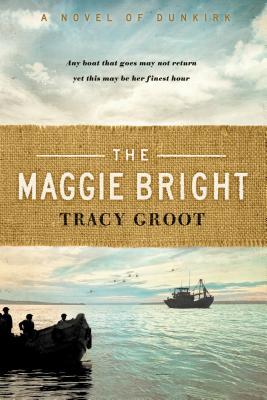
The Maggie Bright by Tracy Groot, 2017

Click to view
on Goodreads 
"England, 1940." Clare Childs knew life would change when she unexpectedly inherited the "Maggie Bright"--a noble fifty-two-foot yacht. In fact, she's counting on it. But the boat harbors secrets. When a stranger arrives, searching for documents hidden onboard, Clare is pulled into a Scotland Yard investigation that could shed light on Hitler's darkest schemes and prompt America to action. Across the Channel, Hitler's "Blitzkrieg" has the entire British army in retreat with little hope for rescue at the shallow beaches of Dunkirk. With time running out, Churchill recruits civilian watercraft to help. Hitler is attacking from land, air, and sea, and any boat that goes might not return. Yet Clare knows "Maggie Bright" must answer the call--piloted by an American who has refused to join the war effort until now and a detective with a very personal motive for exposing the truth.The fate of the war hinges on this rescue. While two men join the desperate fight, a nation prays for a miracle.
(360 pages)

Oof. The Maggie Bright book deals with a lot of heavy topics. I mean, WWII isn't known for being a light or happy period in human history, but sometimes books set during that period focus on the homefront and on happier parts of the story. I don't think I'd ever read a book with such a focus on the beaches of Dunkirk. I also hadn't read a book that painted such a bleak picture of the war effort before America joined in. There are some snide comments made throughout the book about isolationist Americans, because even through the end of the book America has not decided to join the war yet. It's fascinating to read a book set in the thick of WWII before the tide had turned and our triumph was ensured. It's also really scary to see how close the Nazis came to winning everything.

The book takes a surprisingly dark angle on the Nazis as well. I mean, we all know that they were awful–that's not up for debate, of course–but a lot of book that are set more on the homefront don't really focus much on the enemy powers as much more than potential bombers. We get an intimate, horrible look into the atrocious acts committed by the Nazis throughout the book. I won't go too much into the circumstances because those would be spoilers, but suffice it to say that the main characters talk about the Nazi T4 program.

Anyway, moving on to the book as entertainment rather than just as history. I liked it, I did, but I have to say that my main appreciation for the book comes from its historical insights rather than from the characters. Murray is definitely my favorite, and then Jamie and then probably Clare, but there were so many characters that things got rather confusing by the end. Everyone also had a chronic over-sharing problem: perfect strangers would walk up to each other, exchange some pleasantries, and then spill huge secrets to each other. The worst offenders were the two Scotland Yard agents who literally introduced themselves to Clare, invited her to coffee, and then told her big state secrets known only by a few (as well as a plethora of little personal details they surely should have been trained not to reveal to a complete stranger). Along the same vein as this ever-so-convenient openness, there's a dreadful case of insta-love in the book as well. Within the case of a single week and just a few encounters, Clare and a man she just met fall completely in love with each other. It's rather painful to watch.

Also, there's a whole side-plot with Clare's colorful family history, but we never even get to meet her oppresive uncle or learn anything important about her parents or watch her properly process something else she stumbles across over the course of the book. I would have really liked to see more in this area, because I liked what we got.

But really, though, I devoured The Maggie Bright because it's about a fascinating, and little-known, period of WWII. I lapped up the historical details and the new perspective on both the war as a whole and America's role in it, and I read anxiously to see what would happen to my favorite characters on every fresh page because I knew that so many real soldiers faced similar situations to theirs. It's a gripping story, even if parts are rather contrived, and I am glad I had the opportunity to read it.


Disclaimer: I received a complimentary copy of this novel from the publisher in exchange for an honest review.

10 April 2017

That Burning Summer by Lydia Syson, 2017

Click to view
on Goodreads 
It’s July 1940 on the south coast of England. A plane crash-lands in the marsh, and sixteen-year-old Peggy finds its broken pilot—a young Polish airman named Henryk. Afraid and unwilling to return to the fight, Henryk needs a place to hide, and Peggy helps him find his way to a remote, abandoned church.

Meanwhile, Peggy’s eleven-year-old brother Ernest is doing his best to try to understand the war happening around him. He’s reading all the pamphlets—he knows all the rules, he knows exactly what to do in every situation. He’s prepared, but not for Peggy’s hidden pilot.

Told in alternating points of view, this is a beautifully written story about growing up in wartime and finding the difference between following the rules and following your heart.

(298 pages)

I've read a huge amount of WWII books over the past few years, so I've gotten rather picky about them. No, not exactly picky–not bored, either–just really eager to read books that approach the war from unique angles. I don't grow sick of reading about, say, Jews in hiding, but I do like to learn something new from the books I read rather than always focusing on the same (albeit terrible) things.

All that to say . . . I thought That Burning Summer stands out, but isn't incredibly unique. I've never read a book about a Polish airman before, and the details about his past ordeal are absolutely fascinating and horrifying, but the whole idea of someone harboring a fallen pilot in rural England was already covered wonderfully in Dan Smith's My Friend the EnemyI've read a lot of books that included details about the paranoia the Brits felt about an imminent German invasion, so those details also weren't novel to me, but I did appreciate seeing them carried to the level of almost Cold War-era paranoia–I hadn't realized just how much "doom and gloom" many average Brits felt about the war.

Moving on to analyzing the book as a novel, though, I have to point out that everyone (hopefully!) knows going in that the British isles were never invaded during WWII. This takes a lot of tension out of the read for us, because we never seriously worry about this the way Ernest does. Watching him obsess over the impending invasion does give us an insight into his personality, though, so it does serve some purpose.

To be honest, I enjoyed reading That Burning Summer but I didn't absolutely fall in love with it. I liked the different components of the story–learning about Henryk's past, the paranoia in town, Ernest's feelings of inadequacy, the whole storyline about their father that leaks out as the story goes on (and that gave me more new historical perspective!), etc.–but I also felt like many of them could have been fleshed out more. And the ending is fairly abrupt, jumping forward several years and then ending rather suddenly. I would have liked more detail about what had gone on between everyone in the interim years.

Overall, though, this was a pretty good read. If you're interested in it, then by all means do check it out!

Disclaimer: I received a complimentary copy of this novel from the publisher in exchange for an honest review, and this post includes Amazon affiliate links.

13 March 2017

With Love, Wherever You Are by Dandi Daley Mackall, 2017

Click to view
on Goodreads 
Everyone knows that war romances never last. . . .Helen Eberhart always had to fight for what she wanted. Survival in a family of thirteen gave her the grit to push through nurse’s training and support herself. But after the attack on Pearl Harbor, she can’t stand catering to the pampered patients on Chicago’s North Shore. Enlisting as an Army nurse, Helen is transferred to a military hospital in Battle Creek, Michigan. There she comes face-to-face with the waves of broken bodies of the wounded soldiers, many no older than her beloved brothers.

Frank Daley wasn’t trying to be a hero. He’d only enlisted to finish medical school, confident that the war would be over before his deferment ran out. Life just worked out for him that way. But Lieutenant Frank R. Daley, MD, is sent straight from his graduation to boot camp in Battle Creek as his last stop before a battlefield hospital in Europe. And none of his training prepares him for the chance encounter with the spirited nurse who steals his heart.

After a whirlwind romance and courthouse wedding, Helen and Frank are sent to the front lines of Europe with only letters to connect them for months at a time. Surrounded by danger and desperately wounded patients, they soon find that only the war seems real—and their marriage more and more like a distant dream. If they make it through the war, will their marriage survive?

(466 pages)

I've been a long-time casual fan of Dandi Daley Mackall's books for years now, ever since I got hooked on the Starlight Animal Rescue series when I was younger. Mackall always writes children's books filled with equal parts thrills and heart, my favorite combination. When I saw the option to review this book, though, I knew straight away that it was a different beast. This is no 200-word animal rescue book for kids; rather, it's a 450+ page adult novel about a married couple serving as medical personnel in different parts of Europe during WWII.

The first thing I have to say is that this is a fascinating book. It provides an intimate, and often startling, perspective on WWII by focusing explicitly on the lives of Helen and Frank, army nurse and doctor, who are both serving in Europe during the height of the war. The scenes they each see throughout the course of the war and even after it are terrible, yes, but also educational–they show us the depths of human evil, the horrors of human-on-human violence, and the unalterable fact that we need to never engage in such a terrible world war ever again.

Maybe it's because I'm the daughter of two physicians myself, but I've always seen doctors and nurses as some of the greatest heroes during wars. They're the ones who go out to the front lines, risk their lives, do anything it takes . . . to save lives. When everyone around them is focused on destroying the enemy and throwing their men in front of bullets, medical personnel are the ones who stay focused on keeping soldiers alive. I especially appreciate that Helen chooses to help treat German soldiers in the French hospital, despite the flack she gets for it from the other nurses; her determination to help every patient and save every life she can, no matter the stigma, is truly admirable in a time when so many people were focused on mistreating anyone they didn't perceive as being "worth" common decency.

As for the story's central romance, well, I personally didn't care for it that much. Since I figured out who the real Helen and Frank were (hint: their last name is Daley, which is Mackall's maiden name), I was pretty sure I knew how it would turn out. I still don't really agree with the super-fast way they jumped into marriage, which strikes me as very stupid, but the characters themselves do acknowledge the insanity of their decision and spend most of the book building up their marriage bond through daily correspondence. Since they're a newlywed couple who are forcibly separated most of the time, when they rendezvous every few months there are some definite innuendos about what they do together alone–they're not even approaching explicit, though, so I was fine with them. Mainly, though, I just thought their emotions were really strong and rather volatile, and I couldn't get over the fact that they felt so intimate with each other when they'd barely even spent a few weeks together in person before getting married. I guess it was just a different world back then, one where a whirlwind romance like that actually has a chance at success. Plus, memories of their horrible experiences during the war probably helped them bond in later years.

Anyway, Dandi Daley Mackall definitely has the writing skills to try her hand at any genre she chooses. I'm so glad I gave With Love a try, and I look forward to seeing what else she'll be doing in the upcoming future!


Disclaimer: This is an Amazon affiliate link, and I received a complimentary copy of this novel from the publisher in exchange for an honest review.

31 October 2016

The Bicycle Spy by Yona Zeldis McDonough, 2016

Click to view
on Goodreads 
Marcel loves riding his bicycle, whether he's racing through the streets of his small town in France or making bread deliveries for his parents' bakery. He dreams of someday competing in the Tour de France, the greatest bicycle race. But ever since Germany's occupation of France began two years ago, in 1940, the race has been canceled. Now there are soldiers everywhere, interrupting Marcel's rides with checkpoints and questioning.

Then Marcel learns two big secrets, and he realizes there are worse things about the war than a canceled race. When he later discovers that his friend's entire family is in imminent danger, Marcel knows he can help -- but it will involve taking a risky bicycle ride to pass along covert information. And when nothing ends up going according to plan, it's up to him to keep pedaling and think quickly... because his friend, her family, and his own future hang in the balance.

(208 pages)

When I requested The Bicycle Spy, I envisioned a group of kids smuggling covert information in their bike baskets, biking heroically over the border of some European country (possibly over a snow-covered mountain) to do their part in getting some Jews get away from the Nazis.

Yeah. I should have read the description a little more carefully. This is about a boy from a small town in France, whose parents are bakers and who loves to bike. He becomes good friends with the new girl who just moved to town, but soon discovers that she and her family are hiding a secret that puts them in danger from the French soldiers who are loyal to the Nazis and have taken over the countryside. There's lots of biking, to be sure, and certainly quite a bit of smuggling in bike baskets, but no border-crossing or snow-covered mountains. I don't really mind, though, because The Bicycle Spy is just about perfect all on its own.

The only reason I say "just about," rather than that it "is" perfect, is that I wish the book were longer. There were some storylines (especially those having to do with Marcel and Delphine's relationships with the other kids) that would have been interesting to see be developed more thoroughly. Considering that The Bicycle Spy is written for middle-school kids, though, I suppose I can't really hold its shortness against it. McDonough actually does an amazing job packing so much material into just 200 pages.

I thought the details about bike riding were really great. I personally haven't actually ridden a bike in over two years (ever since I injured my wrist falling off a horse–I'm a little paranoid about crashing and hurting it again), but I bet a lot of kids will be drawn to the discussions/descriptions of cycling that come up periodically. Marcel's obsession with the Tour de France, and the way he pretends to be competing in it whenever he's biking, adds a great dimension to the book. The fact that Delphine is also obsessed with biking also makes their friendship very natural–because they actually have something in common! People in books becoming best friends/falling in love when they don't even have any shared interests is a pet peeve of mine, so I was happy about how genuine Marcel's and Delphine's friendship felt.

Honestly, I think genuine is a good word for the book as a whole. All of the characters, from Marcel's parents to Delphine to the boys at school, simply seem real. They read like actual human beings, not just fictional characters. Marcel is not some wonder-child hero out of a romantic novel. He's a real kid, brave yet flawed, who wants desperately to do the right thing but is terrified that he'll make a mistake and bring destruction down on himself and the people he cares most about.

I truly enjoyed reading The Bicycle Spy. There are so many WWII books out there, and pretty much every part of the war has been explored in detail, but I don't think I'd ever read a story set in German-controlled rural France before. It was a very interesting angle, one that is particularly fitting for middle schoolers (not nearly as violent as many books set during the war). I highly recommend The Bicycle Spy to any and all who are interested in it.

Disclaimer: I received a complimentary ARC of this novel from the publisher in exchange for an honest review.

28 October 2016

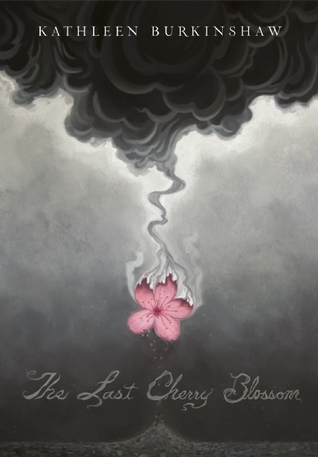
The Last Cherry Blossom by Kathleen Burkinshaw, 2016

Click to view
on Goodreads 
Following the seventieth anniversary of the atomic bombing of Hiroshima, this is a new, very personal story to join Sadako and the Thousand Paper Cranes.

Yuriko was happy growing up in Hiroshima when it was just her and Papa. But her aunt Kimiko and her cousin Genji are living with them now, and the family is only getting bigger with talk of a double marriage! And while things are changing at home, the world beyond their doors is even more unpredictable. World War II is coming to an end, and Japan's fate is not entirely clear, with any battle losses being hidden fom its people. Yuriko is used to the sirens and the air-raid drills, but things start to feel more real when the neighbors who have left to fight stop coming home. When the bomb hits Hiroshima, it’s through Yuriko’s twelve-year-old eyes that we witness the devastation and horror.

This is a story that offers young readers insight into how children lived during the war, while also introducing them to Japanese culture. Based loosely on author Kathleen Burkinshaw’s mother’s firsthand experience surviving the atomic bombing of Hiroshima, The Last Cherry Blossom hopes to warn readers of the immense damage nuclear war can bring, while reminding them that the “enemy” in any war is often not so different from ourselves.

(240 pages)

Okay, this is a really hard book for me to review. Why? Because it's tragic. Spoiler alert: people die. Because it's Hiroshima in 1945, and very bad things happened in that time and place. Things that are truly unspeakable, and which–after actually reading about–I really don't feel up to discussing.

Luckily for both my reviewing struggles and my mental sanity, the attack doesn't happen until about 3/4 of the way through the book. That leaves approximately 170 pages for me to analyze, which are also extremely challenging. How do I provide any sort of a coherent review of a book focused so entirely on a culture I know nothing about?

Because seriously, if this book were set in America–and didn't have an atomic bomb in it–it would be pretty screwy. I've read very few characters like Yuriko: she's curious and opinionated on one hand, but completely submissive and blindly devoted to her father on the other. There are some major bombshells dropped–oh my gosh, can't believe I just tried to use bombing as a metaphor to talk about The Last Cherry Blossom. No, there are some big reveals that take place later in the novel, some really life-shattering reveals that should rock Yuriko. And they do, sort of, for like two chapters. But then they never turn out to be very important, and I just generally get the feeling that they were kind of stray plotlines. All they really accomplished was to drive home just how foreign and patriarchal Japanese society was at the time. Because seriously: Yuriko is expected to just swing with things. And she is so used to conforming to the expectations of the people around her that she buries her emotions deep down and never actually confronts anyone about the (either terribly heartless or magnificently kind, depending on how you look at it) choices that they made and then never told her about.

Gah, I wish I could go into more detail on this but I can't! Anyway, The Last Cherry Blossom is not set in America. It's set in WWII-era Japan, and the novel provides a (presumably accurate, though I'd have no idea if it weren't) glimpse into the intimate everyday life in Japan during the war. I caught some fascinating parallels in this story to books I've read about life on the American homefront (especially in the descriptions of people gathering scraps of metal to give to the government). I also thought it was very cool, just in general since I haven't read any other books set in Japan, to get such a vivid depiction of Japan's rich cultural traditions. There are descriptions of a wedding, several holidays, a feast or two, a soldier sending-off, and–later–funeral rites. Added together with Yuriko's deeply ingrained sense of proper behavior (including not showing emotion in public–like, ever–and never arguing with her elders), this creates a vivid depiction of Japanese culture in the 1940s.

I could go on talking about The Last Cherry Blossom forever, chewing it over, analyzing all the new insights on history that I've gained from it, occasionally complaining about the random leaps forward in time that skipped details I wanted to learn more about. I think I'll stop now, though, just to keep this review at a reasonable length. I definitely recommend The Last Cherry Blossom, if for no other reason than that it is literally the only book I know of that brings readers into the hearts and minds of the nation of Japan. So often in WWII books we only see the brutality of Japanese military actions. I think it's really important that we have books like The Last Cherry Blossom that widen our perspective, showing us how people during wartime can't always be sorted into just "the good guys and the evil enemy." We need more books that show how the themes of heartbreak and sorrow are woven into the narratives of both sides of any war. We need to be shown that people don't have to be on the right side of a war to feel pain when their loved ones die. The Last Cherry Blossom accomplishes this beautifully, and I truly respect and admire Burkinshaw for writing it.

Do you know of any other books written from a Japanese perspective during WWII? If so, post the title in the comments section below so I can check them out!

Disclaimer: I received a complimentary copy of this book from the publisher in exchange for an honest review.
20 November 2015

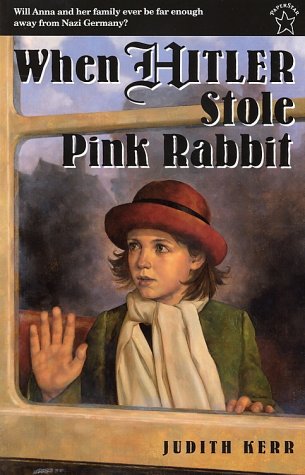
When Hitler Stole Pink Rabbit by Judith Kerr, 1971

Click to view
on Goodreads 
Nine-year-old Anna was too busy with schoolwork and friends in 1933 to take much notice of Adolf Hitler's rise to power in her native Germany. But when her father is suddenly, unaccountably missing, and her family flees Berlin in secrecy, Anna is forced to learn the skills needed to be a refugee and finds she's much more resilient than she thought.
(191 pages)

I like to say that I don't like to read WWII books, but I don't think that's actually true - if I'm being completely honest, I love WWII books. Just not the gritty, horrifying Holocaust books about concentration camps and Nazis and horrible treatment that can make you tremble for humanity. I can read maybe one of those a year - or, actually, every other year - but I can down the other sorts of WWII books by the barrel: books about displacement and identity and bravery, and all the different ways people struggled to find their way in the wake of the most terrible war in human history.

In When Hitler Stole Pink Rabbit, we get the perspective of a little girl whose family flees Germany before the war begins. It's not a tale of cruelty or hatred (though we see hints of that leaking in around the edges through what happens to people they used to know), but instead a book about moving, about trying to fit in, about looking for a place in the world when your own place was destroyed in a way that means it's never coming back.

As I've mentioned before on this blog, I myself have moved many times. I'm actually in the process of moving again - by the time this review goes live, all my earthly possessions will be packed up on a moving truck and on their way back to the Midwest once more. This makes move #7 (not that I'm counting or anything, Mom and Dad!), and I'm beginning to feel like an old pro at this. There's something precious to me about watching Anna and her brother move away from home for the first time, watching them struggle to adapt to their new lives first in Switzerland (where I actually lived for a year, when I was younger!) and then in France. There's something strangely touching in watching the kids become acquainted with homesickness for the first time, with watching Anna bounce back up every time she hits a rock in the road. There's a certain toughness you have to develop when you move, a certain agility that allows you to adapt to your new community, and I loved watching my own experience magnified a thousand-fold as Anna develops these same abilities on a much larger scale than I had to.

I actually chose to write a report for Spanish (yeah, long story) on Judith Kerr, whose own path out of Germany mirrored Anna's. She seems like a fascinating woman, one of the last still alive to have grown up in pre-WWII Germany, and I would absolutely love to sit down and talk with her sometime. Barring that, I will definitely be on the lookout for the sequels to When Hitler Stole Pink Rabbit - and if I ever find them, I will be sure to review them on here. Because this sort of WWII book is my absolutely favorite: the kind that shows the adaptability of the human race, the kind that shows how we can have a "troubled childhood" full of displacement and poverty yet still be perfectly content with the bare necessities of food, friends, and - above all - family to sustain us.

22 May 2015

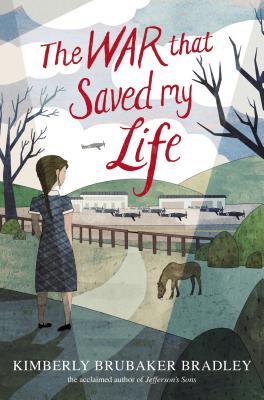
The War that Saved my Life by Kimberly Brubaker Bradley, 2015

Click to view
on Goodreads 
Nine-year-old Ada has never left her one-room apartment. Her mother is too humiliated by Ada’s twisted foot to let her outside. So when her little brother Jamie is shipped out of London to escape the war, Ada doesn’t waste a minute—she sneaks out to join him.
So begins a new adventure of Ada, and for Susan Smith, the woman who is forced to take the two kids in. As Ada teaches herself to ride a pony, learns to read, and watches for German spies, she begins to trust Susan—and Susan begins to love Ada and Jamie. But in the end, will their bond be enough to hold them together through wartime? Or will Ada and her brother fall back into the cruel hands of their mother?
This masterful work of historical fiction is equal parts adventure and a moving tale of family and identity—a classic in the making.
(316 pages)

The War That Saved My Life is a great book for several reasons - several separate reasons. That's because so much is going on, emotionally and physically, that a couple books could have been made off of each separate theme.

One book could provide a fascinating look at what life was like for the uneducated kids from London slums, sent to live with (relatively) rich families in the countryside. Chapters could have been written focusing on the struggles those city kids faced, missing their families and living with complete strangers in a world completely foreign to their own. Many children were actually summoned back to London by parents who missed their kids, and thought that since the Germans hadn't bombed London yet, they never would. This description of events is so different from those in The Lion, the Witch, and the Wardrobe that right there I would have been fascinated!

But that's not all Bradley did. There was also Susan's story, a story of rejection and loss and solitude. Susan's best friend (or maybe more, but I prefer to ignore the signs) Becky died a few years earlier, leaving Susan the house they had shared and remembrances everywhere of what Susan had lost. At the beginning of the book Susan is sad and lonely, and doesn't believe that anything can change that. She is forced to step forward by Ada and Jamie's arrival, and it is great to watch her begin to move on from her own troubles as she helps the kids move on from theirs. From the teaser I was afraid it would be one of those "she initially hates them but gradually comes to love them, then admits it in the end" kind of book. On the contrary, Susan only refuses to take the kids because she fears she's not emotionally fit to care for anyone other than herself. It's soon obvious to the reader that she, while struggling to adapt to their presence, quickly comes to love them. It's far from obvious to the affection-starved children, however, and Ada struggles through much of the book to reconcile Susan's kindness with the actions of someone who by her own admission didn't want kids.

And then of course there's the story of Ada and Jamie. The other stories weave themselves into a background tapestry, combining with a thousand smaller story bits to form a gigantic backing for the central figures - or really, figure. Sorry Jamie, but Ada is the star of this story! It's Ada who tells the tale, her limited understanding of the world painting a harsher picture than any master needle could stitch. She doesn't know what grass is. She doesn't know how to work a flush toilet. She has never heard of crutches. The word "clubfoot" has literally never entered her vocabulary, even though it is the condition that defines her entire life. She thinks that Susan will hit her. And as all the imperfections of Ada's past come to light, it is easy to see that the war does, indeed, save Ada's life. She is just so damaged it takes her a while to understand this.

It's funny, I didn't love The War That Saved My Life when I started writing this review - I only really, really liked it. But the only negatives I can think of are so minor when compared to the positives that they don't really feel worth mentioning - so I guess that means I do love The War That Saved My Life! I'm not going to run out and buy my own copy any time soon, but I will definitely be re-reading it in the future. And I highly recommend it to anyone and everyone who's old enough to appreciate it.

Because the more I think about it, the more I love this book.

24 February 2015

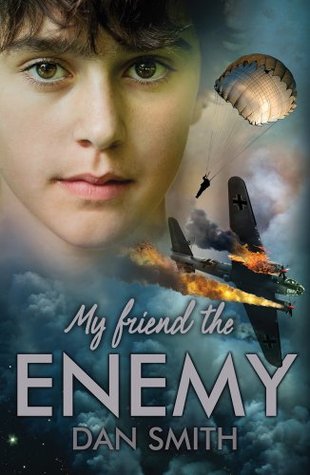
Teaser Tuesday: My Friend the Enemy by Dan Smith (Feb 24)


Okay, so for those of you who are new to this meme, here's how it works:

Teaser Tuesdays is a weekly bookish meme, hosted by MizB of Should Be Reading. Anyone can play along! Just do the following:
• Grab your current read
• Open to a random page
• Share two (2) “teaser” sentences from somewhere on that page
• BE CAREFUL NOT TO INCLUDE SPOILERS! (make sure that what you share doesn’t give too much away! You don’t want to ruin the book for others!)
• Share the title & author, too, so that other TT participants can add the book to their TBR Lists if they like your teasers!

My current read is My Friend the Enemy by Dan Smith.

Synopsis (from Goodreads):


Summer, 1941. For Peter in rural Britain, the war is a long way away, being fought by a faceless enemy. Until the night a German plane is shot down over woods that his missing dad looked after before he went off to fight.
Peter rushes to the crash site to see if there’s something he can keep, but what he finds instead is an injured young German airman. The enemy. Here.
And helping him seems like the right thing to do...
Here´s my quote, the first two sentences of the book:
I was in the far corner of the woods, setting snares, when the siren started. 
I stopped.
Does this interest you? Check back on Friday for my review!