Showing posts with label Sky Pony Press. Show all posts

07 January 2019

Another D for DeeDee by Bibi Belford, 2018

Click to view
on Goodreads 
Life for Dinora Diaz, DeeDee for short, is full of D's. Missing her dad, who's disappeared. Being diagnosed with diabetes. Feeling dumb in fourth grade at her new school, which she transferred into--leaving behind Sandro Zapote and all her other friends in Miss Hamilton's class--after her family's trailer burned down. It's so many D's that DeeDee's sure she'll never really fit in, much less find the perfect best friend she's always wanted.

Then DeeDee meets River. He's a lot like her: River loves skateboarding, art, and dancing, just like she does, and he misses his dad, too. But they're also different: while DeeDee's still struggling to adjust to life with diabetes and has sworn off her Mexican heritage to get back at her dad for leaving, River seems to have totally adjusted to--even learned to love--being deaf. River promises to help search for DeeDee's dad and to compete with her in the spring skateboard exhibition at their local skate park. Finally, DeeDee has something to look forward to.

But when River transfers into DeeDee's fourth grade class, DeeDee makes a huge mistake, putting not just the exhibition, but her entire friendship with River, on the line. Now she has to make a choice: stand up to her classmates and accept being an outsider, or give up her best friend for good? To keep the best friend she's always wanted, DeeDee will have to learn to love difference--not just River's, but also her own.

(208 pages)

Last year, I read Belford's Crossing the Line last year and really loved it. She dealt very sensitively and thoughtfully with the race issues of the early twentieth century through the eyes of a white boy who befriended a black boy and his family.

That's why I was interested to read her latest novel, Another D for DeeDee. This one is set in the present day, and actually manages to impressively mimic the lifestyle of modern kids (communicating by text and everything). It touches on racism lightly, since DeeDee is Mexican-America, but DeeDee also struggles with the aftermath of a fire, living in a trailer park, fitting in at a new school, finding out where her father has gone, and dealing with her new diagnosis of diabetes.

It's a lot of content to smush into a book written for a younger audience, but once again Belford manages to keep the story humming along engagingly. Even though I normally would have gotten so disgusted with DeeDee's bad behavior (especially toward River) that I would have come away from the book with a bad taste in my mouth, somehow Belford manages to keep DeeDee a sympathetic and relatable character. In fact, the reader also learns from DeeDee's bad behvior: Belford makes an excellent point that sometimes mistakes must be forgiven–and that real people are full of nuances, not all good or all bad.

There are too many things going on in this book to go through all of them, but one story aspect I really resonated with was DeeDee and River's conversations about representation. When DeeDee says she might want to enter the talent show as a skateboarder, her nurse is thrilled because she will be a representative of kids with diabetes, showing how her condition is not holding her back. DeeDee is very uncomfortable with this, and indeed spends some time worrying that she could win the competition for her diabetes, because the judges feel sorry for her or want to seem inclusive, rather than because of her actual talent. She doesn't want it to define her. River also grapples with the fine line between personal achievement, representation/paving the way, and handouts.

It's a fascinating question, dealt with in a pretty thoughtful way. I have some very limited experience with these sorts of questions because I am a girl in computer science. There are a lot of extra resources for encouraging women in technology, including special workshops and networking events and even internships. I have always been uncomfortable about taking advantage of these opportunities, and have largely turned them down, because I don't like the idea of getting special help just because of my gender. I can definitely relate to DeeDee and River's thoughts on the topic, and watching them explore the issue actually helped me some.

Anyway, Bibi Belford is quickly becoming one of my favorite authors. Do go back and read Crossing the Line, then read Another D for DeeDee, then join me in waiting for her next book. I'm sure it also will be an engaging and thought-provoking read!

25 June 2018

Salted Caramel Dreams by Jackie Nastri Bardenwerper, 2018

Click to view
on Goodreads 
Jasmine and Kiara have been best friends forever. They've always shared everything, down to their favorite salted caramel dessert. But this year, everything changes -- Kiara joins the school basketball team, and is suddenly too cool to be friends with Jasmine. Jasmine has never felt more alone.

Her mom signs her up for a dance class against her will, and she hates it at first, but it starts to grow on her. One of the other girls in class, Ava, is really nice, and her best friend, Joseph, is very cute! Things are looking up.

But just when Jasmine is starting to be comfortable with her new normal, Kiara reaches out. Can the girls help each other when they need it most?

(240 pages)

This. This is exactly what I needed to start off the summer.

It's grabbing and interesting and has a good message, but at the same time it's light and rather fluffy and fun. It's not stressful, there are no big dark secrets or terrible decisions. Jasmine's best friend drops her for the cool kids, and Jasmine has to find her own path. I loved it.

Maybe I'd have reviewed it a little more negatively if I'd read it in a different frame of mind (it's not exactly breaking new ground, here!), but for the purpose it offers to serve it does a lovely job. I cared about Jasmine, I loved the descriptions of her projects and plans for an Etsy shop, and I was angry when Kiara hurt her. I've done some drama myself, so it was easy to understand what she was going through in auditioning and preparing for the play, and I loved watching her shake herself off and find new hobbies and form new friendships after Kiara dumped her. Too many MG school-drama books are way too melodramatic and ridiculous; this was just the right balance of hurt and maturity.

Also, the climax was slightly too convenient but it played off well enough that I found it to still be plausible and certainly enjoyable.

Basically, Salted Caramel Dreams is exactly what it says on the tin–and probably better than you were thinking it would be. Now that I'm finished with it I want only two things: 1) more books in this Swirl series and 2) a salted caramel steamer. Those things sound awesome!

Disclaimer: I received a complimentary copy of this novel from the publisher in exchange for an honest review.

05 February 2018

Christmas Carol & the Defenders of Claus by Robert L. Fouch, 2017

Click to view
on Goodreads 
Carol really loves Christmas. The decorating and shopping, the Christmas sweaters and music―she wishes it all could be a year-round event. The only downside to the holiday is that she lives in Florida (not exactly the land of snow) and her only family is her Uncle Christopher, who adopted Carol when she was young, after her father's disappearance and mother's death. Her uncle owns a toy company and is super rich―but he's a grinch and a workaholic.

Then, on a magical December trip to NYC, Carol meets her destiny. Santa―the real man with the bag―meets Carol at the top of Rockefeller Center, overlooking the tree. There he explains that Carol is descended from a long line of Defenders of Claus, those who protect and serve Santa. Carol's dad was a Defender. And now Carol has been tapped to fulfill his legacy.

Who would want to hurt Santa? Someone pretty scary and shady, it appears―a masked man who's trying to destroy Christmas! Carol is whisked off to the North Pole on the adventure of a lifetime. Can she help save Santa before it's too late?

(256 pages)

This is a cute book which would be a fun read around Christmas.

It's a fun story, not exactly revolutionary but it does combine the usual Christmas/fantasy story elements in an interesting and relatively unique way. The idea of the Defenders is reminiscent of the Guardians in Rise of the Guardians, but the mortality of the Defenders and their role as active bodyguards for Santa is an interesting twist.

The main characters are fairly straightforward and 2-dimensional, especially Carol–the archetypical happy-go-lucky orphan girl with a depressing parental guardian and unexpected, and incredible, magical powers. Some of the side characters are more interesting, though, especially a fellow Defender from South America Carol gets to know later in the book.

The story takes some interesting twists as it goes along, evolving further away from archetypes, and the plot is not as easy to predict as you would think (though some aspects are still extremely predictable). It goes darker than I expected, but still stays appropriate for younger readers. I think they would enjoy it even more than I did. If you read it, definitely let us know what you think in the comments down below!

Disclaimer: I received a complimentary copy of this novel from the publisher in exchange for an honest review.

19 January 2018

Death and Douglas by J.W. Ocker, 2017

Click to view
on Goodreads 
Douglas has grown up around the business of death. Generations of his family have run the Mortimer Family Funeral Home. The mortician and gravediggers are all his buddies. And the display room of caskets is an awesome place for hide and seek. It’s business as usual in Douglas’s small New England town. Until one day an incredibly out of the ordinary murder victim is brought to the funeral home. And more startling: others follow. On the cusp of Halloween, a serial killer has arrived. And unsatisfied with the small-town investigation, Douglas enlists his friends to help him solve the mystery. With sumptuous descriptions of a bucolic town and it’s quirky people, fascinating yet middle grade–appropriate insider information about the funeral process, and a crackling mystery with a heart-pounding conclusion―Death and Douglas has something for readers young and old.
(372 pages)


What a perfect book book this would have been to read right before Halloween! It's spooky and scary, with a serial killer on the loose and a main character who spends his life surrounded by death, but never so gruesome that it would be unpleasant to read.

It's perfect for middle school, really–though I liked it too, and I'm definitely not in that demographic anymore. I thought Ocker took a really interesting angle on spooky stories, telling a tale that was no less believable than an episode of NCIS or Monk or [insert your favorite crime show here]. Douglas is very comfortable with death, the sort of death that happens by accident or through aging. He knows and accepts that it is natural and inevitable, and he has a very intimate understanding of the process that occurs–from home removal to embalming to funeral ceremony to burial–because he has grown up as a part of the funeral business. When he discovers a serial killer is on the loose, though, it's fascinating not only to watch him and his friends do their best to solve the mystery but also to watch him grapple to equate his peaceful understanding of death with the horrible, unnatural, untimely death that occurs when there is a murder.

I think this is an important issue to think about, especially in a culture such as ours that is so inundated with books and movies and TV shows that revolve around solving murders. I love Agatha Christie's stories, for example, but none of her characters ever quite grapple with the horribleness of murder in quite the same way Douglas does. I think that's a big advantage of having a kid narrate, and I think it's also part of what makes the book both accessible for younger kids and also possibly a bit too much for them.

After all, dealing with the finality and purpose of death is pretty heady stuff for a kid's book. It manages to do a good job, I think, even without bringing in any sort of discussion of an afterlife. And the characters, both major and minor, are just so well-done that the entire book is a joy to read. It's also surprisingly hilarious for a book that literally has the word "Death" in its title.

Basically, if you want to read it, then do. I highly recommend it. But if you (or the kid you're thinking about) might not feel ready, then set it aside for now. Either way, think about saving it to read on some dark nights in October leading up to Halloween–that's definitely the best time of year for it!

Disclaimer: I received a complimentary copy of this novel from the publisher in exchange for an honest review.

01 January 2018

Flower Moon by Gina Linko, 2018

Click to view
on Goodreads 
Tempest and Tally Jo Trimble are mirror twins—so alike they were almost born the same person—and they've been inseparable since birth. But it's the summer they turn thirteen, and it seems like everyone can tell something is changing between them.

Pa Charlie, whose traveling carnival is the best part of every summer, is watching them closer than ever. Digger, who sneaks poor kids onto the carnival rides for free and smiles faster than anyone, seems to be fixing for a fight. Even Mama is acting different, refusing to travel with the carnival this year even though her own twin, who she hasn't seen since childhood, will be there.

And Tally and Tempest are the most different of all. There's a strangeness between them, a thickness to the air, an unseen push and pull, and it's getting stronger. It starts as a feeling, but soon it's sputtering and sparking, hurling them backwards, threatening to explode.

When Tally learns that she and Tempest may not be the first twins in their family to be separated by whatever this force is, she realizes she'll have to find a way to stop it—or she might lose not only her sister, but everyone she loves.

(256 pages)

In the last few years, there has been a surge of quirky quasi-magical books featuring tweens who, more often than not, grow into themselves over the course of the story (often go on a trip) and learn something about themselves/their family that they'd never known before. These books also, for reasons I have yet to comprehend, often have a southern twang to them.

This budding sub-genre of books has been very popular, and I've read many of the books and liked them, but I'm the first to admit that I've never really bought entirely into it: I find many of the books (with the notable exceptions of Sheila Turnage's incredible Mo & Dale Mysteries, Ingrid Law's Savvy series and Kathleen Van Cleeve's Drizzleare pretty vanilla, really, and largely forgotten as soon as the last page is turned.

When I requested Flower Moon, I figured it fell squarely into the niche of books I've just described–but I'd seen good reviews of it, so I hoped it would be one of the great ones. After reading it, I have to report that Flower Moon is a good book–and it ticks all the boxes for the magical realism genre–but it somehow doesn't really seem to match the other books in the subgenre. Maybe it's because the characters are much more down-to-earth and realistic than the protagonists of most books: true, most characters are reduced to one or two personality traits, but Linko narrates with a frank and honest eye for detail and the setting of a traveling carnival is plausible enough that it's easy for the readers to imagine that we are in place of the main characters.

I enjoyed the book, and I rooted for the girls to figure out a solution to their growing separation, but I struggled at first to relate to Tally, because she was such a jerk to her twin. I suppose this is part of the realisticness of the book, since real-life siblings are often cruel to each other, but it was hard to read; at the same time, though, I found it difficult to understand Tempest's insecure worries that Tally wanted to be free of her forever. Surely most functional sibling relationships are strong enough that this would never come into question?

Anyway, as for the magic system itself, I thought the premise was interesting. Linko could have gone into more detail in showing us its effects on past generations, and perhaps its origins. It also seemed like the ending was a little too easy, though I can't go into it much because of spoilers. And everything was made like five times harder by the decision of every single adult to keep the past this big dark secret from the girls, which seems odd since they should have known better (and they should have recognized what was going on way before they did!).

All in all, Flower Moon was a good book and a nice afternoon read, but it wasn't the powerhouse read I was hoping it would be. I do recommend it for those of you who are interested in it, though. Let me know what you think of it in the comments below!

Disclaimer: I received a complimentary copy of this novel from the publisher in exchange for an honest review.

27 November 2017

Crossing the Line by Bibi Belford, 2017

Click to view
on Goodreads 
Billy’s family has fallen on hard times, what with his da hospitalized after the war and his ma barely scraping by. But it’s no hardship for him when there’s not enough money to pay the tuition for Nativity of Our Lord, the private Catholic school everyone in his neighborhood attends. Billy’s not big on education.

When he transfers to James Ward, a Chicago public school, he finds out there’s a big difference at public school: the kids aren’t all Irish—in fact, they aren’t even all white. It isn’t long before Billy’s found a new best friend in Foster, another fifth grader who also doesn’t have any money, loves baseball, and just happens to be black.


Billy is pretty sure skin color doesn’t matter. Not when he and Foster are just horsing around, playing baseball, working on the docks of the canal, and building a raft at their secret hideout on Bridgeport’s Bubbly Creek. But in the Red Summer of 1919, it does matter.


Whew. I had no idea what I was getting into when I picked up Crossing the Line: I thought it was going to be a rather run-of-the-mill middle-grade novel about some kids who learn to be friends across color lines and defend their choices to the outside world (along the lines of Kristin Levine's The Lions of Little Rock). I suppose it did feature those topics, but there's so much more going on in Crossing the Line than just "crossing social boundaries."

The main character Billy learns some very hard truths over the course of the book. Truths like that some of his friends and family are racist. And that in 1919, with not enough money or jobs to go around, racism can rear its head in terrible, gruesome ways. He learns to walk a thin line, staying pleasant to his racist white friends and keeping distant from his black friends in public but spending all of his free time playing in the woods with his best friend Foster (who is black) and Foster's two older brothers. He hates hiding his friendship with the black boys, feels like a coward for pretending not to know them in public, but he grows to realize over time that by being "selfish" and protecting himself he's actually protecting them from all sorts of terrible things at the hands of the racists.

Belford has said that she decided to write Crossing the Line after gradually becoming aware of her own white privilege, and I definitely see that influence in the book. Billy is forced throughout the story to notice and despise all the ways, little and big, that the color of his skin grant him access to both places and freedoms that Foster isn't allowed. He goes from being nearly oblivious to the inequalities in his world to seeing them everywhere, and he struggles with feeling guilty and trying to find ways to help Foster and his brothers that don't put them in even more danger.

Billy's struggle to recognize, internalize, and prevent the evils of racism is the biggest focus of the book, but there are many other themes tied into the story that make it even more meaningful and thought-provoking. There are no absolutes in this book, no pure good guys and very few total bad guys. Billy's racist best friend Tommy seems like a monster when he's talking about "the blacks who steal our jobs," but he also comes from a deeply troubled, abusive home and has still been a wonderful friend to Billy in some of his most vulnerable moments (including when his da returned with debilitating shell-shock from WWI). Billy's da himself was a wonderful man on the race issue, teaching his children to respect people of all races, but he was also quite sexist: he didn't think his oldest daughter needed to go to high school because all a woman needed to know was how to cook and keep house. And don't even get me started on the policeman, the secretive Russian lodger, Billy's put-upon older sister Mary, and the myriad other side characters who are each drawn with their own nuanced personalities.

Honestly, I absolutely loved Crossing the Line. It's gritty and real and honest in a way that's still okay for younger readers. But that same grittiness and realness and honesty forces me to put a qualification on my recommendation of it: beware giving this book to the gentle children you know, because I promise it will upset (and possibly traumatize) them. There's a scene involving a puppy getting hit with a glass bottle that's not described in detail, but which could also be very upsetting for animal lovers. But once a kid is old enough, this is a book that they need to read. Honestly, I would say that this is a book that everyone needs to read at some point or another. It's definitely far and away one of the best books I've read this year–and that's really saying something.

Disclaimer: I received a complimentary copy of this novel from the publisher in exchange for an honest review.

10 November 2017

League of American Traitors by Matthew Landis, 2017

Click to view
on Goodreads 
When seventeen year-old Jasper is approached at the funeral of his deadbeat father by a man claiming to be an associate of his deceased parents, he’s thrust into a world of secrets tied to America’s history—and he’s right at the heart of it.

First, Jasper finds out he is the sole surviving descendant of Benedict Arnold, the most notorious traitor in American history. Then he learns that his father’s death was no accident. Jasper is at the center of a war that has been going on for centuries, in which the descendants of the heroes and traitors of the American Revolution still duel to the death for the sake of their honor.

His only hope to escape his dangerous fate on his eighteenth birthday? Take up the research his father was pursuing at the time of his death, to clear Arnold’s name.

Whisked off to a boarding school populated by other descendants of notorious American traitors, it’s a race to discover the truth. But if Jasper doesn’t find a way to uncover the evidence his father was hunting for, he may end up paying for the sins of his forefathers with his own life.

Like a mash-up of
National Treasure and Hamilton, Matthew Landis’s debut spins the what-ifs of American history into a heart-pounding thriller steeped in conspiracy, clue hunting, and danger.
(256 pages)

Okay, let me start by getting rid of the elephant in the room: Hamilton. I have actually never seen Hamilton (or listened to its full soundtrack), but I know enough about the musical to hazard a pretty good guess that League of American Traitors is nothing like it. Sure, the book's got some mentions of Revolutionary War-era historical figures, but they're definitely not the focus of the book. Instead, League of American Traitors is basically a modern-day adventure/spy novel trying hard to capture some of the vibe of National Treasure while really reminding me of a rather watered-down nonmagical Harry Potter.

I'm sorry, was that overly negative? I don't mean to be, but I'm having a hard time swallowing my disappointment. I was really excited for League of American Traitors, I thought it would be thrilling and realistic and educational at the same time. It may have been education at parts (when the author wasn't, you know, making stuff up to serve the plot), and thrilling occasionally, but I just couldn't get past all the unrealistic and ridiculous stuff that the book expected me to accept. My biggest issue with the plot is the whole premise: a league of the descendants of "good guys" from history decided to hunt down every single descendant of the "bad guys" of American history and force them to participate in one duel. If they win, they're left in peace; if they lose, they're dead; if they flee, they spend the rest of their life on the run.

You know what my biggest problem with this premise is? The idea that people who are descended from famous figures from 300 years ago care so much about some ancient grudge that they're willing to make all of their children participate in duels to the death. That just wouldn't happen. Also, why is everyone so hung up on the past, anyway? We are not our ancestors. We are not responsible for what they did in the past. If you trace my family tree far enough back, I've got some bad people back there, too. But I don't define myself by the choices made by my distant ancestors hundreds of years ago, and I don't see why the people in the book do either!

The other issue I have with the book is the fact that it takes all of history at face value. All the historical figures are sorted into either the "good guy" or the "bad guy" category with no room for nuance. Jasper does bemoan this at one point, when he questions why Benedict Arnold is remembered only for his betrayal and not for any of the amazing battles he won for the cause before then, but I would have liked to take things a step further: why does everyone assume that the "good guys" were good? Why is fighting against Britain inherently better than remaining a Loyalist? Is it just because we won the Revolutionary War, so history was written by the victors? I for one would have probably been a Loyalist, if we're being perfectly honest–I just don't really think our excuses for breaking off from Britain were as great as everyone thought. And some of the classifications seemed very arbitrary, like the fact that Thomas Paine (author of the extremely patriotic Common Sense) was classified as a traitor for a pamphlet he wrote after the war that the patriots didn't agree with, or that one "traitor" ancestor was a slave who fled his patriot owners and fought for the British because he was promised freedom afterword. I think it's frankly horrible that this poor man was branded a "traitor" to some cause he really couldn't care less about and his descendants were forced to participate in this gruesome tradition of deadly duels. And setting all this aside, I think it's ridiculous that all of these people who pride themselves on being descended from the people who fought for American freedoms (only for white male landowners at the beginning, but still) are completely disrespecting those same freedoms to force people into duels against their will.

Honestly, though, I should stop and talk about the positives. I did like some of the side characters, though Jasper seemed like a very bland character without much personality of his own–and I completely disagree with an immoral choice that he made during the climax. I would say that the book could be good for younger kids who love spy stories and history, but it's got some pretty terrible languge (including several instances of the f-word), so I don't want to recommend it to anyone who's not ready for that. Basically, if you've read my semi-ranting review and still think you'd like to read the book, and you don't mind some bad language, then go ahead and give League of American Traitors a try. Maybe you can find something in it that I couldn't.

Disclaimer: I received a complimentary copy of this novel from the publisher in exchange for an honest review.

25 August 2017

The Next Together by Lauren James, 2017

Click to view
on Goodreads 
Katherine and Matthew are destined to be born again and again, century after century. Each time, their presence changes history for the better, and each time, they fall hopelessly in love, only to be tragically separated.

Spanning the Crimean War, the Siege of Carlisle and the near-future of 2019 and 2039 they find themselves sacrificing their lives to save the world. But why do they keep coming back? What else must they achieve before they can be left to live and love in peace?

Maybe the next together will be different...

(356 pages)

I'd definitely heard of this basic scenario (two souls in love reborn again and again throughout time), but I love it so much I just had to request The Next Together. I was so excited when it came that I cracked it open that same day and read the whole thing by bedtime.

The sad thing is that it wasn't as good as I'd hoped it would be. And it's strange, because in some ways it lived up to my expectations: it features true love, multiple fascinating and under-represented periods in European history, drama and sacrifices galore.

But it was also a disappointment. Because I never really felt the connection between Katherine and Matthew, I was just told that there was this big special tie between them. And there was so much skipping around between time periods that I never really got invested in any of them. And the side characters were basically footnotes in the stories. And in at least one storyline, Katherine and Matthew are both a little too . . . promiscuous for my tastes.

Instead of being a beautiful epic love story about two intricate people throughout time, and the mystery of why they kept being separated from each other, The Next Together basically turned out to be four rather shallow romance novelettes about unremarkable people who are tied together by some funky time travel shtuff. And the time travel shtuff wasn't even explained in the end. I was prepared to be really mad about that in this review, but then I looked on Goodreads and found out that there's actually a sequel coming that will probably explain everything (though I don't think I'll read it). As an aside, the main character of this sequel is lesbian. I think that gives you a good idea of the author's outlook on certain things.

I did enjoy the storyline that was told entirely through notes between the two characters, though. They may have been rather naughty from time to time, but they were also so sweet and hilarious that I couldn't help but love them. I kind of want a whole book now just made up of the sticky-notes they sent each other via the fridge.

Disclaimer: I received a complimentary copy of this novel from the publisher in exchange for an honest review.

21 August 2017

Back on the Map by Lisa Ann Scott, 2017

Click to view
on Goodreads 
With their mother long dead and their father unknown, eleven-year-old Penny Porter and her twin brother Parker have been bouncing around foster homes for as long as they can remember. Inspired by the historical figures in her favorite book, Penny likes to imagine who she could be related to. Sacagawea? Her genes would be good ones to have. Or maybe Ghandi, or Harriet Tubman. There are endless possibilities!

But while Penny embraces the question marks in her family tree, she and Porter are both ready for a real home. Living with their aging, ornery Grauntie isn’t easy, but it’s better than other places they’ve been, and they don’t want to get moved again—or worse, split up. Penny believes the key to keeping them from being bounced to another new home is getting their town of New Hope, North Carolina back on the state map. And what better way to do that than to spruce up and sell New Hope’s Finest—an old orphanage that was supposed to reopen years ago as the best attraction ever, but never did.

She’s got the creativity and the gumption to do it. And maybe knowing who you are doesn’t matter so much as knowing what you can do. But will that be enough to finally keep her and Parker in one place for good?

(306 pages)

There are a lot of books on the market out there about kids living in quirky small towns, learning some valuable lesson about life while trying to overcome a challenge. They often have quite a Southern twang to them. I've liked a few of them, but they often ring rather hollow/cliche for me.

If that category of books is a circle, then Back to the Map is lying on the edge of that circle with part of its body in the circle and part of it outside it. I think it actually gains a lot for keeping the quirkiness a little more contained than some of the other books do. Penny's passion for trading items around town and fixing junk up into art is very fun to read about, and the interesting side characters add fun distractions to the story. The central project of fixing up New Hope's Finest (a decrepit, abandoned orphanage) is very interesting to read about. I never quite could follow Penny's logic that tied selling New Hope's Finest and getting the town back on the map to gaining a forever home there, but I suppose 11-year-olds aren't known for having the soundest reasoning skills.

I think the bits I mainly didn't care for revolved around characters' quirky semi-magic "gifts" that popped up here and there, just because I don't really care for that particular trope. Others might like it more than I did, though. I also didn't really like the depiction of Porter, which offered a rather stereotypical "behaves like he has autism and has special powers" character, but I don't know enough about the issue to know whether it's actually offensive or not.

There was also a plotline about Penny's search for information about her father, whom she and her twin brother Porter have never met because their mother gave birth out of wedlock without him. All they know is that he must have been some dark ethnicity because their mother was white and they look Black. Racism is lightly touched on (Penny thinks her mother's family is extra ashamed that she and her brother were born out of wedlock and dark, and she remembers times when strangers called her a mutt), with a subtlety that I think works well in a book which is really focused on other issues. There are a lot of snippets of information about historical figures who Penny likes to "try on" as potential ancestors on her father's side, which is sweet and sad and educational all at the same time.

Basically, Back on the Map is a sweet, fun read that I enjoyed. It's probably not going on my top twenty favorites list, but that's not really saying much about its quality since I've literally read hundreds (if not thousands) of books. If you're interested in it, then go ahead and read it. You won't be disappointed.

Disclaimer: I received a complimentary copy of this novel from the publisher in exchange for an honest review.

07 July 2017

Cheesus Was Here by J.C. Davis, 2017

Click to view
on Goodreads 
Sixteen-year-old Delaney Delgado knows miracles aren’t real—if they were, her kid sister wouldn’t be dead. So when the image of baby Jesus appears on a Babybel cheese wheel, she’s not buying the idea that God’s got a dairy obsession. Soon, religious signs begin turning up all over Del’s hometown, tiny Clemency, Texas. Overnight, news vans fill the streets and religious pilgrims start searching for God in the discount aisle of the grocery store.

Hell-bent on proving the so-called miracles are fake, Del convinces her best friend, Gabe, to help her find the truth. While Gabe’s willing to play detective, as a preacher’s son he’s more interested in finding evidence that supports the miracles. But when the whole town becomes caught up in religious fervor and even the late-night talk show hosts have stopped laughing and started to believe, finding the truth might cause more trouble than Del can handle. This novel is neither pro nor anti-religion, and will appeal to fans of contemporary YA novels that explore deep themes with an element of humor. The voice and characters are funny, strong, and full of heart. This is a book for anyone who loved
Saved!
(272 pages)

I waffled on this one.

I almost didn't agree to review Cheesus Was Here because I worried it would be offensive to me as a Christian. The teaser promised it was "neither pro nor anti-religion," though, so my curiosity won out and I got the book. I agree that it doesn't wind up siding firmly with one side of the argument of the other, though there are some interesting points made along the way. In many ways, I almost thought it was a little biased toward religion.

Don't get me wrong–as I said, I'm a Christian myself. But I find it rather disturbing that the entire town of Clemency believes in the miracles except for Delaney, and that everyone (including characters who are considered by the author to be voices of reason!) constantly tells Delaney that her only reason for trying to disprove the miracles is some sort of bitter, slightly immature vendetta against God for her sister's death.

I mean, I don't know about you, but if people started worshipping a hunk of Babybel cheese I'd definitely be skeptical and start investigating. You can be religious without being gullible, and you can roll your eyes at some baby-shaped cheese just because you think it's stupid (and not because you're angry at the universe). Granted, Del's particular reasoning may have had something to do with her sister's death, too, but it would have been good to see some other viewpoints.

Besides that, though, I thought the book's take on everything was really good. The crazed way people start worshipping the hunk of cheese (and then later a window and a board that appear to be similarly marked by God) is frustrating but realistic, and Del's emotional turmoil and cynicism after her sister's death by cancer the year before rings crushingly true. There's a little bit of language and some references to mature topics (including sex and homosexuality), but nothing horrible to turn people away.

Basically, Cheesus Was Here is a really interesting book that raises some fascinating questions about religion and death and mourning. I really enjoyed it, much more than I thought I would.


Disclaimer: I received a complimentary copy of this novel from the publisher in exchange for an honest review.

03 July 2017

Cold Summer by Gwen Cole, 2017

Click to view
on Goodreads 
Today, he’s a high school dropout with no future.
Tomorrow, he’s a soldier in World War II.

Kale Jackson has spent years trying to control his time-traveling ability but hasn’t had much luck. One day he lives in 1945, fighting in the war as a sharpshooter and helplessly watching soldiers—friends—die. Then the next day, he’s back in the present, where WWII has bled into his modern life in the form of PTSD, straining his relationship with his father and the few friends he has left. Every day it becomes harder to hide his battle wounds, both physical and mental, from the past.

When the ex-girl-next-door, Harper, moves back to town, thoughts of what could be if only he had a normal life begin to haunt him. Harper reminds him of the person he was before the PTSD, which helps anchor him to the present. With practice, maybe Kale could remain in the present permanently and never step foot on a battlefield again. Maybe he can have the normal life he craves.

But then Harper finds Kale’s name in a historical article—and he’s listed as a casualty of the war. Kale knows now that he must learn to control his time-traveling ability to save himself and his chance at a life with Harper. Otherwise, he’ll be killed in a time where he doesn’t belong by a bullet that was never meant for him.

(322 pages)

Some of my favorite story tropes include childhood friends falling in love, time travel, and kids healing and growing after parental abandonment. Cold Summer has all three of those, so it seems like it should be perfect for me.

And in some way, it is. I really, really enjoyed reading it. Kale and Harper's relationship is so beautiful, built on the shared experiences of their childhoods. They trust each other completely and it's beautiful to watch. Kale's struggles with his uncontrollable time travel and the PTSD from living as a soldier during WWII are tragic, though also preventable (he's literally offered an out at one point!) and occasionally skated past (we spend a lot more time in the drama of the present than in the life-or-death horror of the past). The storylines about Harper's neglectful-to-the-point-of-abandonment mother and Kale's tense-and-angry father are very delicately and honestly done.

But at the same time, the book isn't perfect. Like I said, I liked the romance between Kale and Harper–but I also didn't like how physical things got between them. At one point, they nearly even had sex! Also, the language was less than ideal: swears are littered here and there, and the f-word is even used maybe once a chapter. It's used during times of great stress usually, sure, but that's still not great especially for younger readers. I thought Harper's abandonment issues were dealt with way too quickly at the end, and the time travel mechanism still seems kind of hazy to me. I like the "purpose" they realize Kale's experiences served, but it seems really random that he was chosen for that one thing out of everything he could have done throughout history.

All that aside, I still spent a couple of hours reading and enjoying Cold Summer. It's a good summer read, full of plot and grit while somehow managing to simultaneously be rather fluffy. If you're curious, and you don't mind the medium to high-level racy material and swearing, then you might like it. Let us know in the comments section what you think if you do decide to read it!


Disclaimer: I received a complimentary copy of this novel from the publisher in exchange for an honest review.

26 June 2017

Call Me Sunflower by Miriam Spitzer Franklin, 2017

Click to view
on Goodreads 
Sunny Beringer hates her first name—her real first name—Sunflower. And she hates that her mom has suddenly left behind her dad, Scott, and uprooted their family miles away from New Jersey to North Carolina just so she can pursue some fancy degree. Sunny has to live with a grandmother she barely knows, and she’s had to leave her beloved cat and all her friends behind. And no one else seems to think anything is wrong.

So she creates “Sunny Beringer’s Totally Awesome Plan for Romance”—a list of sure-fire ways to make her mom and Scott fall madly in love again, including:

Send Mom flowers from a “Secret Admirer” to make Scott jealous and make him regret letting them move so far away.
Make a playlist of Scott’s favorite love songs—the mushier the better—and make sure it’s always playing in the car.
Ask them about the good old days when they first fell in love.
But while working on a photo album guaranteed to make Mom change her mind and rush them right back home, Sunny discovers a photo—one that changes everything.

Sunny’s family, the people she thought she could trust most in the world, have been keeping an enormous secret from her. And she’ll have to reconcile her family’s past and present, or she’ll lose everything about their future.

(256 pages)

Call Me Sunflower is a rather . . . odd book. I guess that's a good thing, but I think it doesn't quite hit the mark with me.

For one thing, I'm rather horrified that Sunny's parents kept her so in the dark about her past and their present relationship. No one should be that clueless and uncertain about their family dynamics, and her mother has done both Sunny and her sister a huge disservice by keeping everything murky. Also, this whole idea of a fractured family that was never truly together (where the mom adopted a baby and the dad agreed to act as the father to a kid he had no direct ties to) seemed really odd. Sunny's mother and the father should have either married and adopted together, or should have gone their separate ways altogether.

I don't know, I just feel like the whole dynamic was really weird. Don't get me wrong here, I have no issue with a single mother adopting babies–in fact, a friend of mine and her sister were both adopted as babies by a single mother! It's really the father figure role that doesn't quite add up for me. Besides that, I also thought the way the relationship between Sunny and her grandmother played out was a little strange (and the plotline surrounding her grandmother's fur store was especially forced). I did like her interactions in school, which were slightly along the beaten path of middle school drama but which nevertheless rang true. The increasingly-distant emails between Sunny and her best friend Madeline from her old hometown felt especially real to me, as someone who has exchanged more than her fair share of those moving-away conversations over the years.

To be honest, I think that this particular type of quirky story is going to sit really well with some readers and just not be quite right for others. I fall into the latter category, but you might be in the former; if you do decide to give Call Me Sunflower a try, let us know in the comments section what you think of it!


Disclaimer: I received a complimentary copy of this novel from the publisher in exchange for an honest review.

10 April 2017

That Burning Summer by Lydia Syson, 2017

Click to view
on Goodreads 
It’s July 1940 on the south coast of England. A plane crash-lands in the marsh, and sixteen-year-old Peggy finds its broken pilot—a young Polish airman named Henryk. Afraid and unwilling to return to the fight, Henryk needs a place to hide, and Peggy helps him find his way to a remote, abandoned church.

Meanwhile, Peggy’s eleven-year-old brother Ernest is doing his best to try to understand the war happening around him. He’s reading all the pamphlets—he knows all the rules, he knows exactly what to do in every situation. He’s prepared, but not for Peggy’s hidden pilot.

Told in alternating points of view, this is a beautifully written story about growing up in wartime and finding the difference between following the rules and following your heart.

(298 pages)

I've read a huge amount of WWII books over the past few years, so I've gotten rather picky about them. No, not exactly picky–not bored, either–just really eager to read books that approach the war from unique angles. I don't grow sick of reading about, say, Jews in hiding, but I do like to learn something new from the books I read rather than always focusing on the same (albeit terrible) things.

All that to say . . . I thought That Burning Summer stands out, but isn't incredibly unique. I've never read a book about a Polish airman before, and the details about his past ordeal are absolutely fascinating and horrifying, but the whole idea of someone harboring a fallen pilot in rural England was already covered wonderfully in Dan Smith's My Friend the EnemyI've read a lot of books that included details about the paranoia the Brits felt about an imminent German invasion, so those details also weren't novel to me, but I did appreciate seeing them carried to the level of almost Cold War-era paranoia–I hadn't realized just how much "doom and gloom" many average Brits felt about the war.

Moving on to analyzing the book as a novel, though, I have to point out that everyone (hopefully!) knows going in that the British isles were never invaded during WWII. This takes a lot of tension out of the read for us, because we never seriously worry about this the way Ernest does. Watching him obsess over the impending invasion does give us an insight into his personality, though, so it does serve some purpose.

To be honest, I enjoyed reading That Burning Summer but I didn't absolutely fall in love with it. I liked the different components of the story–learning about Henryk's past, the paranoia in town, Ernest's feelings of inadequacy, the whole storyline about their father that leaks out as the story goes on (and that gave me more new historical perspective!), etc.–but I also felt like many of them could have been fleshed out more. And the ending is fairly abrupt, jumping forward several years and then ending rather suddenly. I would have liked more detail about what had gone on between everyone in the interim years.

Overall, though, this was a pretty good read. If you're interested in it, then by all means do check it out!

Disclaimer: I received a complimentary copy of this novel from the publisher in exchange for an honest review, and this post includes Amazon affiliate links.

16 December 2016

Snakes & Stones by Lisa Fowler, 2016

Click to view
on Goodreads 
Twelve-year-old Chestnut Hill’s daddy stole her and the triplets away from their mama. At least, that’s how Chestnut remembers it.

It’s 1921, and after nearly two years on the road with his traveling elixir show, Daddy’s still making no move to go back to Kentucky and buy Mama that house. So Chestnut is forced to come up with her own plan to get home. At night, when Daddy and the triplets are in bed, she draws up flyers with the name of the next town they’ll be traveling to. Before they leave each town and hoping her mama will see them, she nails up the flyers, leaving Mama an easy trail straight to her children.

When that doesn’t work, Chestnut is forced to try something bigger. But when her newest plan lands Daddy in jail and Mama has to come to the rescue, Chestnut discovers that things are not always as they seem. Written with a wonderful mountain hillbilly voice, Snakes and Stones has a mystery at its heart and lovable, strong, and complicated characters.

(240 pages)

My life has been so crazy lately between applying to college, doing my regular schoolwork, and traveling to visit colleges (and then making up for those trips by working even harder to catch up in school). I'm so busy lately that I literally had to schedule time for blogging into my to-do list! This is the first time in a long time that I've actually had to force myself to make time for reading, and it's not really so great.

Anyway, I'm happy to report that I really enjoyed reading Snakes & Stones. Quirky Southern-flavored novels don't always work for me, but this one did for the most part. If I were a little less tired right now I might take issue with how naiive Chestnut is about the truth that's so clearly right in front of her. I might also express concern about the fact that the one African-American character (who grew up in the exact same town as Chestnut's father) has a dreadfully stereotypical "impoverished black person" accent. I might also complain a little bit about the lack of communication going on between Chestnut and her father, and about the fact that her father feels more like a theoretical character than an actual person.

The truth, though, is that I can look past those things and enjoy this debut novel for the interesting and heart-tugging story that lies at its core. Chestnut's struggle to understand her past, her urgent need to lay the blame for the fracture of her family at her father's feet, feels real to me. In fact, Chestnut feels very real: she's flawed and quirky enough to be a real human being, but not so out-of-this-world quirky that she has to have been made up. In fact, I think this is one of the few books which give me the feeling that I could legitimately meet the protagonist walking down the street.

I have to say, though, that my favorite parts of the book were definitely the ones with her three younger siblings. The triplets were so cute, very full of personality and heart! They all three reminded me of my own younger siblings at some point or another. I know from experience how hard it can be to care for small children, even if they are your own flesh and blood, so I admired Chestnut for taking such good care of them throughout the book.

I don't think this is the best book of this type that I've read, but if you're out of other books to read in the quirky-and-meaningful genre or you're aching for some good father-daughter relationship struggles, then this is the book for you. If you do read it, et me know what you think in the comments section down below!

Disclaimer: I received a complimentary copy of this novel from the publisher in exchange for an honest review.

12 December 2016

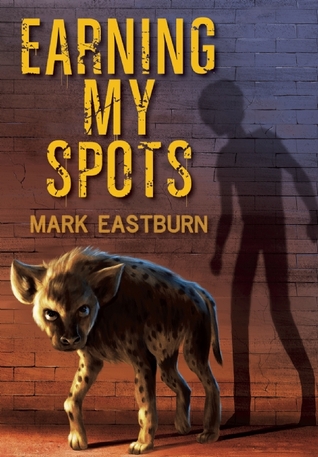
Earning My Spots by Mark Eastburn, 2016

Click to view
on Goodreads 
Sam and his family are the only werehyenas in their town, and they do their best to keep up their cover in front of the humans while the other more aggressive shifters mock the werehyena family for being weak and passive. But Sam sees no other life for himself, as he believes what he is told: he is inferior to the other shifters.

One night, a pack of shifters raids Sam’s house and takes his family, leaving him all alone. With the help of some new friends, Sam sets off on a journey from Vermont to South America to rescue his family. Along the way, he meets various shifters who aid him on his quest. He even meets a tribe of werehyenas in Louisiana who teach him how powerful his kind actually is and how far his ancestry goes back. From them, Sam learns he has a great destiny to fulfill.

As Sam draws closer to finding his family, he begins to understand how different the world of shifters is that exists outside of his small hometown. Shifters are tired of humans destroying their homes, and they want not only revenge but also to force humans into submission. It becomes clear that Sam is the only one who can stop a war that’s on the brink of erupting.

Fans of the Spirit Animals and Warriors series will enjoy accompanying Sam on his quest as he discovers not only that his destiny and inner strength are greater than he thought, but also that being a werehyena is not as laughable as he assumed.

(288 pages)

Okay, when the description said Earning My Spots was for fans of the Spirit Animals series, I thought that meant it would be one of those fun middle-grade novels about kids with cool powers who go on a quest to save the world and discover they're way secretly extraordinary.

And I guess on a certain level that's exactly what Earning My Spots was, but it was just so much more bizarre and, well, strange than anything I would have expected. In this case, that's not really a good thing.

I have to admit, when I had to set the book down at the 75% mark I wasn't even sure whether I would pick it back up. Things get really, really weird when Sam meets the other werehyenas and starts tapping into his heritage. At first, it was actually really cool that he's white in human form while the other werehyenas are black (which happened because his black ancestry was diluted through intermingling with white families). It's neat to watch Sam discover that he has ancestors from an entirely different continent from the one he thought was descended from, and to learn about the culture that was passed down in his blood. It makes me a little jealous because I think it would be so meaningful to have more than just European blood running through my veins!

Anyway, things took a turn for the weird when the other hyenas gave Sam some magical items to help him on his journey and provided him with spirits to protect him. I don't want to spoil too much of what happens after that, but let's just leave it at the fact that things are very mystical and strange. I don't believe in mysticism, and I was a little uncomfortable with the whole "spirits passed down from our ancestors" concept. I also thought it seemed a little forced: Sam himself didn't really undergo any character development. Instead, the spirits and "instinct" seemed to alter his personality just enough to be convenient in whatever scene he was currently in. I would have liked him to gain his own backbone, rather than just relying entirely on the beliefs and customs of a bunch of shifters he'd never met before who just happened to turn into the same animal that he did.

Also, Sam's mother and sister were pretty horrible to him during the small snippets we get of them in the beginning of the book. He claims that they actually were nice to him sometimes, but doesn't offer any concrete examples; I'm a little skeptical of his driving need to rescue his family when the only times he ever thinks of them are when he's thinking about how mean the females were to him. Love is about companionship and sacrifice, not just beating each other up all the time!

So yeah, this one's definitely going to the Little Free Library. I feel bad because I still think the basic concept could have been really cool and meaningful. There's so much meat buried in there, about cultural heritage and finding your place in the world and protecting the environment and about a million other things, but they're obscured by the weird plot developments and just plain strange scenarios that I'm gonna have to call this book a solid miss.

Disclaimer: I received a complimentary copy of this novel from the publisher in exchange for an honest review.

02 December 2016

A Blind Guide to Normal by Beth Vrabel, 2016

Click to view
on Goodreads 
Richie “Ryder” Raymond has a gift. He can find the punchline in any situation, even in his limited vision and prosthetic eye. During the past year at Addison School for the Blind, Ryder’s quick wit earned the respect and friendship of his classmates. Heading to mainstream, or “normal,” school for eighth grade is going to be awesome.

After all, what’s not to like? At Addison, Ryder was everyone’s favorite person. He could make anyone laugh, especially his best friend Alice. So long as he can be first to make all of the one-eyed jokes, Ryder is sure he’ll fit in just as quick at Papuaville Middle School, home of the Fighting Guinea Pigs. But Alice warns him fitting in might not be as easy as he thinks.

Turns out, Alice was right. In just the first hour of “normal” school, Ryder is attacked by General MacCathur II (aka, Gramps’s cat), causes his bio teacher to pass out cold, makes an enemy out town hero Max, and falls for Jocelyn, the fierce girl next door who happens to be Max’s girlfriend. On top of that, Ryder struggles to hold onto his dignity in the face of students’ pity and Gramps’s non-stop practical jokes.

Ryder quickly sees the only thing worse than explaining a joke is being the punchline. But with help from his stuck-in-the-70s Gramps and encouragement from Alice, Ryder finds the strength to not only fight back, but to make peace.

This exciting sequel to A Blind Guide to Stinkville weaves humor, recovery and second chances into an unforgettable story, with characters who will hook you from page one.

(272 pages)

I always meant to read A Blind Guide to Stinkville. I even went so far as to check it out from the library one time about a year ago, but then life happened and I had to turn it back in before I got around to reading it. When I got an email from Sky Pony Press asking whether I'd like to review its sequel/companion, A Blind Guide to Normal, I figured this was my chance to read a book at least connected to Stinkville. I went in with very high hopes.

Coming out of the book I'm a little less enthusiastic. I liked it, sure, but I just didn't really connect with the characters the way everyone else seemed to with Stinkville. I could see and understand the pain Ryder buried deep inside his chest, the way he shoved aside his fear and anger and insecurity and masked it with corny jokes. I saw that, but I still didn't really like him. Ryder treats his grandfather like a laughingstock throughout most of the book, even though the old man is still mourning the death of his wife; he makes new friends in school but treats them absolutely horribly; he does some very insensitive things, then never really apologizes for them. To be honest, I feel bad for Ryder–I really do. But I feel even worse for Jocelyn and Max and Gramps.

And really, Jocelyn and Max and Gramps are the main reason I liked Normal. Jocelyn was probably my favorite character, just because I loved the glimpses we got of her past and how she fought to move forward. Max is, basically, an ideal boyfriend. I loved him throughout the book, even when he was going head-to-head with Ryder. And Gramps? Gramps is just straight-up awesome. When he tells the story of his past, it's so touching to see how much in love he still is with his wife–even though she's been gone for around thirty years. Ryder was too busy being embarrased by his grandfather's old-fashioned sense of style to realize how sweet and cool the old man really was.

Do I recommend A Blind Guide to Normal? Meh. I suppose if you want to read it I'm not going to warn you off it, it really is funny in some parts and meaningful in others. Just go in knowing that Ryder isn't the nicest person in the world, and that there is way too much romantic angst in this book about a bunch of thirteen-year-olds. If you do/have read it, definitely let me know what you think! In the meantime, I think I'm going to send my copy off to my local Little Free Library.

Disclaimer: I received a complimentary copy of this novel from the publisher in exchange for an honest review.

25 November 2016

Henry Hunter and the Beast of Snagov by John Matthews, 2014

Click to view
on Goodreads 
Adolphus Pringle lived a relatively normal life before he met Henry Hunter, but being the best friend of a twelve-year-old millionaire genius certainly makes life interesting. He has accompanied Henry on adventures all over the world and encountered dozens of supernatural creatures. Henry has a penchant for paranormal mysteries, and he never fails to drag his trusty sidekick, Dolf, into adventures to track down the truth in these mystical legends.

Henry announces one morning that he and Dolf are going to go in search of a creature more terrifying than Dracula himself: the Beast of Snagov. The pair of supernatural investigators travel from where Bram Stoker stayed in Whitby to Transylvania. Along the way they come across some strange things such as Dracula’s daughter, Bella, and an organization called the Order of the Dragon that wants to sacrifice Henry Hunter to the Beast of Snagov. When Henry is taken, it’s up to Dolf and Bella to team up and rescue him!


Will Henry survive this supernatural adventure? Get ready to discover the world of the supernatural through the eyes of our spooked narrator as he tags along on the first adventure in the Henry Hunter series!
(240 pages)

This is the second Halloween-themed book that I've read in the past week, the first one being Monsterville. As I wrote in my review, I really loved that book and was totally in the mood for another creepy Halloween-type novel. Luckily, I had another monster-themed Sky Pony Press book sitting on my shelf: Henry Hunter. I jumped right into it after finishing Monsterville, and was expecting great things.

Honestly, though, it just didn't really hit me the right way. Maybe it felt too much like a dumbed-down Sherlock Holmes (with monsters instead of an actual crime, and a stereotypical twelve-year-old genius millionaire robot rather than the brilliant, enigmatic and flawed human being we get in Sherlock). Maybe I couldn't get over the unrealistic premise of two young boys wandering into all sorts of terrible danger, with no adult ever even attempting to stand in their way. Maybe I didn't like how vanilla and clueless Dolf was–like the worst of Watson and Hastings and movie-Ron all jumbled together.

Maybe I'm just too old for this book. I think that's really the bottom line, I've simply reached the age where I want more subtlety and dynamism than Henry Hunter could offer. Honestly, I think it's quite a good book for kids who are in middle school. It's got vampires and backwoods Transylvania, cool creepy ancient castles, and a big ole' monster that the main characters need to defeat in the end. If I were five years younger, I think I'd probably have loved reading about the wealthy, independent Henry who spoke dozens of languages and knew practically everything. I would have lapped up the story just as quickly as I devoured, say, the 39 Clues series–which also featured hyper-intelligent children entrusted with large sums of money and zipping around the planet practically on their own.

I don't know, there's probably a pretty good chance that your kid would like this if they're in middle school. If you're looking for some slightly creepier books to give them that aren't really macabre, then this might be just the thing. I can't say I really recommend it to anyone older than middle school, though, just because there are so many other books out there. I don't know that it really stands out from the crowd enough to demand the attention of anyone over the age of about twelve.

Disclaimer: I received a complimentary copy of this novel from the publisher in exchange for my honest review.

21 November 2016

Monsterville: A Lissa Black Production by Sarah S. Reida, 2016

Click to view
on Goodreads 
Thirteen-year-old Lissa Black is miserable when her parents force her to move from New York City (the perfect home for an aspiring writer/director/actress) to Freeburg, Pennsylvania, nowhere capital of the world. There’s nothing to do there, except play her little sister Haylie’s favorite new game, Monsterville, and hang out with her new neighbor Adam.
But when a walk in the woods lands her face-to-face with a swamp monster hungry for brains and then a Sasquatch that moos, even Lissa can’t call her new home totally boring. With Adam’s help, she catches the culprit behind the drama: a shape-shifting goblin who’s fled from the monster world of Down Below.
And what do you do with a creature that can be literally anything? Make monster movies, of course! Lissa is convinced that Blue will be the secret to her big break.
But when Haylie goes missing on Halloween, Lissa, Adam, and the monster must venture Down Below to stage a rescue—and face the real Monsterville, which is anything but a game.
Monsterville is a fusion of The Boxtrolls, Jumanji, and Candyland, weaving together friendship, family, and monsters into a funny fantasy-horror brimming with heart from a great new middle grade voice.

(368 pages)

Wow. This was . . . very different from what I was expecting it to be. In the best possible sort of way! I'm really regretting not reading it around Halloween time because it would have been gotten me into the perfect spooky mood. It's definitely got a very high creep factor in it, but not in an over-the-top unpleasant sort of way.

The first thing that really made the story for me, right from the first few chapters, was Lissa's narration. She's absolutely obsessed with filmography, so half the time she describes a scene she compares it to some classic film or describes how she would film it if her life were a movie. These extra details add a very creative angle to the novel and provide many instances of picturesque imagery that we wouldn't get otherwise. Besides enjoying Lissa's narration, I also just really connected with her as a character. It's all too rare to find a main character who loves small children and is great at babysitting. For Lissa, though, acting as a "mini mother" seems to come naturally. In fact, especially toward the second half of the novel, she often behaves more like Hailey's mother than her older sister! Lissa's reaction to moving from New York to middle-of-nowhere Pennsylvania is also very realistic: she's mad, and grouchy, and at first refuses to admit that there might be anything good about the entire state of Pennsylvania. Honestly, that's how I usually feel when I move somewhere new. Lissa's evolution of emotions (and the reliable, yet increasingly distant, support she gets from her friends back in New York) ring true to my own moving experiences.

So basically, Lissa is exactly like me with a love for movies swapped out for my obsession with books. Good. That right there guarantees I'll enjoy at least a large part of the book. But did I love it? Yes, absolutely. I adored Adam, Lissa's next-door neighbor who allows himself to get dragged along for the ride in exchange for nothing more than the opportunity to show Lissa reasons why she shouldn't hate Pennsylvania. The cynical part of me says he's a little too perfect to be a real person, but I'm not in the mood to listen to it. He's awesome. Hailey herself is adorable, very realistic (if a tad too cooperative at times–but then, maybe my younger siblings are just wilder than most). The side characters we meet from Lissa's new and old school all ring true in the small roles that they're given.

But now for the monsters. And I have to say, this is one of the more horrific premises for a novel that I've read in a while. The further you get into the story, the worse it gets; by the time the main characters are stumbling through Down Below, facing terrible monsters in their quest to find Hailey, things are pretty hard-core. If you stop and think about the reason Hailey's been kidnapped, they're positively horrific.

At the same time, though, like I said: I really loved reading Monsterville. Maybe it's just the fact that it's a middle-grade novel, but no matter how dark things got I never felt like it was going to end in total tragedy. I'm not usually one for horror, but I actually adored Monsterville. It had just the right mixture of family (including not-dead, emotionally-invested parents!), friendship, love, and tension. It also ended on a sort-of cliffhanger, and I am definitely ready for the sequel. Someone please tell me it will be out in time for next Halloween!

Disclaimer: I received a complimentary copy of this novel from the publisher in exchange for an honest review.

28 October 2016

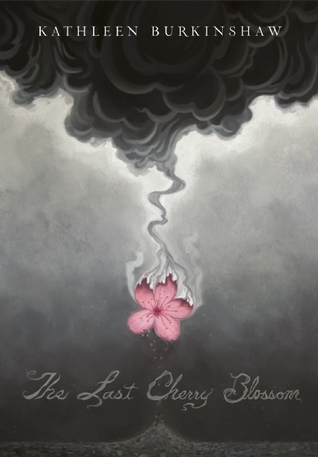
The Last Cherry Blossom by Kathleen Burkinshaw, 2016

Click to view
on Goodreads 
Following the seventieth anniversary of the atomic bombing of Hiroshima, this is a new, very personal story to join Sadako and the Thousand Paper Cranes.

Yuriko was happy growing up in Hiroshima when it was just her and Papa. But her aunt Kimiko and her cousin Genji are living with them now, and the family is only getting bigger with talk of a double marriage! And while things are changing at home, the world beyond their doors is even more unpredictable. World War II is coming to an end, and Japan's fate is not entirely clear, with any battle losses being hidden fom its people. Yuriko is used to the sirens and the air-raid drills, but things start to feel more real when the neighbors who have left to fight stop coming home. When the bomb hits Hiroshima, it’s through Yuriko’s twelve-year-old eyes that we witness the devastation and horror.

This is a story that offers young readers insight into how children lived during the war, while also introducing them to Japanese culture. Based loosely on author Kathleen Burkinshaw’s mother’s firsthand experience surviving the atomic bombing of Hiroshima, The Last Cherry Blossom hopes to warn readers of the immense damage nuclear war can bring, while reminding them that the “enemy” in any war is often not so different from ourselves.

(240 pages)

Okay, this is a really hard book for me to review. Why? Because it's tragic. Spoiler alert: people die. Because it's Hiroshima in 1945, and very bad things happened in that time and place. Things that are truly unspeakable, and which–after actually reading about–I really don't feel up to discussing.

Luckily for both my reviewing struggles and my mental sanity, the attack doesn't happen until about 3/4 of the way through the book. That leaves approximately 170 pages for me to analyze, which are also extremely challenging. How do I provide any sort of a coherent review of a book focused so entirely on a culture I know nothing about?

Because seriously, if this book were set in America–and didn't have an atomic bomb in it–it would be pretty screwy. I've read very few characters like Yuriko: she's curious and opinionated on one hand, but completely submissive and blindly devoted to her father on the other. There are some major bombshells dropped–oh my gosh, can't believe I just tried to use bombing as a metaphor to talk about The Last Cherry Blossom. No, there are some big reveals that take place later in the novel, some really life-shattering reveals that should rock Yuriko. And they do, sort of, for like two chapters. But then they never turn out to be very important, and I just generally get the feeling that they were kind of stray plotlines. All they really accomplished was to drive home just how foreign and patriarchal Japanese society was at the time. Because seriously: Yuriko is expected to just swing with things. And she is so used to conforming to the expectations of the people around her that she buries her emotions deep down and never actually confronts anyone about the (either terribly heartless or magnificently kind, depending on how you look at it) choices that they made and then never told her about.

Gah, I wish I could go into more detail on this but I can't! Anyway, The Last Cherry Blossom is not set in America. It's set in WWII-era Japan, and the novel provides a (presumably accurate, though I'd have no idea if it weren't) glimpse into the intimate everyday life in Japan during the war. I caught some fascinating parallels in this story to books I've read about life on the American homefront (especially in the descriptions of people gathering scraps of metal to give to the government). I also thought it was very cool, just in general since I haven't read any other books set in Japan, to get such a vivid depiction of Japan's rich cultural traditions. There are descriptions of a wedding, several holidays, a feast or two, a soldier sending-off, and–later–funeral rites. Added together with Yuriko's deeply ingrained sense of proper behavior (including not showing emotion in public–like, ever–and never arguing with her elders), this creates a vivid depiction of Japanese culture in the 1940s.

I could go on talking about The Last Cherry Blossom forever, chewing it over, analyzing all the new insights on history that I've gained from it, occasionally complaining about the random leaps forward in time that skipped details I wanted to learn more about. I think I'll stop now, though, just to keep this review at a reasonable length. I definitely recommend The Last Cherry Blossom, if for no other reason than that it is literally the only book I know of that brings readers into the hearts and minds of the nation of Japan. So often in WWII books we only see the brutality of Japanese military actions. I think it's really important that we have books like The Last Cherry Blossom that widen our perspective, showing us how people during wartime can't always be sorted into just "the good guys and the evil enemy." We need more books that show how the themes of heartbreak and sorrow are woven into the narratives of both sides of any war. We need to be shown that people don't have to be on the right side of a war to feel pain when their loved ones die. The Last Cherry Blossom accomplishes this beautifully, and I truly respect and admire Burkinshaw for writing it.

Do you know of any other books written from a Japanese perspective during WWII? If so, post the title in the comments section below so I can check them out!

Disclaimer: I received a complimentary copy of this book from the publisher in exchange for an honest review.